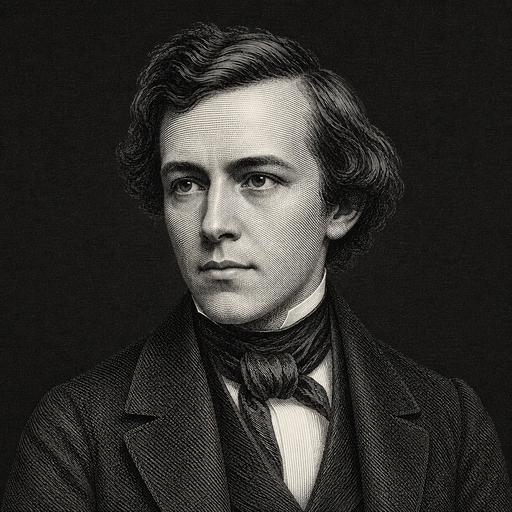
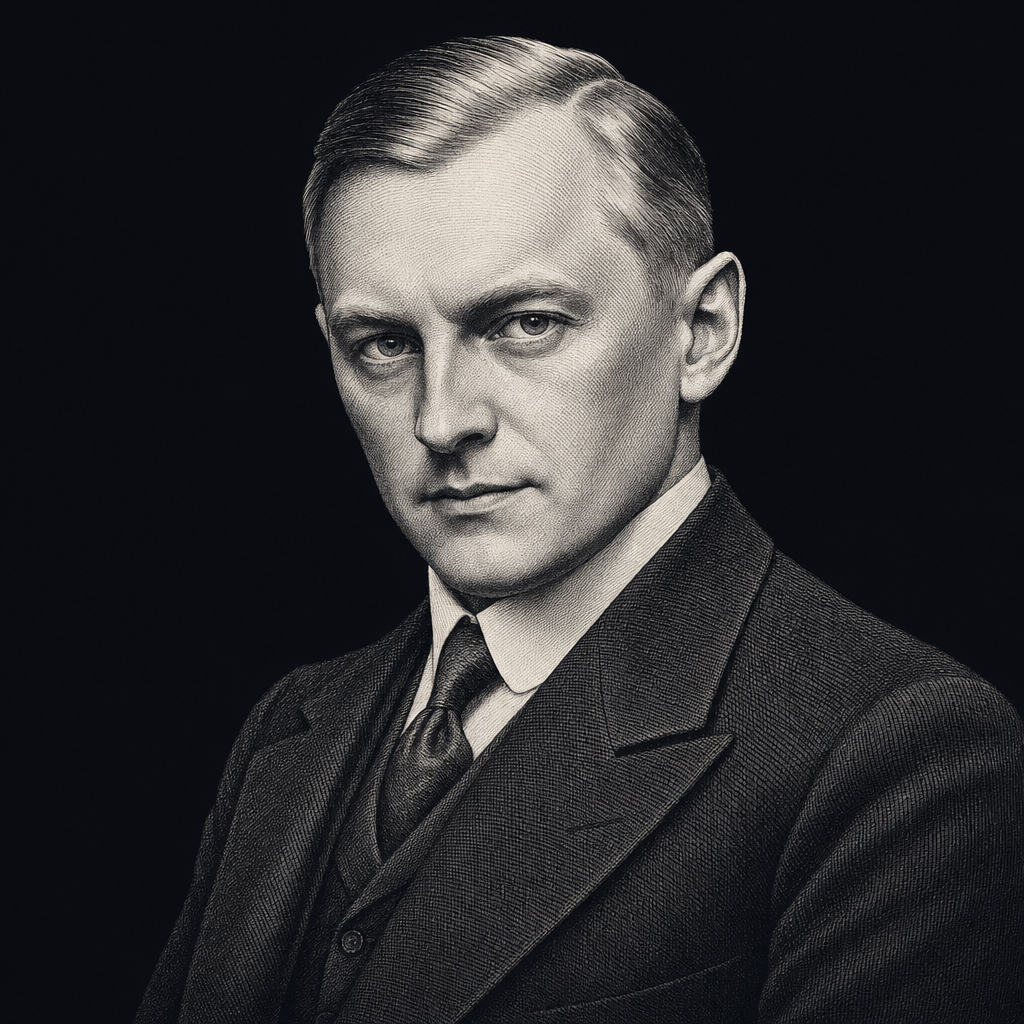
Paul Morphy
“The Pride and Sorrow of Chess”
Dominating world chess in barely two years before retiring at 22; the Opera Game.
2743Peak ratingChessmetrics historical estimate
World #1late 1850s
Born–died1837–1884
CountryUnited States
Active erac. 1850–1859
TitleUnofficial World Champion (1858)
Paul Charles Morphy was born on June 22, 1837, into a cultured, prosperous Creole family in New Orleans. His father Alonzo was a lawyer who later sat on the Louisiana Supreme Court, and the household spoke French, Spanish and English. Paul learned chess simply by watching his father and uncle play, and family lore holds that he absorbed the rules without instruction. By the age of about twelve he was already beating the strongest players in New Orleans, including the visiting Hungarian master Johann Löwenthal, who passed through the city in 1850 and lost a short series to the boy.
Morphy was, first and foremost, a serious law student, and he did not enter the wider chess world until he had completed his degree at the University of Louisiana (he graduated in 1857 but was too young to be admitted to the bar). That year he travelled north to play in the First American Chess Congress in New York, the first major tournament held in the United States. He swept the field, crushing the German-American master Louis Paulsen in the final, and was instantly hailed as the strongest player in America at the age of just twenty.
In 1858 Morphy sailed for Europe to test himself against the Old World's elite. In London and Paris he demolished a succession of leading masters — Löwenthal, Daniel Harrwitz, Augustus Mongredien and others — and his crowning achievement came at the end of the year when he defeated Adolf Anderssen, the conqueror of London 1851 and the consensus best player in Europe, by 7 wins to 2 with 2 draws. Reportedly Morphy played part of the match from his sickbed while suffering from influenza. The English champion Howard Staunton, whom Morphy most wanted to face, repeatedly avoided a match, to Morphy's lasting frustration. It was in Paris in 1858 that he played the celebrated Opera Game against Duke Karl of Brunswick and Count Isouard, a model of rapid development and attack that is still the first masterpiece shown to most beginners.
Having proved his supremacy, Morphy effectively walked away from the game. He returned to New Orleans in 1859 a national hero, but he regarded chess as a gentleman's pastime rather than a profession and hoped to practise law. The outbreak of the American Civil War, and the social disruption it brought to the South, derailed his legal ambitions, and he never built the career he wanted. He played only occasional casual games thereafter and steadfastly refused to compete seriously.
Morphy's later years were clouded by mental illness. He became reclusive and increasingly paranoid, was the subject of a failed attempt by his family to have him committed in 1882, and grew obsessed with imagined slights. He died suddenly on July 10, 1884, at the age of 47, found in his bath; the cause was attributed to a stroke or congestion brought on by entering cold water after a walk in the New Orleans heat. The contrast between his dazzling brilliance and his unhappy, unfulfilled life earned him the enduring epithet 'the Pride and Sorrow of Chess.'
More than a century and a half later, Morphy remains a touchstone. Bobby Fischer rated him among the greatest of all time and argued that, given modern openings, Morphy could still have competed with anyone. His games are prized not for opening novelties but for their crystalline logic: he understood the value of development, open lines and the initiative decades before such ideas were codified. He is widely regarded as the first truly modern player and, in many accounts, the most naturally gifted the game has produced.
Playing style
Morphy's chess is the purest illustration of classical principles applied with overwhelming clarity. He developed his pieces with extraordinary speed, fought relentlessly for open lines and the initiative, and was willing to part with material — pawns or even pieces — to bring his forces to bear on the enemy king before the opponent could untangle. His attacks almost always fell on a king still stuck in the centre or insufficiently defended, and his combinations, though spectacular, were the logical consequence of superior development rather than mere fireworks. Against weaker resistance he could also play with restraint, but it is the swift, harmonious mobilisation and the inevitability of his finishes that make his games timeless teaching material.
Signature openings
“Chess never has been and never can be aught but a recreation. It should not be indulged in to the detriment of other and more serious avocations.”
— Paul Morphy, speaking at a banquet in his honour, New York, 1859
Rivalries & key opponents
- Match with Adolf Anderssen (1858): Morphy won 7–2 with 2 draws, settling who was the world's best.
- Match with Louis Paulsen (1857): defeated him in the final of the First American Chess Congress.
- Non-match with Howard Staunton (1858): Staunton repeatedly avoided a contest Morphy badly wanted.
Career highlights
- Won the First American Chess Congress, New York (1857)
- Defeated Adolf Anderssen in a match (1858), establishing himself as the world's best
- Beat leading European masters Löwenthal, Harrwitz and Mongredien on his 1858–59 tour
- Played the Opera Game against Duke Karl of Brunswick and Count Isouard (Paris, 1858)
- Widely regarded as the unofficial World Champion of the late 1850s
- Retired from serious play at 22, never having been beaten in a formal match in his prime
Famous games on BetterChess
Morphy's Opera Game (1858)
Paul Morphy vs Duke of Brunswick & Count Isouard · 1858 · Philidor Defense
Replay & play ›Paulsen vs Morphy (1857)
Louis Paulsen vs Paul Morphy · 1857 · Four Knights Game
Replay & play ›Bird vs Morphy (1858)
Henry Bird vs Paul Morphy · 1858 · Philidor Defence, Philidor Countergambit
Replay & play ›More players







Biographical summary compiled by BetterChess. BetterChess is a practice tool — we make no guarantee you'll reach 1800 or any rating.
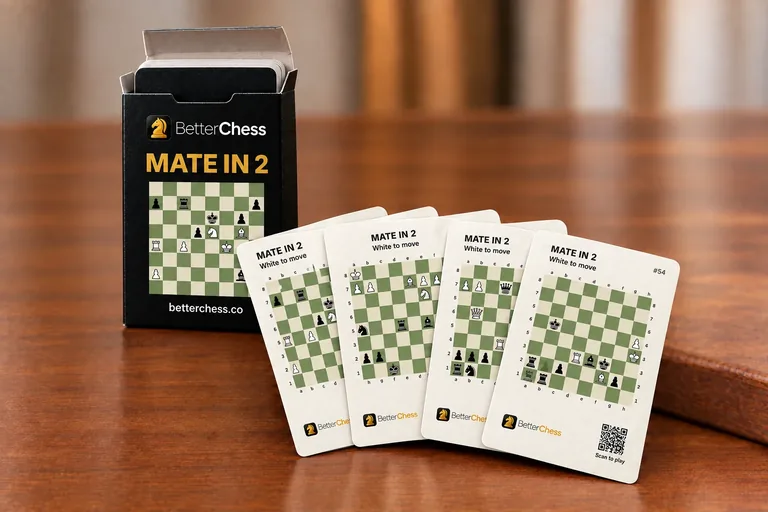
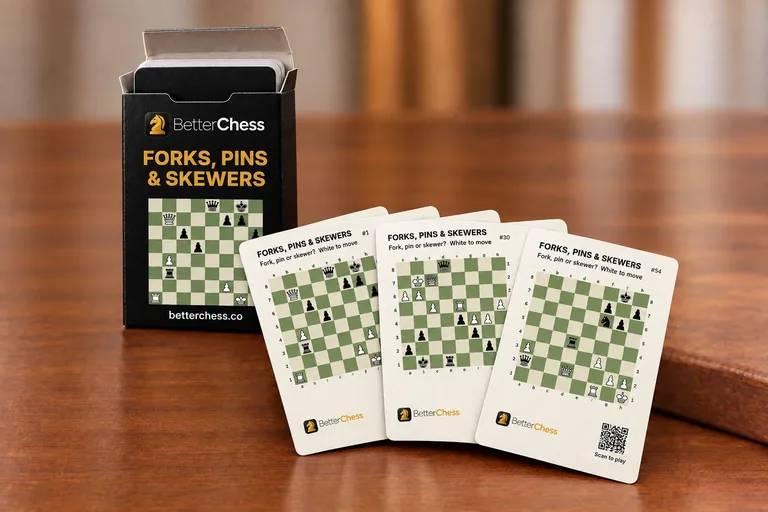
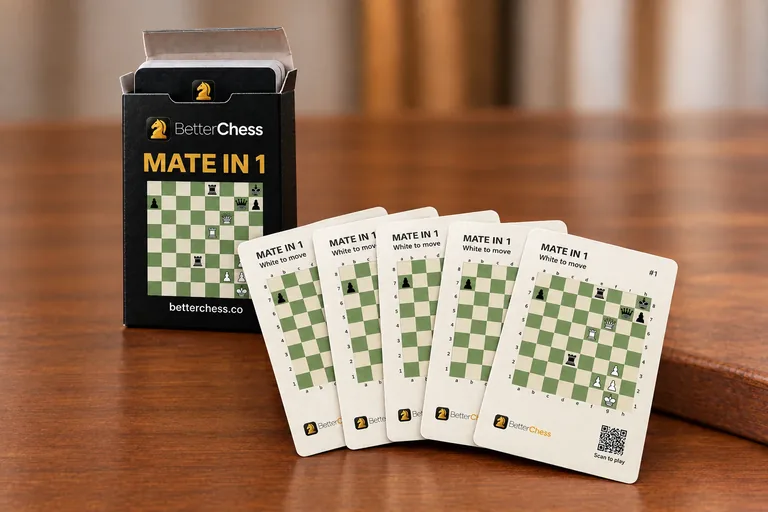
PRINTED CHESS PUZZLE CARDS
Chess puzzle playing card decks
54 poker-size cards in a tuck box. Puzzle on the front, solution on the back.