Paulsen vs Morphy (1857)
- White
- Louis Paulsen
- Black
- Paul Morphy
- Event
- First American Chess Congress, New York
- Year
- 1857
- Result
- 0–1
- Opening
- Four Knights Game
See this game roasted by the engine
17. Qa6
17.Qa6 — Paulsen grabs at counterplay on the queenside, far from his own king. The board is set for the combination.
Why this game matters
New York, 1857. In the final of the first American Chess Congress, twenty-year-old Paul Morphy faced the great defensive technician Louis Paulsen. Cramped and seemingly equal, Morphy uncorked one of the most famous queen sacrifices ever played — 17...Qxf3!! — and hunted the white king with a swarm of minor pieces. It is the game that made Morphy a national hero.
The lesson
A sacrifice doesn't need a forced mate to be sound — it needs more attackers than the defender can meet. Morphy gave up his queen to rip open the white king, then kept feeding pieces into the attack (bishop, rook) until the position simply collapsed. Activity and open lines beat raw material.
Move by move
8. Bc48.Bc4 — Paulsen develops solidly, but Morphy already has the freer game and the initiative after the early trades.
12… Qd312...Qd3! Morphy plants the queen deep in White's camp, tying down the pieces and preparing the storm.
17. Qa617.Qa6 — Paulsen grabs at counterplay on the queenside, far from his own king. The board is set for the combination.
17… Qxf317...Qxf3!! The immortal queen sacrifice. It rips open the g-file and the white king; the point is the swarm of attackers, not a single forced line.
18. gxf318.gxf3 is forced — and now the white kingside is shattered with the queen gone.
18… Rg6+18...Rg6+ — the rook swings to the open g-file with check. Every black piece is about to join in.
19… Bh319...Bh3! threatens mate and freezes the white rook on f1. The attack feeds itself.
24… Bxf224...Bxf2 keeps the king pinned in the corner; Black has more than enough for the queen.
26. Rxf126.Rxf1 — and after ...Re2 Morphy's rook penetrates to the seventh and the white position is paralysed.
28… Be328...Be3 — the final quiet move; with mate threats everywhere and no defence, Paulsen resigned. Morphy's masterpiece.
Frequently asked
Why is 17...Qxf3 so famous?
It's one of the earliest and most beautiful queen sacrifices in tournament play. Morphy gave up his queen not for a forced mate but to expose the white king, then overwhelmed it with bishop, rook and king-side pressure. It announced his genius to the world.
Is the sacrifice completely sound?
Modern engines have found defensive tries for White, but over the board the practical attack is crushing — and Morphy's instinct for activity over material is exactly the lesson that still wins club games today.
Can I try the combination myself?
Yes — take the board as Black at move 17 and try to find the queen sacrifice and the follow-up, or replay the whole game move by move, no sign-up.
Similar games
Morphy's Opera Game (1858)
Paul Morphy vs Duke of Brunswick & Count Isouard · 1858 · Philidor Defense
Replay & play ›Bird vs Morphy (1858)
Henry Bird vs Paul Morphy · 1858 · Philidor Defence, Philidor Countergambit
Replay & play ›Paulsen vs Schwarz (1879)
Louis Paulsen vs Adolf Schwarz · 1879 · French Defence, Advance Variation
Replay & play ›Zukertort's Immortal (1883)
Johannes Zukertort vs Joseph Blackburne · 1883 · English Opening
Replay & play ›Want this on your own games? BetterChess puts a real engine inside Claude, so it finds the moves that actually decided the game instead of listing every inaccuracy.
BetterChess is a practice tool. We make no guarantee you'll reach 1800 or any rating. This is a historical game; the analysis is our own.
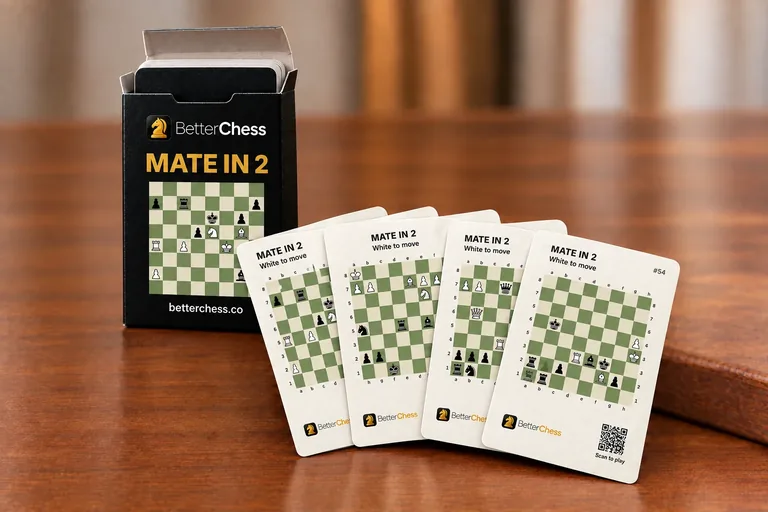
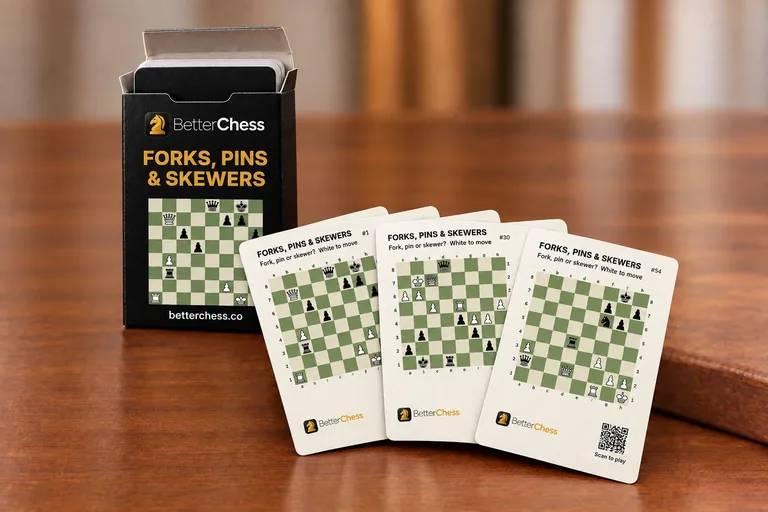
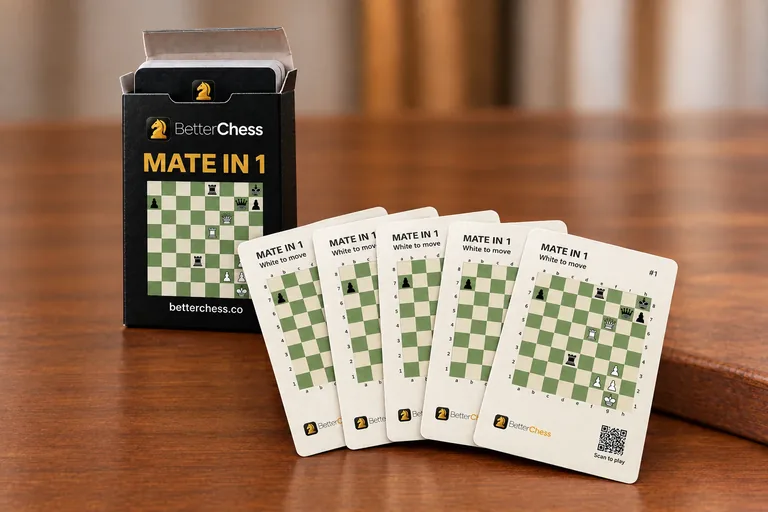
PRINTED CHESS PUZZLE CARDS
Chess puzzle playing card decks
54 poker-size cards in a tuck box. Puzzle on the front, solution on the back.