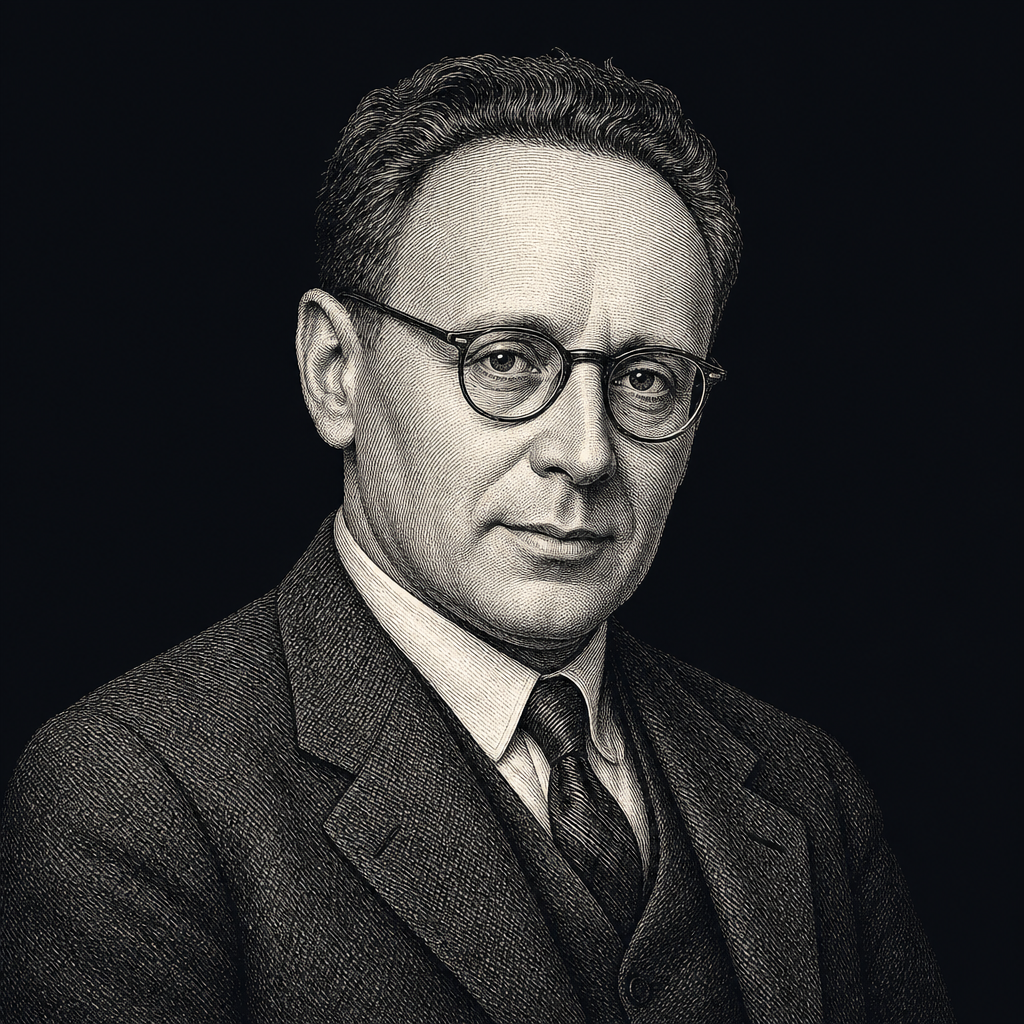
Mikhail Botvinnik
“The Patriarch of the Soviet chess school”
Founding the Soviet chess school and holding the World Championship across three separate reigns
2828Peak ratingChessmetrics historical estimate
World #11940s–1950s (dominant force of his era)
Born–died1911–1995
CountrySoviet Union
Active era1924–1970
Title6th World Champion (1948–1957, 1958–1960, 1961–1963)
Mikhail Moiseyevich Botvinnik was born on August 17, 1911, near St. Petersburg in the Russian Empire. He came to chess relatively late, learning the moves at twelve during the 'chess fever' that swept the new Soviet state in the mid-1920s, but he progressed with formidable seriousness. At fourteen, less than two years after learning the game, he famously defeated the reigning World Champion José Raúl Capablanca in a simultaneous exhibition. He became a national master at sixteen and Soviet Champion at twenty.
Botvinnik combined his chess with a full career as an electrical engineer, earning a doctorate and treating the game with scientific rigor. Through the 1930s he emerged as the Soviet Union's standard-bearer, holding his own against the West's elite at the great tournaments of Nottingham 1936 (where he tied for first with Capablanca) and AVRO 1938. His methodical, research-driven approach to preparation set a new standard and would define Soviet chess for half a century.
The Second World War and the death of champion Alexander Alekhine in 1946 left the world title vacant. FIDE organized a five-player tournament in 1948 to determine a successor, and Botvinnik won it convincingly to become the 6th World Champion. His victory inaugurated an era of near-total Soviet dominance of the championship that would last, with one brief interruption, until 2000.
Botvinnik's tenure was defined by a remarkable resilience built into the rules of his era: a defeated champion was entitled to a rematch. He drew his 1951 match against David Bronstein and his 1954 match against Vasily Smyslov, retaining the title both times. When Smyslov finally beat him in 1957, Botvinnik won the title straight back in 1958; when the brilliant young Mikhail Tal dethroned him in 1960, he again reclaimed the crown in the 1961 rematch, having minutely analyzed his opponent's style. Only in 1963, against Tigran Petrosian, did he lose without the right to a return match, ending his reign for good.
Far from fading after his playing career, Botvinnik devoted his later decades to teaching and to pioneering computer chess. The chess school he ran produced an extraordinary lineage of champions — Anatoly Karpov, Garry Kasparov, and Vladimir Kramnik all passed through it — cementing his title as the Patriarch of the Soviet chess school. He died on May 5, 1995, in Moscow, his influence on the modern game as great as that of any player who ever lived.
Playing style
Botvinnik was the supreme scientist of the board, approaching chess as a problem to be solved through deep preparation, objective analysis, and iron self-discipline. He favored strategically rich, positional struggles — closed centers, well-grounded pawn structures, and long-term plans — and he excelled at steering games into the kind of complex middlegames he had studied exhaustively at home. He pioneered the systematic, opponent-specific preparation that became the hallmark of Soviet chess, and his readiness to publish penetrating analysis of his own games made him as influential a teacher as he was a champion.
Signature openings
Caro-Kann DefenseNimzo-Indian DefenseWinawer Variation, French DefenseEnglish OpeningBotvinnik System (Semi-Slav / English)
“Chess is the art which expresses the science of logic.”
— Mikhail Botvinnik, widely attributed
Rivalries & key opponents
- Vasily Smyslov
- Mikhail Tal
- Tigran Petrosian
- David Bronstein
Career highlights
- Defeated reigning champion Capablanca in a simultaneous exhibition at age 14 (1925)
- Tied for first at the great Nottingham tournament alongside Capablanca (1936)
- Won the 1948 World Championship tournament to become the 6th World Champion
- Retained the title in matches against Bronstein (1951) and Smyslov (1954)
- Regained the title from Smyslov in the rematch (1958)
- Regained the title from Tal in the rematch (1961)
- Founded the Soviet chess school that trained Karpov, Kasparov, and Kramnik
- Pioneered early computer chess research after retiring from play (1970s–80s)
Famous games on BetterChess
Botvinnik's AVRO Masterpiece (1938)
Mikhail Botvinnik vs José Raúl Capablanca · 1938 · Nimzo-Indian Defence
Replay & play ›Tal's Knight Sacrifice (1960)
Mikhail Botvinnik vs Mikhail Tal · 1960 · King's Indian Defence
Replay & play ›More players
Biographical summary compiled by BetterChess. BetterChess is a practice tool — we make no guarantee you'll reach 1800 or any rating.
PRINTED CHESS PUZZLE CARDS
Chess puzzle playing card decks
54 poker-size cards in a tuck box. Puzzle on the front, solution on the back.