Emanuel Lasker
“The longest-reigning World Champion”
Holding the world title for a record 27 years and pioneering a fighting, psychological approach to chess.
2886Peak ratingChessmetrics historical estimate
World #1World Champion 1894–1921 (27 years — the longest reign)
Born–died1868–1941
CountryGermany
Active erac. 1889–1936
Title2nd World Champion (1894–1921)
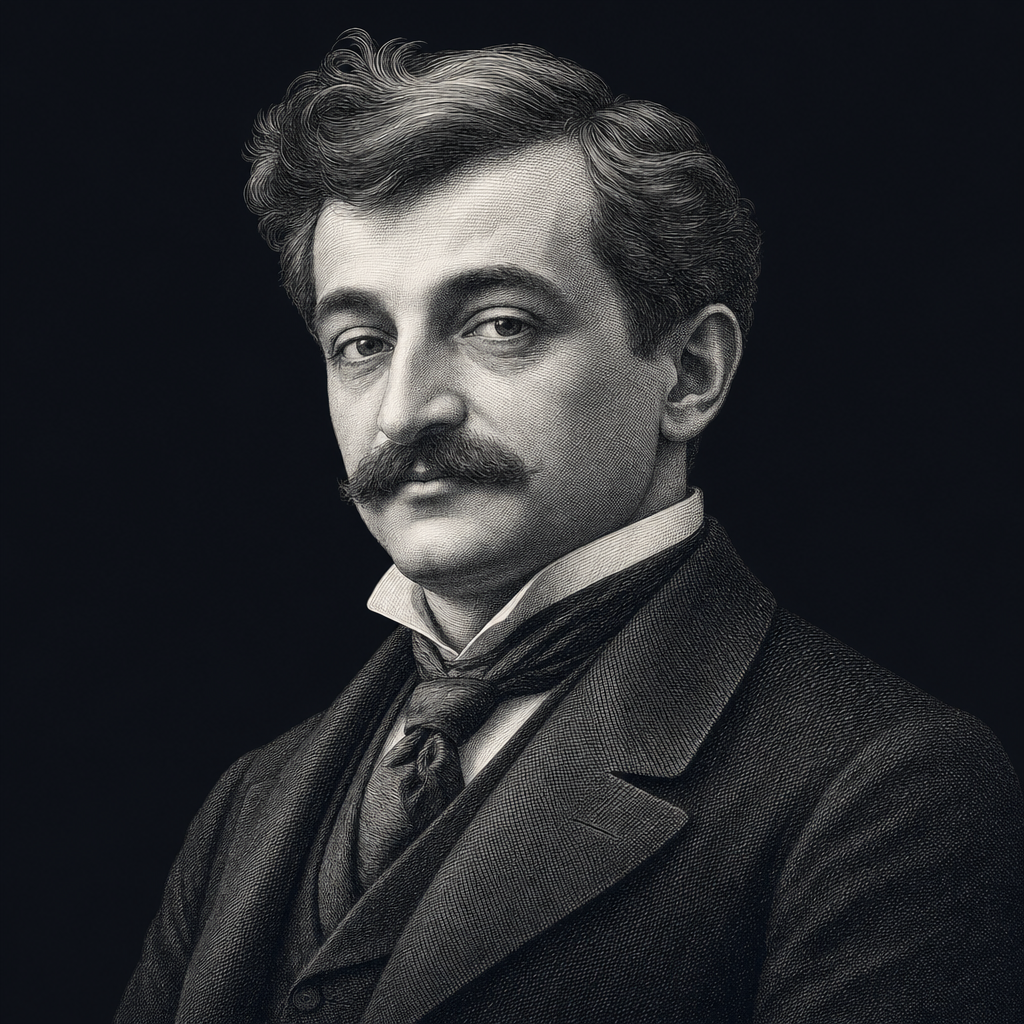
Emanuel Lasker was born on 24 December 1868 in Berlinchen in the Prussian region of Neumark (today Barlinek, Poland), the son of a Jewish cantor. Sent to Berlin at eleven to study mathematics, he was taught the game by his elder brother Berthold, himself a strong master. Lasker initially saw chess as a way to fund his studies, but his results were so striking that the game became his career while he simultaneously pursued a serious life in mathematics and philosophy.
Lasker won a series of strong tournaments and matches in the early 1890s, establishing himself as the natural challenger to the first official World Champion, Wilhelm Steinitz. In their 1894 match, played across New York, Philadelphia, and Montreal, Lasker won convincingly with ten wins, five losses, and four draws, becoming the second formally recognised World Champion. He confirmed his superiority emphatically in their 1896–97 rematch, crushing the older Steinitz.
What followed was the longest championship reign in chess history: Lasker held the title for 27 years, from 1894 to 1921. He defended it successfully against the strongest challengers of his day, including Frank Marshall (1907), Siegbert Tarrasch (1908), and Carl Schlechter (1910), and dominated the great tournaments of the era, winning marquee events such as St. Petersburg 1895–96, London 1899, Paris 1900, and St. Petersburg 1914. He combined this with major mathematical work — his 1905 paper on primary decomposition of ideals introduced what are now called primary ideals, later generalised by Emmy Noether and foundational to modern algebra.
Lasker's title finally passed to José Raúl Capablanca in 1921 in Havana, where Lasker, ageing and playing in difficult conditions, resigned the match while behind. Even in defeat his strength endured: at St. Petersburg 1914 he had already overhauled the young Capablanca, and after losing the crown he returned to produce one of the finest results of his life by winning the colossal New York 1924 tournament ahead of both Capablanca and Alekhine, undefeated.
As a German Jew, Lasker was forced to flee the Nazis in the 1930s, losing his property and his livelihood. He lived in England and the Soviet Union before settling in New York, where he died in relative poverty on 11 January 1941. A philosopher and writer as well as a player, his 'Lasker's Manual of Chess' remains one of the deepest books ever written on the game, and his fighting, opponent-aware approach anticipated the modern, practical understanding of competitive chess.
Playing style
Lasker was the first great pragmatist and psychologist of the board. Where his contemporaries sought the objectively best move, he played the move that posed his particular opponent the greatest practical problems, unafraid of complications, defence, or apparently inferior positions if they led to a hard fight he could win. Modern engine analysis suggests he was not so much 'unsound' as remarkably flexible and ahead of his time, a tenacious fighter who excelled in difficult and double-edged middlegames and endgames.
Signature openings
Ruy Lopez (as White)Queen's Gambit DeclinedOpen defences to 1.e4, including the Berlin and classical linesFlexible, fighting systems chosen to unbalance opponents
“On the chessboard lies and hypocrisy do not survive long. The creative combination lays bare the presumption of a lie; the merciless fact, culminating in a checkmate, contradicts the hypocrite.”
— Emanuel Lasker, 'Lasker's Manual of Chess' (1925)
Rivalries & key opponents
- Wilhelm Steinitz
- Siegbert Tarrasch
- José Raúl Capablanca
- Carl Schlechter
Career highlights
- Won the World Championship from Wilhelm Steinitz (1894)
- Held the world title for a record 27 years, the longest reign in history
- Defended the title against Marshall (1907), Tarrasch (1908), and Schlechter (1910)
- Won the elite St. Petersburg 1914 tournament ahead of Capablanca and Alekhine
- Won the great New York 1924 tournament undefeated, after losing his title
- Made a foundational contribution to algebra with primary decomposition of ideals (1905)
- Authored 'Lasker's Manual of Chess', a landmark of chess literature
Famous games on BetterChess
Lasker's Double Bishop Sacrifice (1889)
Emanuel Lasker vs Johann Bauer · 1889 · Bird's Opening
Replay & play ›Lasker's Counterattack (1896)
Harry Nelson Pillsbury vs Emanuel Lasker · 1896 · Queen's Gambit Declined
Replay & play ›Lasker's Strategic Masterpiece (1914)
Emanuel Lasker vs Jose Raul Capablanca · 1914 · Ruy Lopez, Exchange
Replay & play ›More players




Biographical summary compiled by BetterChess. BetterChess is a practice tool — we make no guarantee you'll reach 1800 or any rating.
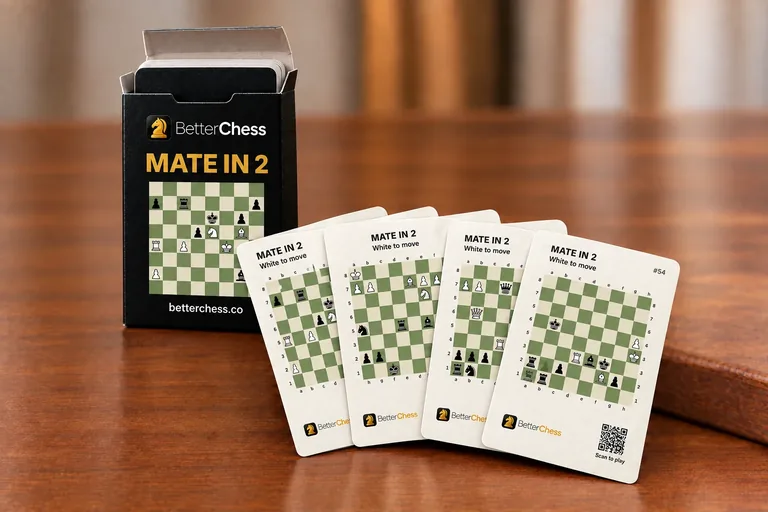
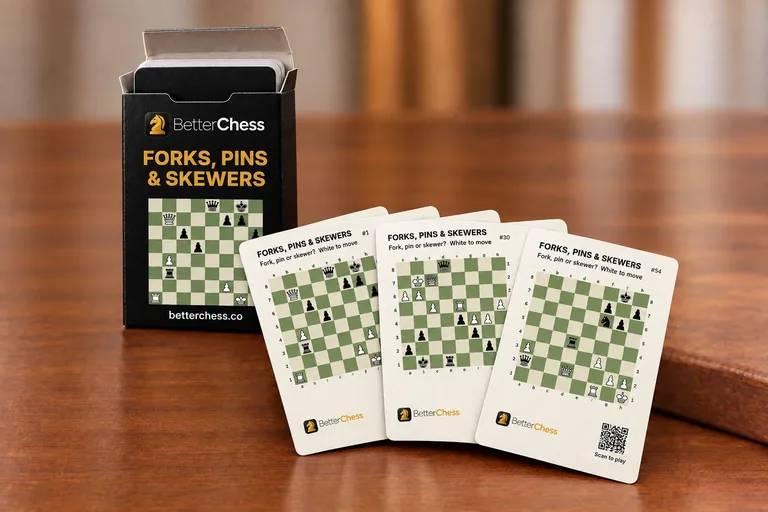
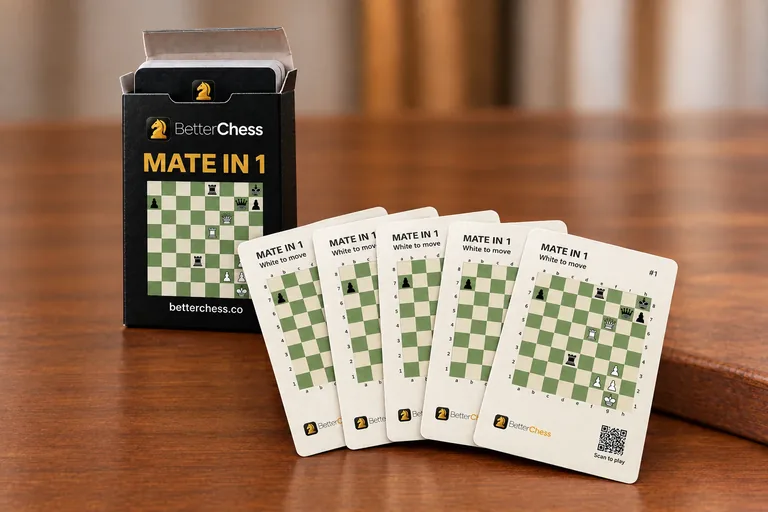
PRINTED CHESS PUZZLE CARDS
Chess puzzle playing card decks
54 poker-size cards in a tuck box. Puzzle on the front, solution on the back.