Mikhail Tal
“The Magician from Riga”
The most daring sacrificial attacker in chess history and the youngest World Champion of his era
2705Peak ratingpeak FIDE rating (1980)
World #1around 1960 (peak of his powers)
Born–died1936–1992
CountrySoviet Union (Latvia)
Active era1949–1992
Title8th World Champion (1960–1961)
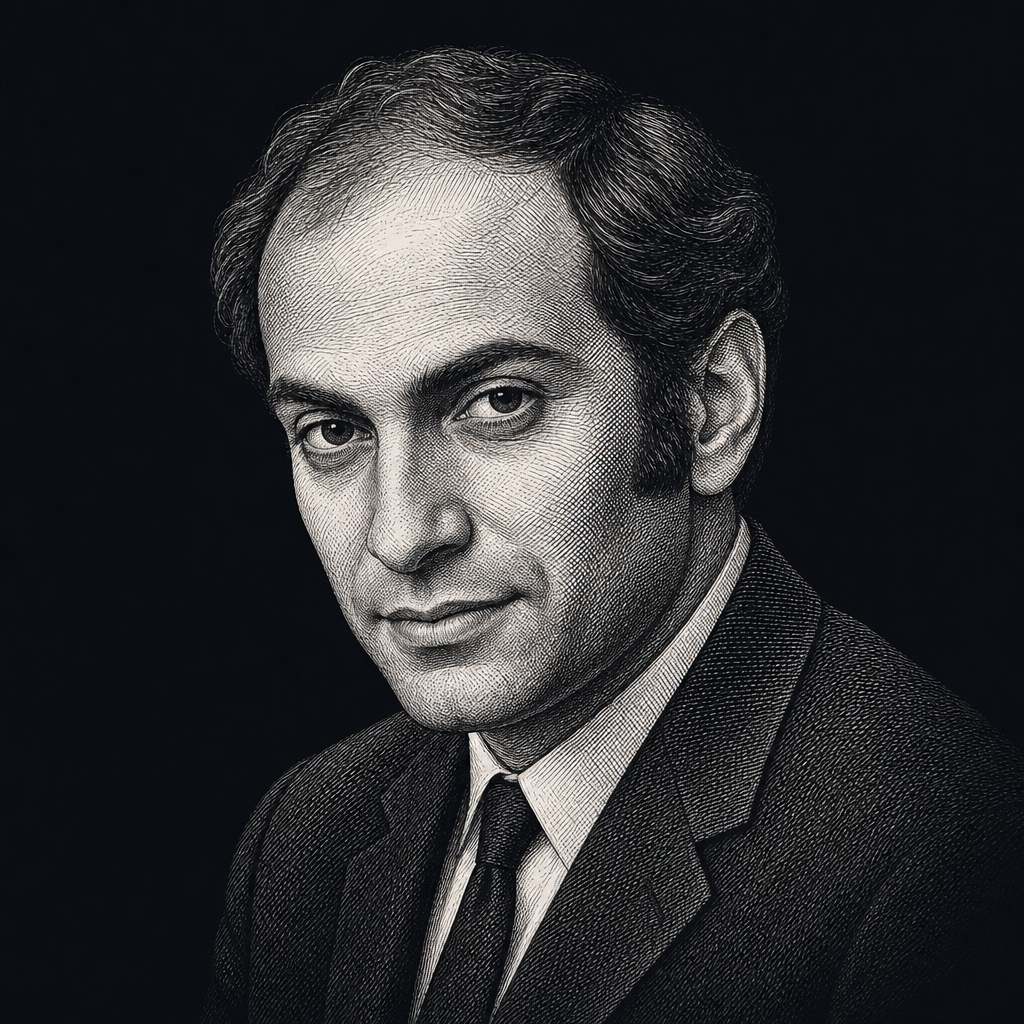
Mikhail Nehemievich Tal was born on November 9, 1936, in Riga, Latvia, then a recently independent state soon absorbed into the Soviet Union. A precocious and famously brilliant child, he learned chess at a young age and combined an extraordinary memory with a restless imagination. He studied literature at the University of Latvia and for a time worked as a schoolteacher, even as his chess talent began to outstrip everyone around him.
Tal burst onto the national stage by winning the Soviet Championship in 1957 at the age of twenty, then an almost unheard-of feat, and retaining it in 1958. His attacking play electrified spectators and bewildered opponents, who found themselves drawn into wild complications they could not calculate to the end. He won the 1958 Interzonal and the 1959 Candidates Tournament — the latter ahead of a field that included the young Bobby Fischer and the experienced Paul Keres — to earn a match for the world title.
In 1960, at the age of twenty-three, Tal defeated the reigning champion Mikhail Botvinnik in Moscow by 12½–8½, becoming the youngest World Champion the game had yet seen. The match was a triumph of dynamism over dogma: Tal's swirling, sacrificial attacks repeatedly overwhelmed the famously rigorous and scientific Botvinnik. His victory made him a folk hero across the Soviet Union and beyond.
His reign was brief. Botvinnik invoked his right to a rematch, and in 1961 — with Tal weakened by the chronic kidney disease that would plague his entire life — the older champion reversed the result decisively, winning 13–8. Tal never again reached a world title match, but he remained a feared and beloved competitor for three more decades, winning the Soviet Championship six times in total and setting an astonishing record unbeaten streak of 95 games in the early 1970s.
Despite ill health, frequent hospitalizations, and a famously bohemian lifestyle, Tal continued to produce dazzling chess into the 1980s, and he won a string of strong tournaments and blitz events late in his career. A gifted writer and editor of the magazine Šahs, he was as celebrated for his wit and warmth as for his combinations. He died in Moscow on June 28, 1992, but his uniquely creative, fearless chess remains among the most admired and most replayed in the game's history.
Playing style
Tal played the most romantic and intuitive attacking chess of the modern era, sacrificing material with abandon to generate initiative, complications, and psychological pressure. He did not always calculate his sacrifices to a forced conclusion; instead he relied on creating positions so chaotic that his opponents, given far more to calculate than he was, would inevitably stumble. This deliberately disorienting approach — dragging an opponent into a thicket of variations where intuition mattered more than precision — made him the most dangerous tactician of his generation and the spiritual heir to the great Romantic masters.
Signature openings
“You must take your opponent into a deep dark forest where 2+2=5, and the path leading out is only wide enough for one.”
— Mikhail Tal, widely attributed
Rivalries & key opponents
- Mikhail Botvinnik
- Tigran Petrosian
- Bobby Fischer
- Viktor Korchnoi
Career highlights
- Won the Soviet Championship for the first time at age 20 (1957)
- Won the Soviet Championship six times across his career (1957–1978)
- Won the Interzonal (1958) and Candidates Tournament (1959)
- Defeated Mikhail Botvinnik to become the 8th World Champion, then the youngest ever (1960)
- Reached a peak FIDE rating of 2705 (1980)
- Set a record unbeaten streak of 95 consecutive games (1973–1974)
- Won multiple Chess Olympiad gold medals as part of the Soviet team
- Renowned as one of the greatest attacking and blitz players in history
Famous games on BetterChess
Tal's Knight Sacrifice vs Larsen (1965)
Mikhail Tal vs Bent Larsen · 1965 · Alekhine Defence
Replay & play ›Tal's Knight Sacrifice (1960)
Mikhail Botvinnik vs Mikhail Tal · 1960 · King's Indian Defence
Replay & play ›Tal's Candidates Brilliancy (1959)
Mikhail Tal vs Vasily Smyslov · 1959 · Caro-Kann Defence
Replay & play ›More players





Biographical summary compiled by BetterChess. BetterChess is a practice tool — we make no guarantee you'll reach 1800 or any rating.
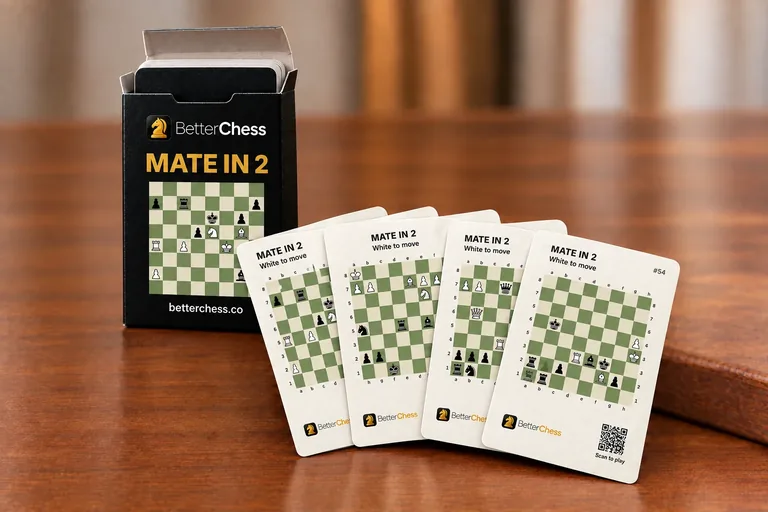
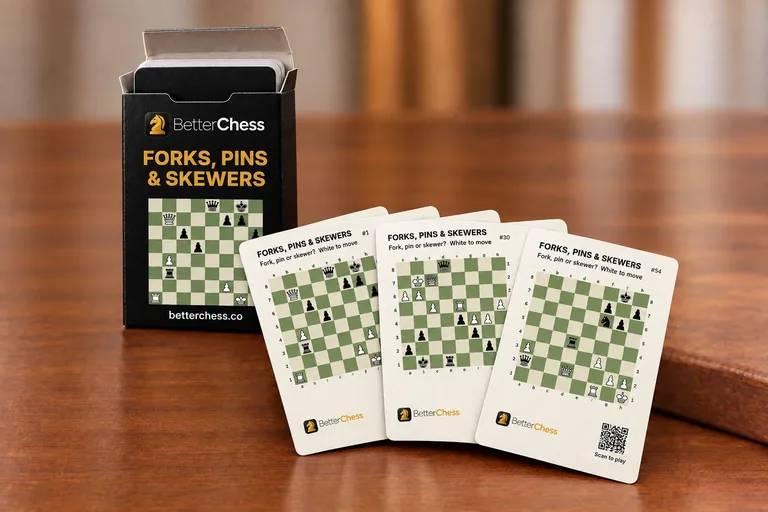
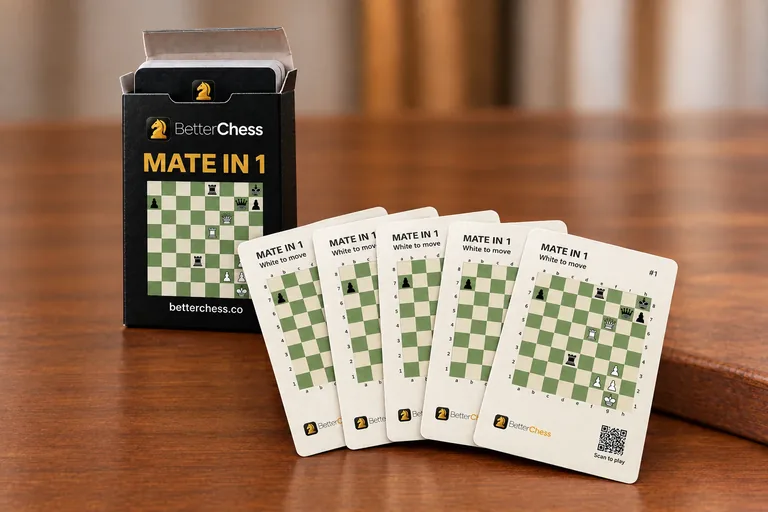
PRINTED CHESS PUZZLE CARDS
Chess puzzle playing card decks
54 poker-size cards in a tuck box. Puzzle on the front, solution on the back.