Savielly Tartakower
“The grandmaster of the chess aphorism”
His witty 'Tartakowerisms,' prolific chess writing, and a hypermodern, all-or-nothing playing style
2700Peak ratingChessmetrics historical estimate
Born–died1887–1956
CountryPoland / France
Active era1905–1953
TitleGrandmaster (1950); chess journalist and author
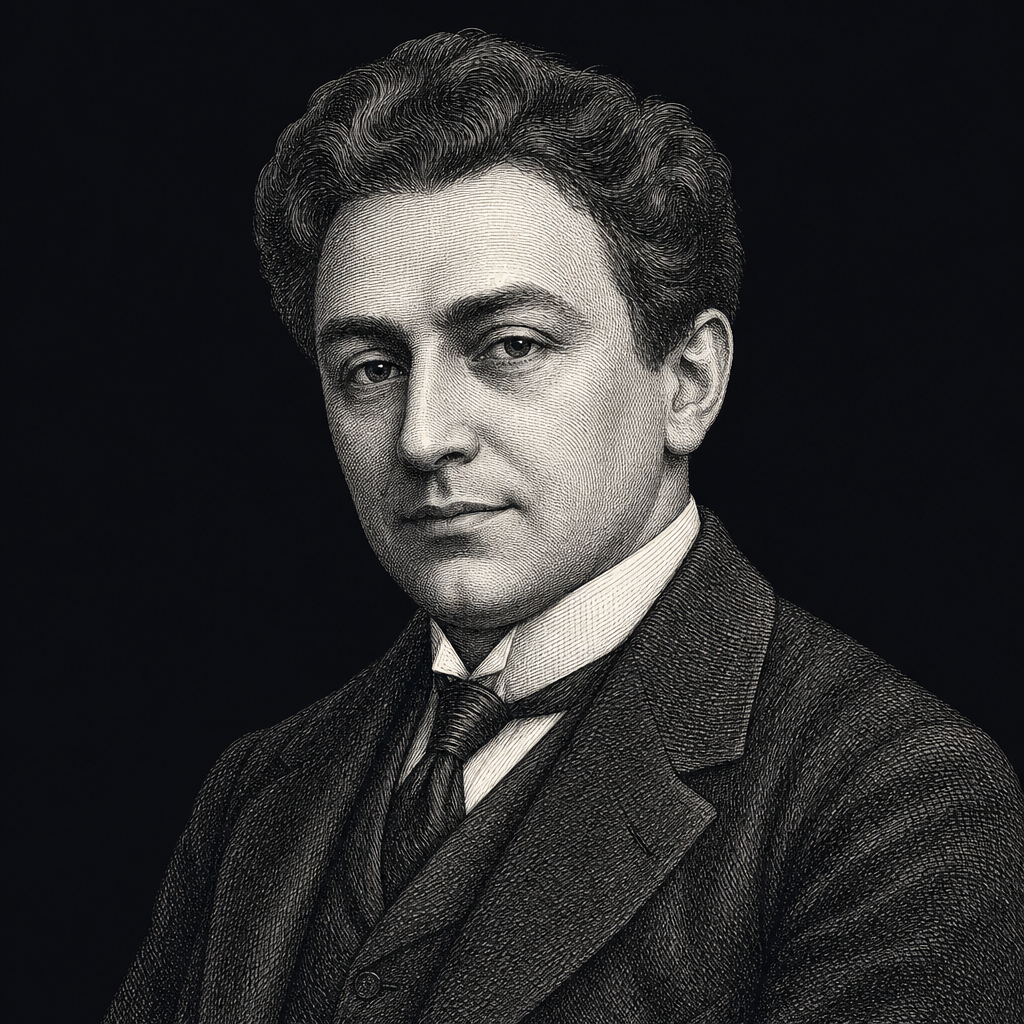
Savielly Tartakower was born on February 21, 1887, in Rostov-on-Don, Russia, to Austrian-Polish Jewish parents. His early life was marked by tragedy: his parents were killed in an anti-Jewish pogrom in 1911. He studied law in Geneva and Vienna and earned a doctorate, but devoted himself increasingly to chess, becoming a central figure of the vibrant Viennese chess scene before the First World War.
Tartakower was one of the most cultured and cosmopolitan masters of his age, fluent in many languages and equally at home as a player, theorist, journalist and wit. Together with Nimzowitsch and Réti he was associated with the hypermodern movement — indeed he coined the very word 'hypermodern' to describe the new approach — and his book Die hypermoderne Schachpartie surveyed the openings and ideas of the era.
As a competitor he was a dangerous, imaginative attacker who relished sharp, double-edged positions and was willing to take great risks in pursuit of the initiative. He won major tournaments including London 1927 and Hastings on multiple occasions, represented Poland with distinction in the Chess Olympiads, helping the team to gold, and remained a formidable opponent into his sixties. In 1950 he was among the first players awarded the International Grandmaster title by FIDE.
He is perhaps best remembered today for his wit. His aphorisms — the 'Tartakowerisms' — are quoted wherever chess is discussed: that the winner is the player who makes the next-to-last mistake, that the blunders are all there on the board waiting to be made, that some part of a mistake is always correct. He wrote prolifically and entertainingly, and his two-volume collection of his own best games is a classic of chess literature.
Tartakower lived in Paris from the 1920s. During the Second World War he joined the Free French forces under the alias 'Lieutenant Cartier,' a striking act of courage for a man already in his fifties. He continued to play and write after the war until his death in Paris on February 4, 1956. He is remembered as a bridge between chess as sport and chess as culture — a master who gave the game some of its most enduring phrases.
Playing style
Tartakower was an inventive, combative and unpredictable player who delighted in offbeat openings and complex, irrational positions where calculation and imagination counted for more than rote knowledge. A natural attacker, he would happily sacrifice material for the initiative and often steered the game into the kind of chaos in which his creativity thrived. This boldness made him brilliant on his day and erratic on others — but rarely dull, and always instructive.
Signature openings
Tartakower Variation, Queen's Gambit DeclinedDutch DefenceCatalan and fianchetto systemsRéti OpeningBird's Opening
“Tactics is knowing what to do when there is something to do; strategy is knowing what to do when there is nothing to do.”
— Savielly Tartakower, widely attributed in chess literature
Rivalries & key opponents
- Richard Réti
- Aron Nimzowitsch
- José Raúl Capablanca
- Rudolf Spielmann
Career highlights
- Among the inaugural recipients of the International Grandmaster title (1950)
- Won the strong London 1927 international tournament
- Multiple-time winner of the Hastings tournament
- Won Olympiad team gold representing Poland
- Coined the term 'hypermodern' and authored Die hypermoderne Schachpartie
- Authored the classic two-volume collection of his 'My Best Games of Chess'
- Served in the Free French forces in WWII as 'Lieutenant Cartier'
- Famous for the 'Tartakowerisms' quoted throughout chess literature
Famous games on BetterChess
Capablanca's Rook Endgame (1924)
José Raúl Capablanca vs Savielly Tartakower · 1924 · Dutch Defence
Replay & play ›Réti vs Tartakower (1910)
Richard Réti vs Savielly Tartakower · 1910 · Caro-Kann Defence
Replay & play ›More players


Biographical summary compiled by BetterChess. BetterChess is a practice tool — we make no guarantee you'll reach 1800 or any rating.
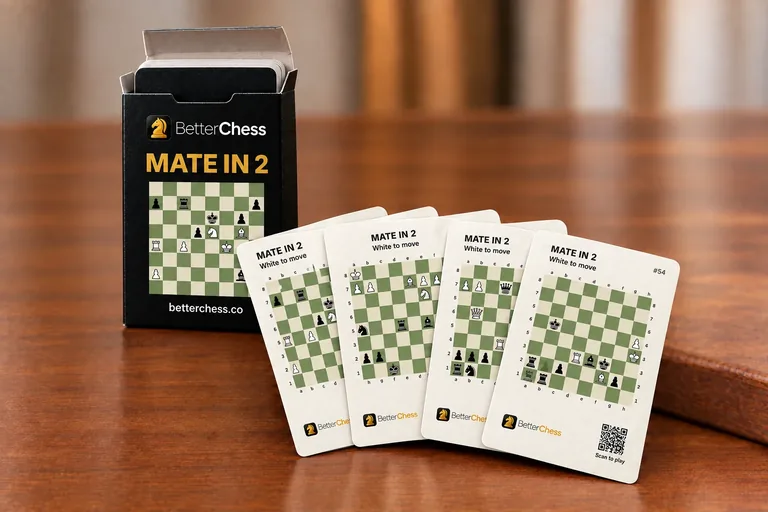
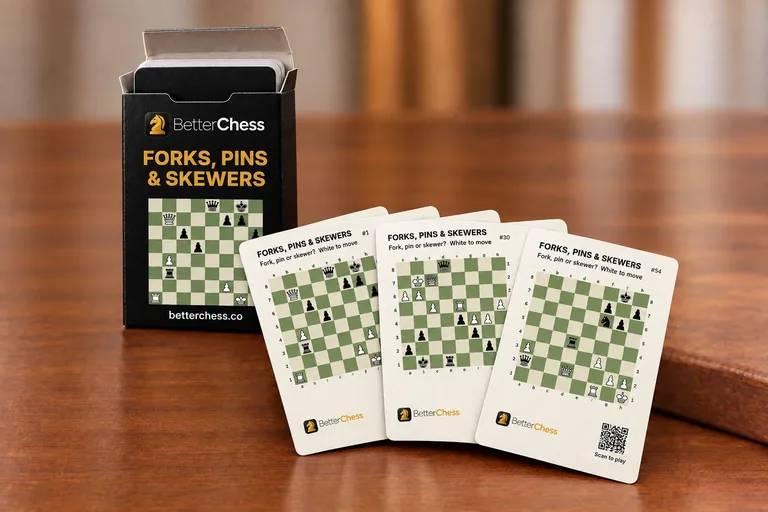
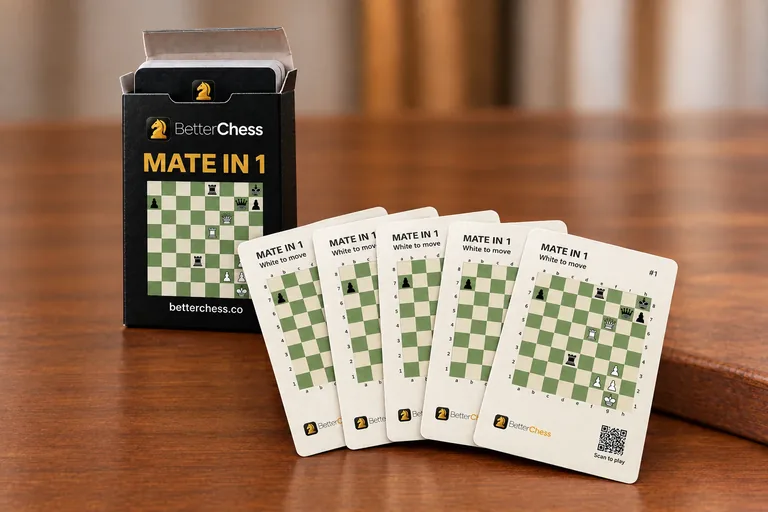
PRINTED CHESS PUZZLE CARDS
Chess puzzle playing card decks
54 poker-size cards in a tuck box. Puzzle on the front, solution on the back.