Capablanca's Rook Endgame (1924)
- White
- José Raúl Capablanca
- Black
- Savielly Tartakower
- Event
- New York
- Year
- 1924
- Result
- 1–0
- Opening
- Dutch Defence
26… Kxe8
White to move. The queens are off and it's a rook ending. Capablanca found the move that activates his rook on the seventh rank and starts the winning plan. Can you find it? (Hint: push the h-pawn.)
Why this game matters
New York, 1924. In an endgame that masters from Réti to Smyslov called one of the finest ever played, José Raúl Capablanca shows that activity outweighs material. He sacrifices pawns to seize the seventh rank, march his king up the board, and queen a passed pawn — a pure lesson in rook-endgame technique.
The lesson
In rook endings, activity beats material. Capablanca gave away pawns without a second thought to get his rook to the seventh rank and his king deep into Black's camp. The active king and the supported passed pawn won, even down material. When you have the initiative in a rook ending, push it — don't cling to pawns.
Move by move
10… Nxc310...Nxc3 11.bxc3 — Capablanca accepts doubled c-pawns, but in return gets the open b-file and a clear plan to seize space.
15. Qh315.Qh3 — Capablanca's queen swings to the kingside, beginning the slow build-up of pressure that will define the game.
25. Qxe8+25.Qxe8+ — Capablanca trades into the rook endgame deliberately. He has judged that his more active pieces will win it.
27. h527.h5! 'This is the calamity,' wrote Alekhine — the rook is about to enter Black's camp via the h-file. Capablanca ignores his own queenside weaknesses.
30. Rh730.Rh7 — the rook reaches the seventh rank, the key to almost every rook ending. From here it ties Black down.
32. g532.g5 — Capablanca offers a pawn. He doesn't care about material; he cares about the passed pawn he will create.
35. Kg335.Kg3! Now the king marches up the board. The plan is the classic winning set-up: king on f6, pawn on g6, rook on h7.
37. g637.g6 — the passed pawn advances under the rook's shelter. Black's pawns, as Alekhine put it, 'tumble like ripe apples.'
39. Kf639.Kf6 — the king reaches its ideal square. Capablanca passes Black's pawns by rather than capturing, staying safe from rook checks behind.
45. g7+45.g7+ — the passed pawn is one step from queening, and the whole position is decided.
52. d652.d6 — the last passed pawn rolls home. Tartakower resigned. Smyslov called it one of the finest rook-and-pawn endgames ever played.
Frequently asked
What's the main endgame lesson?
In rook endings, an active rook and king are worth more than pawns. Capablanca deliberately gave up material to get his rook to the seventh rank and his king to f6, then queened a passed pawn. The principle 'rooks belong behind passed pawns, and activity beats material' is the takeaway.
Why give away pawns when you're trying to win?
Because the pawns bought activity. Each pawn Capablanca conceded let his king or rook get more active, and the resulting passed pawn was unstoppable. Counting only material misses the point in rook endings, where initiative dominates.
Can I try the technique?
Yes — take the board as Capablanca at the start of the rook ending and try to find 27.h5 and the winning plan, or step through the whole endgame, no sign-up.
Similar games
Réti vs Bogoljubov (1924)
Richard Réti vs Efim Bogoljubov · 1924 · Réti / English Opening
Replay & play ›Rubinstein's Endgame Clinic (1912)
Akiba Rubinstein vs Carl Schlechter · 1912 · Queen's Gambit Declined, Semi-Tarrasch
Replay & play ›Fischer's Positional Masterpiece (1972)
Bobby Fischer vs Boris Spassky · 1972 · Queen's Gambit Declined
Replay & play ›Lasker's Strategic Masterpiece (1914)
Emanuel Lasker vs Jose Raul Capablanca · 1914 · Ruy Lopez, Exchange
Replay & play ›Want this on your own games? BetterChess puts a real engine inside Claude, so it finds the moves that actually decided the game instead of listing every inaccuracy.
BetterChess is a practice tool. We make no guarantee you'll reach 1800 or any rating. This is a historical game; the analysis is our own.
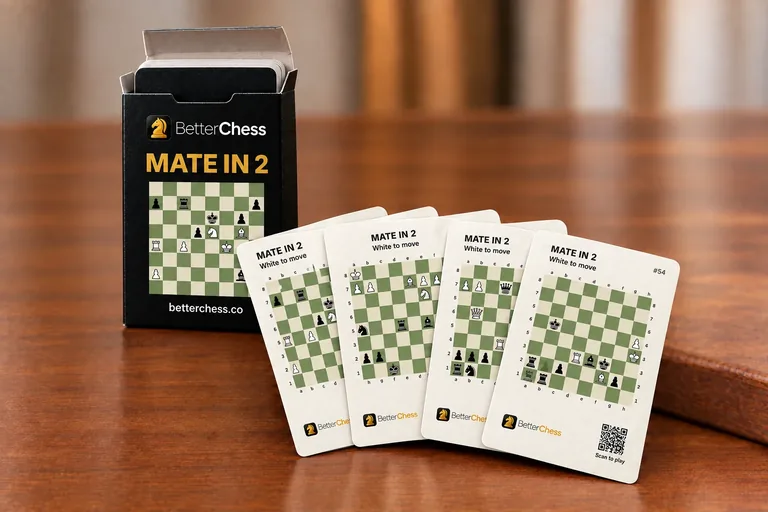
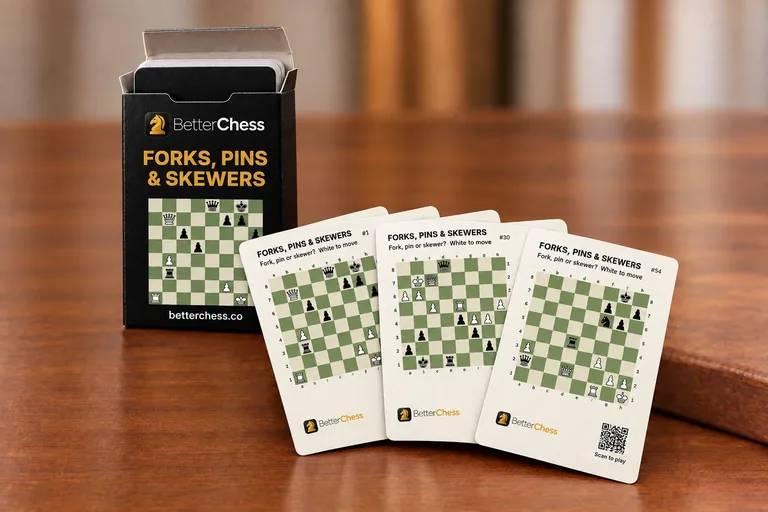
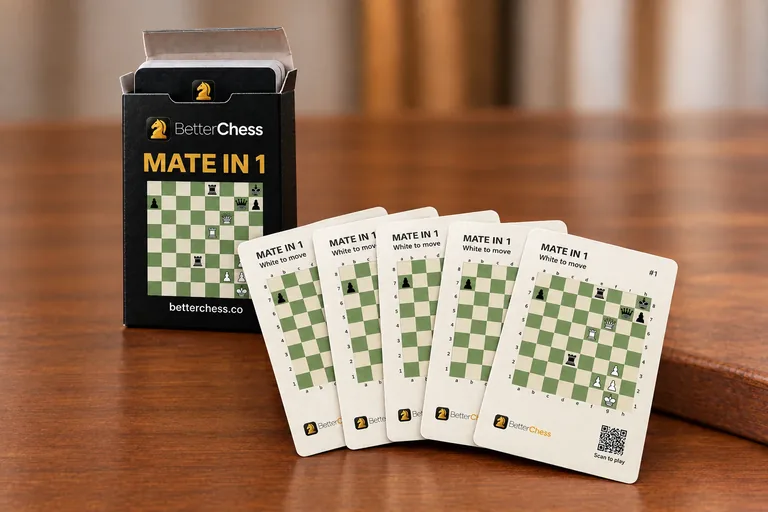
PRINTED CHESS PUZZLE CARDS
Chess puzzle playing card decks
54 poker-size cards in a tuck box. Puzzle on the front, solution on the back.