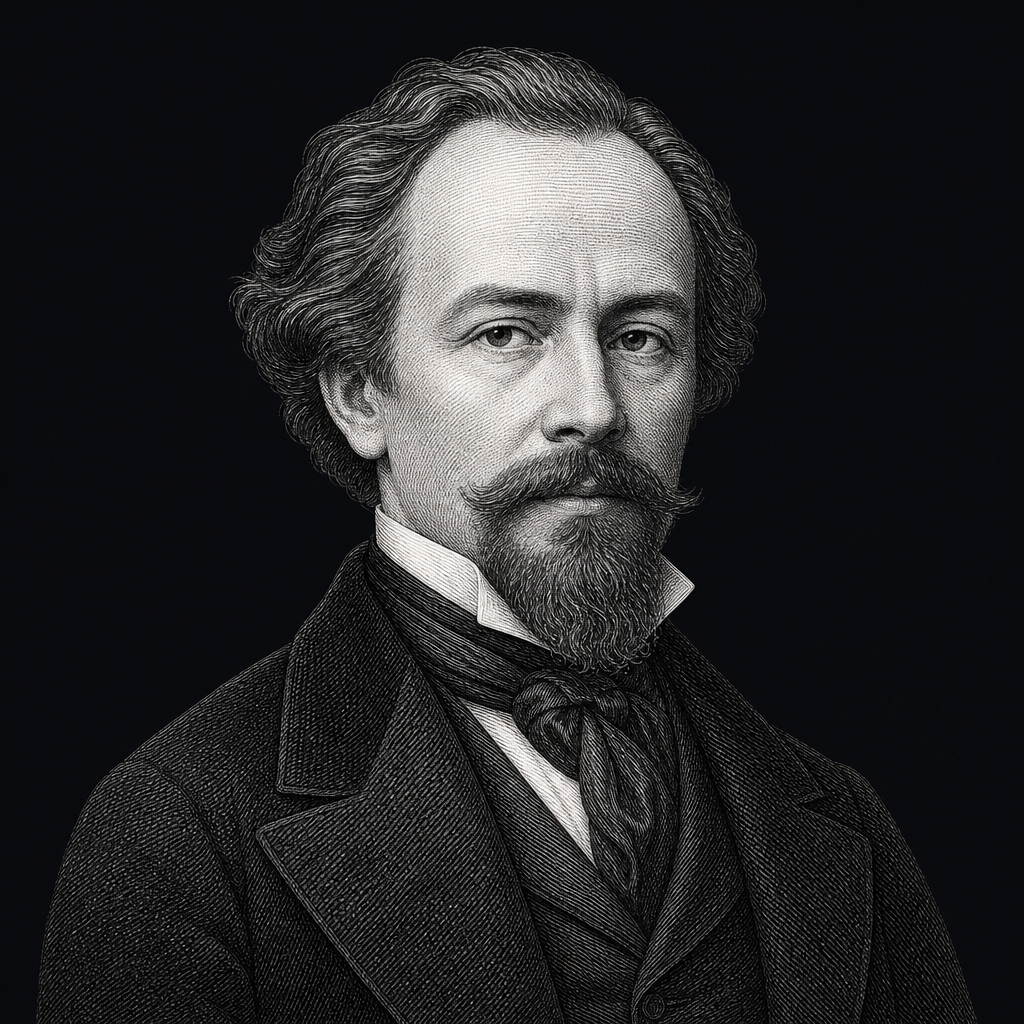
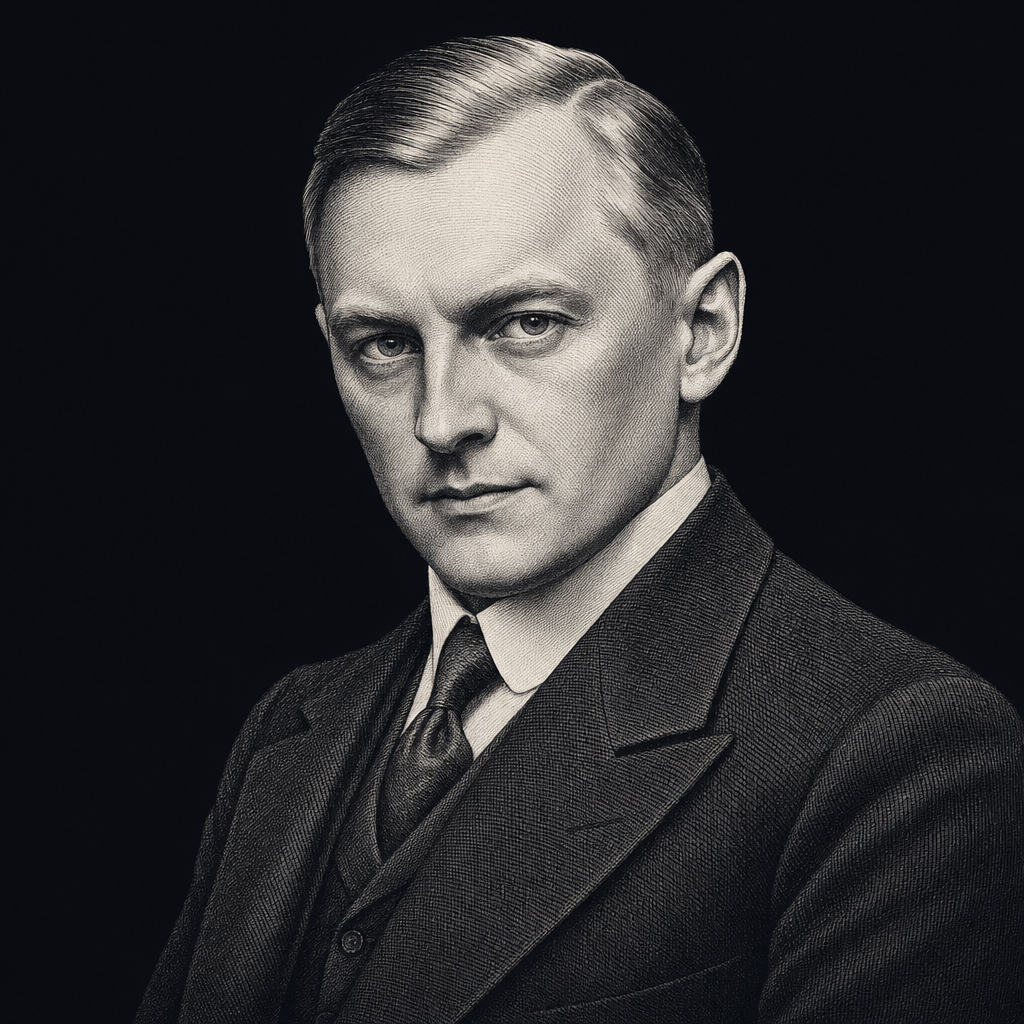
Mikhail Chigorin
“The father of Russian chess”
Founding the Russian chess school and twice challenging Steinitz for the World Championship
2745Peak ratingChessmetrics historical estimate
Born–died1850–1908
CountryRussian Empire
Active era1870s–1907
TitleTwo-time World title challenger (1889, 1892)
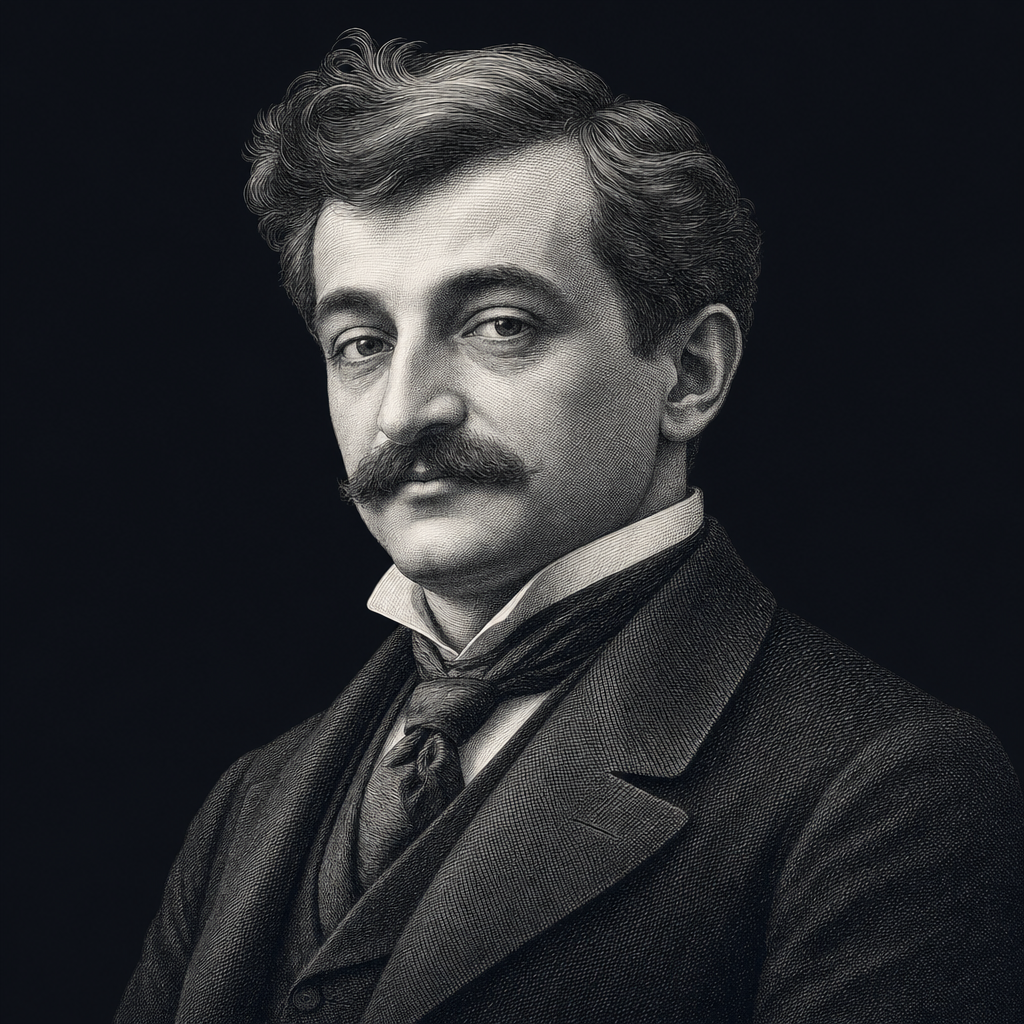
Mikhail Ivanovich Chigorin was born on November 12, 1850, in Gatchina, near St. Petersburg. Orphaned young, he was raised in an orphans' institute and learned the moves only at sixteen, taking the game up seriously around 1874 after completing his education and entering the civil service. His late start makes his subsequent rise all the more remarkable: within a decade he had become the strongest player in Russia and one of the best in the world.
Chigorin devoted himself entirely to chess, abandoning his government post to play, teach, edit and promote the game. He founded chess magazines, organized tournaments, and tirelessly built the infrastructure of Russian chess almost single-handedly. For these efforts he is universally remembered as the father of the Russian — and, by extension, the Soviet — school of chess, the tradition that would dominate the twentieth century.
On the board he was the last great champion of the Romantic style in an age increasingly ruled by Steinitz's positional doctrines. Chigorin loved open, attacking play, original piece manoeuvres and sharp gambits, and he distrusted dogmatic rules. He defended the King's Gambit and the Evans Gambit long after fashion had abandoned them, and his disputes with Steinitz and Tarrasch over chess principles — conducted partly through famous correspondence and 'theme' matches — were a defining intellectual feud of the era.
Twice Chigorin challenged Wilhelm Steinitz for the World Championship, and twice he came agonizingly close. He lost the 1889 match in Havana, then in the 1892 rematch, also in Havana, he pushed Steinitz to the very edge — leading at points and reaching a winning position in the decisive game before a famous one-move blunder, overlooking a mate against himself, handed the title back to the champion. It remains one of the most painful misses in championship history.
Beyond the title matches, Chigorin enjoyed a long and distinguished tournament career, sharing first at New York 1889, winning at Budapest 1896, and triumphing at the inaugural All-Russian Championship. He remained a feared opponent into the new century, even as his beloved Romantic style was eclipsed by the rising generation. His openings — the Chigorin Defence to the Queen's Gambit and the Chigorin Variation of the Ruy Lopez — keep his combative spirit alive in modern play.
Diagnosed with advanced diabetes, Chigorin returned to his family and died on January 25, 1908, in Lublin. He was mourned as the founder of Russian chess, and the strong tradition he built bore extraordinary fruit: the Chigorin Memorial tournament has honoured his name for over a century, and every Russian and Soviet champion stands, in a sense, on his shoulders.
Playing style
Chigorin was the last great representative of the Romantic school, a fierce and imaginative attacker who trusted concrete calculation and piece activity over general rules. He delighted in open positions, original knight manoeuvres, and gambits that most of his contemporaries had abandoned, championing the King's Gambit and the Evans Gambit against the rising tide of positional orthodoxy. He was a superb tactician with a flair for sharp, double-edged middlegames, and his willingness to question Steinitz's and Tarrasch's dogmas — sometimes proving exceptions to their rules over the board — gave his games a creative, combative character that inspired the Russian school he founded.
Signature openings
Chigorin Defence (Queen's Gambit)Evans GambitKing's GambitRuy Lopez (Chigorin Variation)Two Knights Defence
Rivalries & key opponents
- Wilhelm Steinitz
- Siegbert Tarrasch
- Emanuel Lasker
- Harry Nelson Pillsbury
Career highlights
- Became the dominant player in Russia and a world-class master despite learning chess at sixteen
- Shared first place at the great New York tournament (1889)
- Challenged Wilhelm Steinitz for the World Championship (1889)
- Pushed Steinitz to the brink in the World Championship rematch, losing on a famous blunder (1892)
- Won the international tournament at Budapest (1896)
- Won the inaugural All-Russian Championship
- Founded magazines, clubs and tournaments as the organizer of Russian chess
- Gave his name to the Chigorin Defence and the Chigorin Variation of the Ruy Lopez
Famous games on BetterChess
More players




Biographical summary compiled by BetterChess. BetterChess is a practice tool — we make no guarantee you'll reach 1800 or any rating.
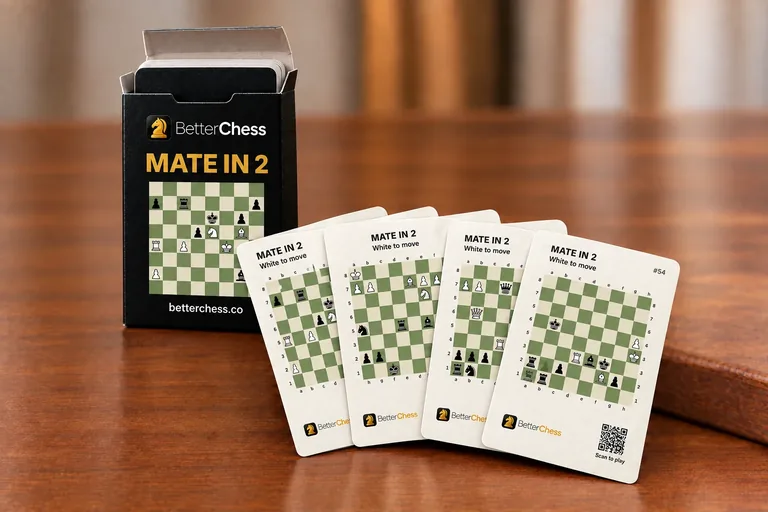
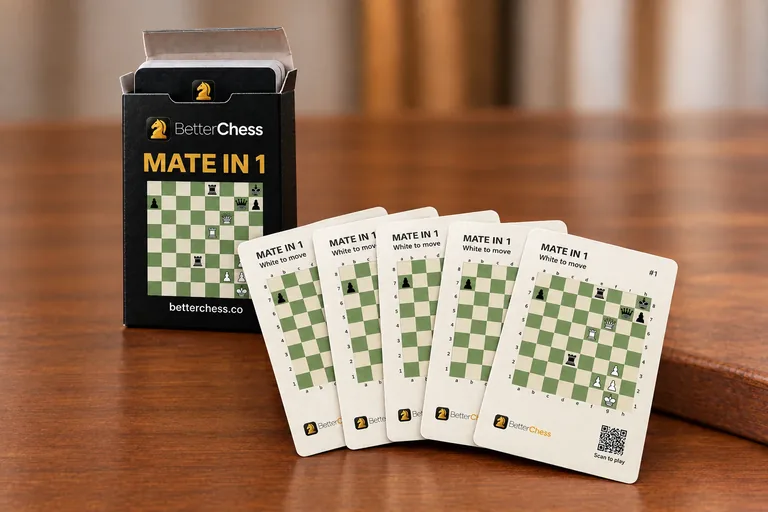
PRINTED CHESS PUZZLE CARDS
Chess puzzle playing card decks
54 poker-size cards in a tuck box. Puzzle on the front, solution on the back.