Chigorin Defense
Starting position
Engine ready — step through to see live evals.
Press ▶ Watch to play the line out, or Next to step through it — the engine evaluates every position.
The Chigorin Defense answers the Queen's Gambit with a nineteenth-century idea that still works: develop pieces as fast as possible, even if it costs a bishop or a clean pawn structure. Mikhail Chigorin used it against the best players of his era, and Alexander Morozevich revived it at the top level a century later. It is offbeat, fully playable, and leads to unbalanced positions where the better-prepared player usually wins.
The idea in one line
Meet the Queen's Gambit with 2...Nc6: develop at top speed, happily give a bishop for a knight to damage White's pawns, and strike with ...e5, betting on piece activity over structure.
Key ideas
- 2...Nc6 breaks the classical rule against blocking the c-pawn, and that is the point: Black wants piece play, not the slow ...c6 or ...e6 structures.
- ...Bg4 and ...Bxf3 is the thematic trade: Black damages White's kingside pawns and removes a defender of d4.
- The freeing break is ...e5: Black opens lines while White is still untangling, justifying the early queen trip to d5.
- The positions are unbalanced by design: bishops and structure for White, knights, activity and initiative for Black. Perfect for making opponents think from move two.
Plans for each side
White: Grab the bishop pair when it is offered, play e3 and Nc3 to gain time on Black's queen, and aim for a stable middlegame where the two bishops and the healthier centre outweigh the doubled f-pawns.
Black: Develop fast and keep the game concrete: ...Bg4, ...Bxf3 and ...Qxd5, then the ...e5 break and ...Bb4 to pin, trade and keep White's structure damaged. Castle quickly and play against the doubled pawns before White's bishops open up.
Common mistakes to avoid
- This is a defence of activity: develop slowly and you keep all the structural minuses with none of the dynamic pluses.
- Know the point of each trade: giving up both bishops without damaging White's structure or winning time just leaves you worse.
- As White, trying to refute the Chigorin outright usually backfires; simple development and the bishop pair promise a pleasant game without risk.
The main line, explained
2… Nc6...Nc6, the Chigorin move: a piece comes out at once, even though it blocks the c-pawn. Activity over structure is the theme of the whole defence.
3… Bg4...Bg4 pins the knight that guards d4. Black develops with threats, not preparation.
4. cxd5cxd5, the main test: White grabs the pawn and hopes to gain time on the recapturing queen.
4… Bxf3...Bxf3, the committal trade: Black gives the bishop to double White's f-pawns before recapturing on d5.
5. gxf3gxf3 accepts the doubled pawns but gains the half-open g-file and keeps the bishop pair.
5… Qxd5...Qxd5 regains the pawn. The queen looks exposed, but Black is ready to meet Nc3 with the pin ...Bb4.
6… e5...e5, the thematic strike: Black opens the centre immediately, insisting that piece activity, not structure, will decide.
Frequently asked
Is the Chigorin Defense sound?
It is playable and much sounder than its reputation. Engines give White a small edge with precise play, as in most defences, but Morozevich used it successfully against elite grandmasters. At club level its surprise value and clear activity-first plan are worth a lot.
Why does Black give up the bishop pair so early?
Each trade comes with a concrete gain: doubled f-pawns, a tempo, or faster development. The Chigorin bets that active knights and open lines matter more than bishops in the kind of positions it creates, and in practical play that bet pays off often.
Who should play the Chigorin?
Players who want a fight against the Queen's Gambit without memorizing heavy theory. If you like open piece play, quick development and early original positions, it fits. If you prefer solid structures, the Queen's Gambit Declined or the Slav suits you better.
More openings to explore
Queen's Gambit
Queen's Pawn (1.d4) · D06–D69
Learn & play ›Tarrasch Defense
Black vs 1.d4 · D32-D34
Learn & play ›Knowing the moves of the Chigorin Defense is not the same as knowing why they work. Use Claude? BetterChess gives it a real engine, so it explains this opening from the board in front of you instead of from memory.
BetterChess is a practice tool — we make no guarantee you'll reach 1800 or any rating. The lines here are standard, well-established opening theory, and every move is checked legal with the same engine the board runs.
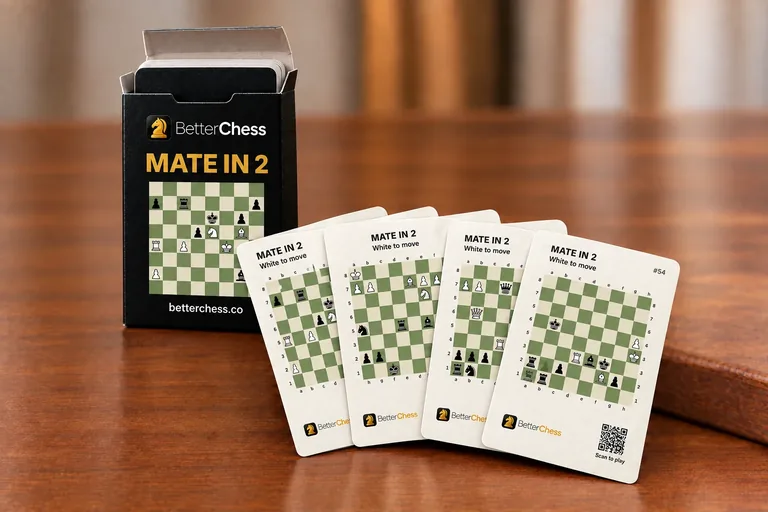
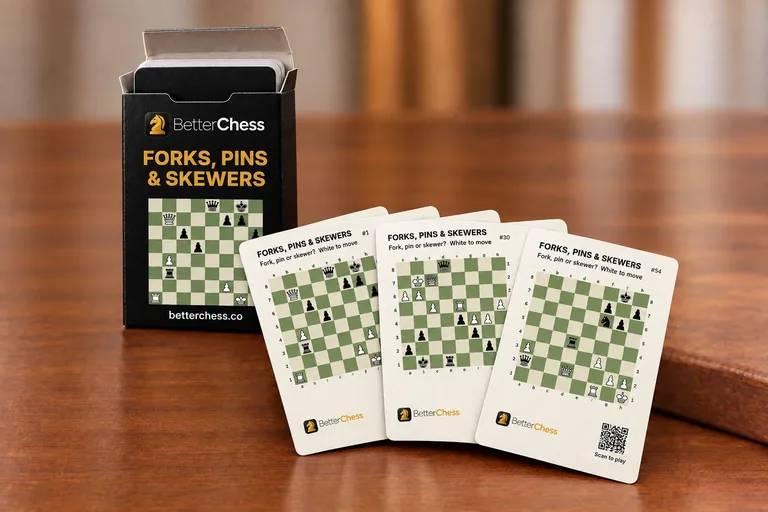
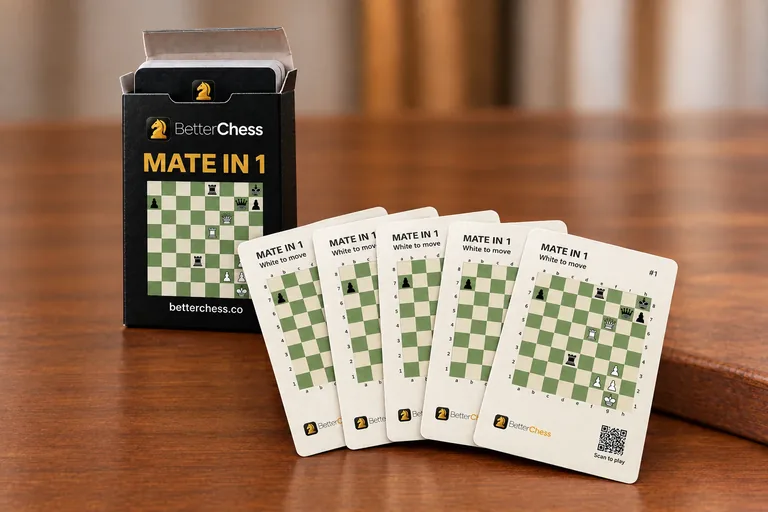
PRINTED CHESS PUZZLE CARDS
Chess puzzle playing card decks
54 poker-size cards in a tuck box. Puzzle on the front, solution on the back.