Joseph Henry Blackburne
“The Black Death — grand old man of British chess”
A 50-year career as Britain's leading player, fearsome attacking brilliancies and legendary blindfold displays
2748Peak ratingChessmetrics historical estimate (peak, 1886)
Born–died1841–1924
CountryEngland
Active erac. 1859–1914
TitleLeading world master (1870s–1880s); British great
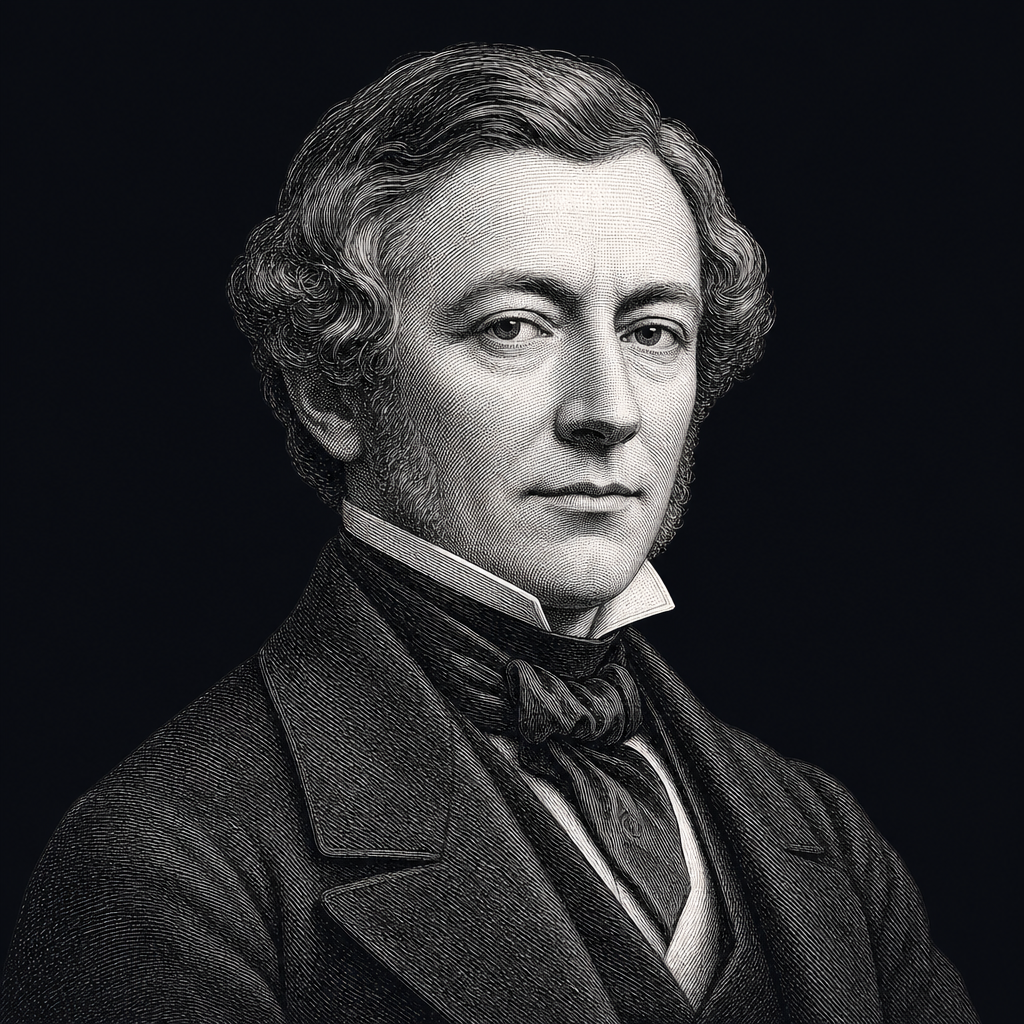
Joseph Henry Blackburne was born on December 10, 1841, in Manchester, England. He came to chess late, learning the moves at seventeen or eighteen after hearing of Paul Morphy's exploits during the American's European tour. Within a few years the largely self-taught Lancastrian had become one of the strongest players in the country, and soon one of the most feared attackers in the world.
Blackburne combined a sharp tactical eye with relentless attacking energy and remarkable practical resilience, and was regularly ranked among the world's top five players from the early 1870s into the late 1880s, an era dominated by Steinitz, Zukertort and the leading German and English masters. It was at the great Vienna tournament of 1873 that German commentators, struck by his black beard and the relentless, deadly nature of his attacking play, gave him the nickname 'der Schwarze Tod' — 'the Black Death' — which followed him for the rest of his life.
His tournament record was formidable. He won the British championship in the 1868–69 season, tied for first with Steinitz at Vienna 1873 (losing the play-off), won London 1876 with the crushing score of 10/11, and triumphed at Berlin 1881 ahead of a strong field, among many other strong results across a career that spanned more than half a century. He was, for decades, simply the leading British player and a fixture at every major international event.
Blackburne was also one of the greatest blindfold players the game has known. Inspired by an exhibition from Louis Paulsen, he developed his blindfold skill until he could conduct numerous games at once without sight of the boards, and he toured Britain for years giving simultaneous and blindfold displays that helped popularize chess among the public. He kept performing such feats into his sixties.
He was famous above all for his combinative gifts and his skill in the endgame. He won numerous brilliancy prizes for spectacular attacking games, and even his rival Steinitz praised one of his efforts as 'among the finest efforts of chess genius.' He was also, however, on the receiving end of one of the most celebrated games ever played, falling victim to Zukertort's Immortal at London 1883 — testament to the strength of the company he kept at the top of the game.
A genial, witty character fond of a glass of whisky at the board — he once joked that it improved his play — Blackburne became a beloved institution. His longevity was extraordinary: in 1914, at the age of seventy-two, he won a Special Brilliancy Prize for a victory over the young Aron Nimzowitsch at the great St. Petersburg tournament, and that same year he shared first place in the British Championship.
He died of a heart attack on September 1, 1924, in London, at the age of eighty-two, after a playing career of more than sixty years. Remembered as the grand old man of British chess, Blackburne left behind a treasury of brilliant attacking games and a reputation as one of the great popularizers and competitors of the classical age.
Playing style
Blackburne was a quintessential attacking player of the classical age, a sharp tactician whose aggressive, enterprising style earned him the grim nickname 'the Black Death.' Largely self-taught, he relied on a keen eye for combinations, dangerous initiative and great practical fighting spirit rather than deep theoretical preparation, and he was at his most dangerous in open, tactical positions where his imagination could run free. Yet he was also one of the finest endgame players of his era, able to win technical positions with great precision. He was one of history's finest blindfold players, able to hold many games in his head at once, and his remarkable competitive longevity — winning brilliancy prizes into his seventies — testified to both his talent and his love of the game.
Signature openings
Rivalries & key opponents
- Wilhelm Steinitz — tied for first at Vienna 1873 (lost the play-off); frequent rival
- Johannes Zukertort — opponent in Zukertort's Immortal (London 1883)
- Henry Bird — many matches and tournament games across decades
- Mikhail Chigorin
- Siegbert Tarrasch
Career highlights
- Won the British Chess Championship (1868–69)
- Ranked among the world's top five players for nearly two decades (1870s–1880s)
- Tied for first with Wilhelm Steinitz at Vienna 1873 (lost the play-off)
- Won the London international tournament with 10/11 (1876)
- Won the strong Berlin tournament (1881)
- Won numerous brilliancy prizes for his attacking games
- One of the greatest blindfold players in history, touring Britain with simultaneous displays
- Won a Special Brilliancy Prize for beating Nimzowitsch at St. Petersburg, aged 72 (1914)
- Shared first place in the British Championship (1914)
- Sustained a top-class competitive career spanning more than sixty years
Famous games on BetterChess
Zukertort's Immortal (1883)
Johannes Zukertort vs Joseph Blackburne · 1883 · English Opening
Replay & play ›Blackburne vs Schwarz (1881)
Joseph Blackburne vs Jacques Schwarz · 1881 · French Defence, Exchange Variation
Replay & play ›More players



Biographical summary compiled by BetterChess. BetterChess is a practice tool — we make no guarantee you'll reach 1800 or any rating.
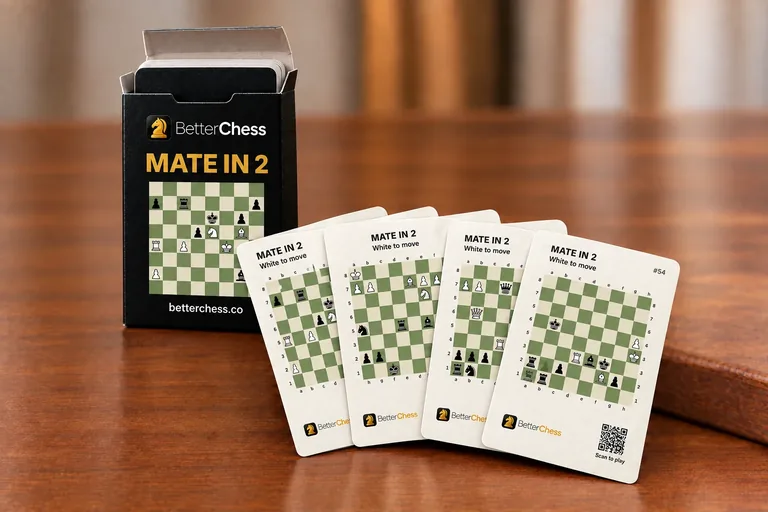
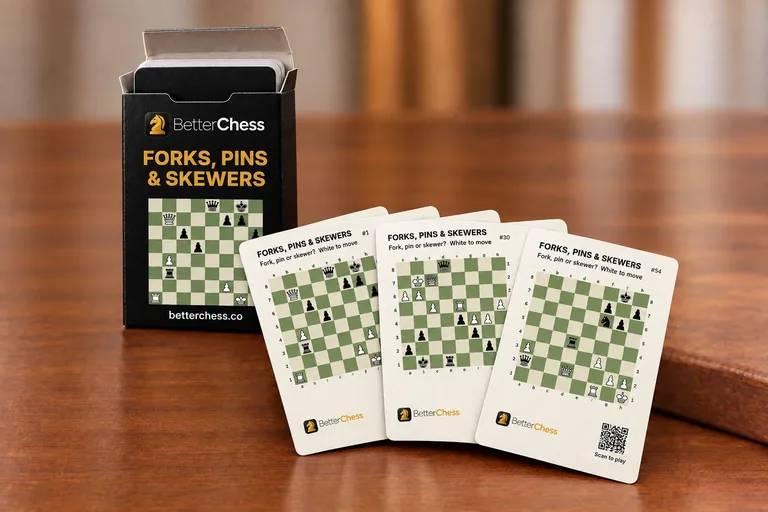
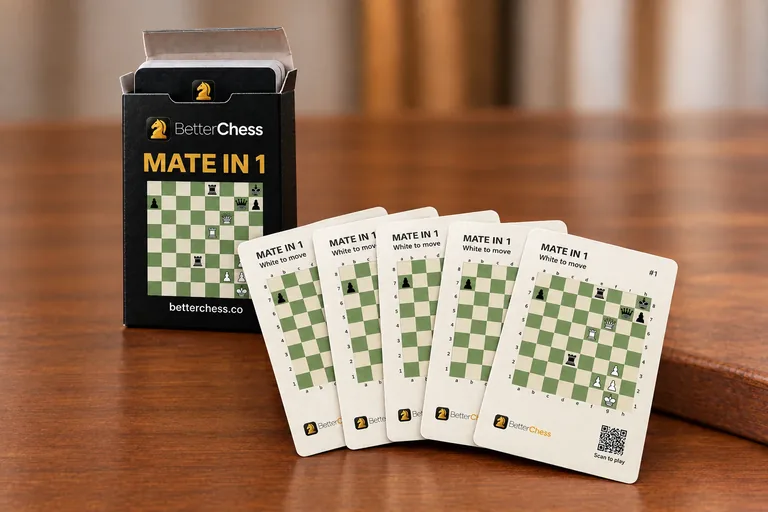
PRINTED CHESS PUZZLE CARDS
Chess puzzle playing card decks
54 poker-size cards in a tuck box. Puzzle on the front, solution on the back.