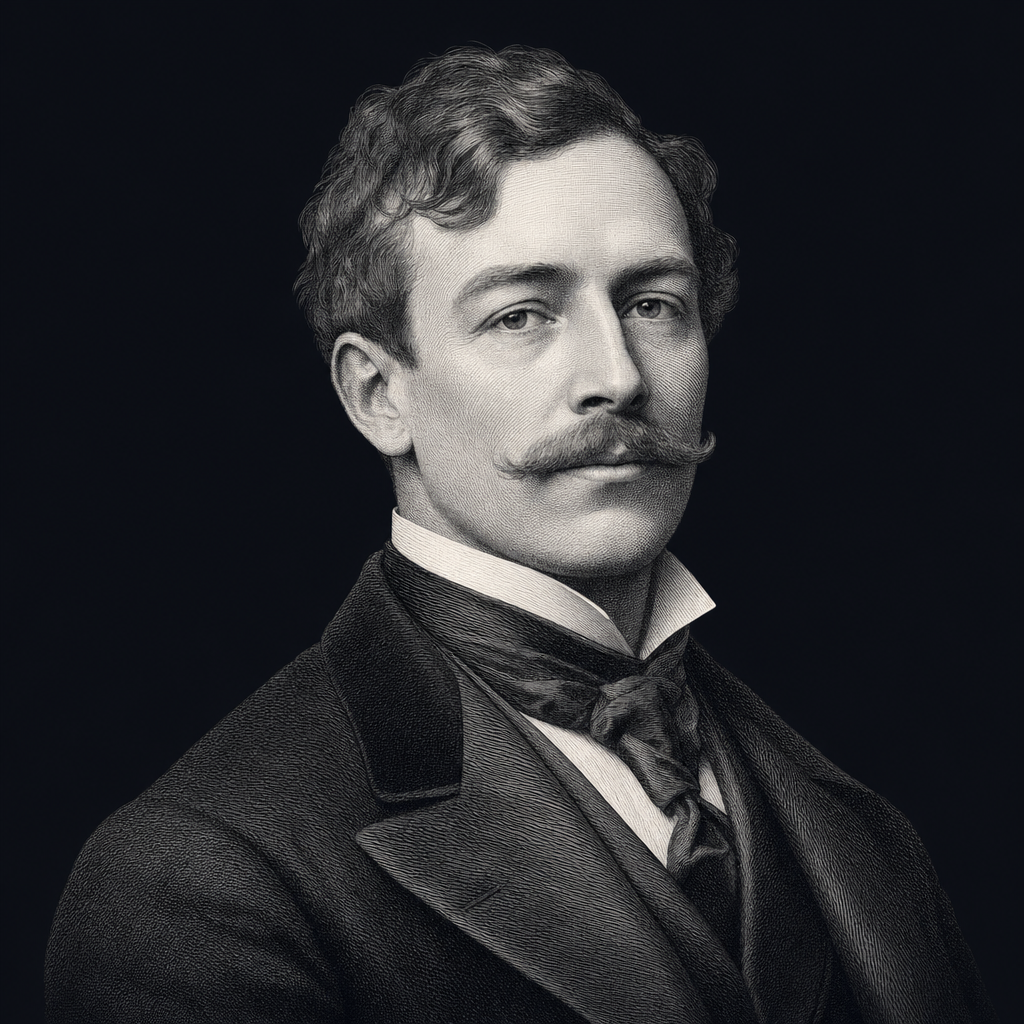
Frank Marshall
“The great American swashbuckler”
His dazzling tactics, the Marshall Attack, and the 'gold coins' move 23...Qg3!!
2734Peak ratingChessmetrics historical estimate
Born–died1877–1944
CountryUnited States
Active erac. 1893–1944
TitleGrandmaster; U.S. Champion (1909–1936)
Frank James Marshall (10 August 1877 – 9 November 1944) was an American chess master, born in New York City and raised partly in Montreal. He learned the game at ten and was among the leading players in Montreal by his early teens, going on to become one of the world's strongest players in the early twentieth century.
Marshall won the great Cambridge Springs tournament of 1904 ahead of World Champion Emanuel Lasker, and in 1909 he won the U.S. Championship — a title he would hold for an astonishing 27 years, until he voluntarily relinquished it to a championship tournament in 1936. He played title matches against both Lasker (1907) and the young Capablanca (1909), losing both but recognising and championing Capablanca's genius.
He finished fifth at the legendary St Petersburg tournament of 1914, behind Lasker, Capablanca, Alekhine and Tarrasch but ahead of Rubinstein, Nimzowitsch and others. According to his autobiography, Tsar Nicholas II conferred the title 'Grandmaster' on the five finalists, though chess historians have questioned the story.
In 1915 Marshall founded the Marshall Chess Club in New York, which remains one of the most famous chess clubs in the world. He captained the United States team to four gold medals at the Chess Olympiads in the 1930s, and was renowned for the 'Marshall swindle' — his magical ability to rescue lost positions with a sudden trick.
Several openings bear his name, most importantly the Marshall Attack in the Ruy Lopez and the Marshall Gambit in the Semi-Slav. But he is loved above all for the 'gold coins' game against Stepan Levitsky at Breslau 1912, which he finished with 23...Qg3!! — a move so beautiful that, by legend, spectators showered the board with gold pieces.
Playing style
Marshall was a brilliant, fearless tactician in the romantic tradition of Morphy, forever seeking attacking chances and complications. He was equally famous for his swindling resourcefulness in difficult positions and, less obviously, for a fine endgame technique.
Signature openings
“The hardest thing in chess is to win a won game.”
— Frank Marshall
Rivalries & key opponents
- Emanuel Lasker
- José Raúl Capablanca
Career highlights
- Won the Cambridge Springs International (1904), ahead of World Champion Lasker
- U.S. Chess Champion (1909–1936)
- World Championship challenger against Lasker (1907) and Capablanca (1909)
- Founded the Marshall Chess Club, New York (1915)
- Captained the U.S. team to four Olympiad gold medals (1930s)
- Originated the Marshall Attack and the Marshall Gambit
- Black in the 'gold coins' game with the famous 23...Qg3!! (Breslau 1912)
Famous games on BetterChess
Marshall's Gold Coins Game (1912)
Stepan Levitsky vs Frank Marshall · 1912 · Queen's Pawn Game
Replay & play ›The Pipe Game (1900)
Frank Marshall vs Amos Burn · 1900 · Queen's Gambit Declined
Replay & play ›Capablanca Refutes the Marshall (1918)
Jose Raul Capablanca vs Frank Marshall · 1918 · Ruy Lopez, Marshall Attack
Replay & play ›More players





Biographical summary compiled by BetterChess. BetterChess is a practice tool — we make no guarantee you'll reach 1800 or any rating.
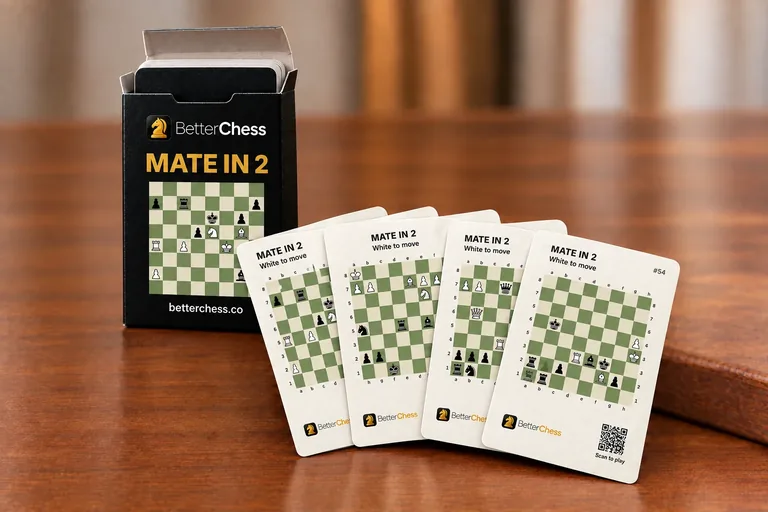
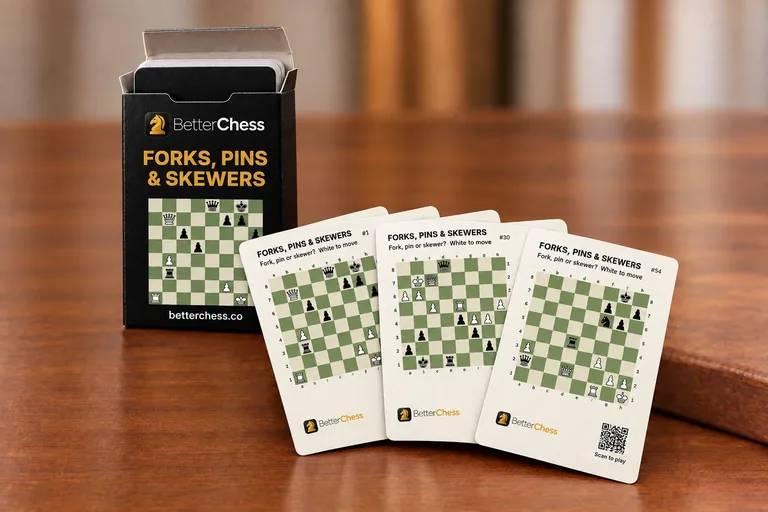
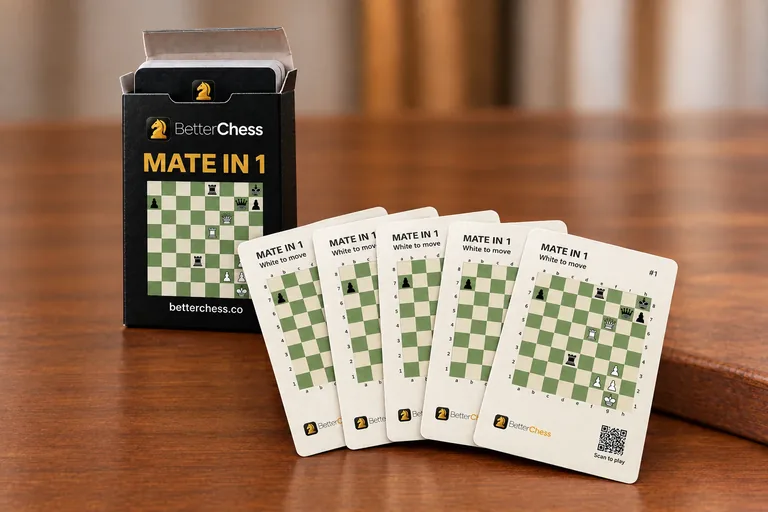
PRINTED CHESS PUZZLE CARDS
Chess puzzle playing card decks
54 poker-size cards in a tuck box. Puzzle on the front, solution on the back.