Semi-Slav Defense
Starting position
Engine ready — step through to see live evals.
Press ▶ Watch to play the line out, or Next to step through it — the engine evaluates every position.
The Semi-Slav is one of the most respected defenses to 1.d4: Black builds the pawn triangle c6, d5 and e6 and gets a position that is rock solid and secretly very sharp. It combines the Slav's sturdy grip on d5 with the Queen's Gambit Declined's ...e6, and it hides famous fighting systems like the Meran and the Botvinnik. World champions from Botvinnik to Anand have trusted it in matches with everything at stake.
The idea in one line
Build the c6-d5-e6 triangle, keep d5 rock solid, then free your game with a well-timed ...dxc4 and ...b5: the Meran plan that turns solidity into a queenside attack.
Key ideas
- The triangle of c6, d5 and e6 guards d5 twice with pawns: White cannot force the centre open, so Black decides when the game sharpens.
- The one real cost is the c8-bishop, shut in behind e6; the entire opening is a plan to free it, usually via ...dxc4, ...b5 and ...Bb7.
- Timing is the skill: Black delays ...dxc4 until White's bishop has gone to d3, so the recapture Bxc4 costs White a full tempo.
- The Meran (...dxc4 and ...b5) turns the solid wall into a queenside pawn storm; the races between White's centre and Black's queenside are some of the richest positions in chess.
Plans for each side
White: Develop with Nc3, Nf3, e3 and Bd3, recapture on c4, then push e4 to build the big centre the triangle was designed to restrain; meet ...b5 and ...c5 with central action before the queenside pawns start rolling.
Black: Hold d5 with the triangle, develop ...Nbd7, capture on c4 exactly when it gains a tempo, then expand with ...b5, ...Bb7 and the ...c5 break: the freed bishop and the queenside majority are the payoff.
Common mistakes to avoid
- Don't release the tension early: ...dxc4 before White's bishop commits lets White play Bxc4 in one move instead of two, handing back the tempo the whole plan is built on.
- The c8-bishop must not stay buried: if the freeing plan (...b5 and ...Bb7, or a timely ...e5) never arrives, Black is just cramped with no compensation.
- As White, respect the b-pawn: once ...b5-b4 starts rolling, slow play loses the race; the antidote is energetic central action with e4 and e5.
The main line, explained
2… c6...c6 is the Slav move: a second pawn guards d5 so the centre cannot be forced open.
4… e6...e6 completes the Semi-Slav triangle. Black is extremely solid; the cost is the c8-bishop, and freeing it becomes the whole plan.
5… Nbd7...Nbd7 develops flexibly, supports both the ...e5 and ...c5 breaks, and waits for White's bishop to commit itself.
6. Bd3Bd3 is natural development, and it is also the cue Black has been waiting for.
6… dxc4...dxc4 at exactly the right moment: the bishop just moved, so recapturing costs White a full tempo.
7… b5...b5 is the Meran. Black grabs queenside space and prepares ...Bb7 and ...c5; the freed bishop justifies the entire setup.
Frequently asked
Is the Semi-Slav solid or sharp?
Both, and that is its charm. The triangle structure is one of the hardest in chess to attack, yet the main lines (Meran, Botvinnik) are among the sharpest known. Black chooses the temperature.
What is the difference between the Slav and the Semi-Slav?
The Slav plays ...c6 and gets the c8-bishop out (often to f5) before ...e6. The Semi-Slav plays ...e6 early, locking that bishop in but supporting a faster ...dxc4 and ...b5 plan.
Do I have to learn the Botvinnik Variation?
No. The razor-sharp Botvinnik only arises if White plays Bg5 and you answer with ...dxc4. Meeting Bg5 with the solid ...h6 (the Moscow) keeps you in far calmer waters.
Famous games in the Semi-Slav Defense
- Anand's Immortal (2013): Levon Aronian vs Viswanathan Anand
More openings to explore
Slav Defense
Black vs 1.d4 · D10–D19
Learn & play ›Queen's Gambit Declined
Black vs 1.d4 · D30–D69
Learn & play ›Knowing the moves of the Semi-Slav Defense is not the same as knowing why they work. Use Claude? BetterChess gives it a real engine, so it explains this opening from the board in front of you instead of from memory.
BetterChess is a practice tool — we make no guarantee you'll reach 1800 or any rating. The lines here are standard, well-established opening theory, and every move is checked legal with the same engine the board runs.
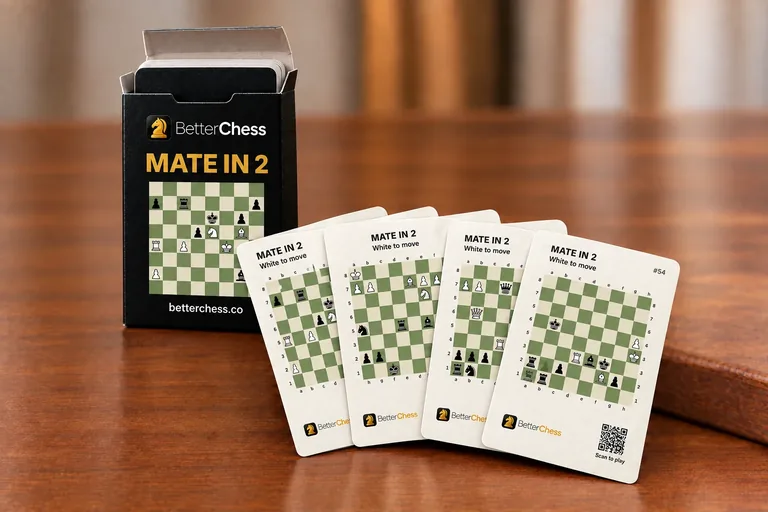
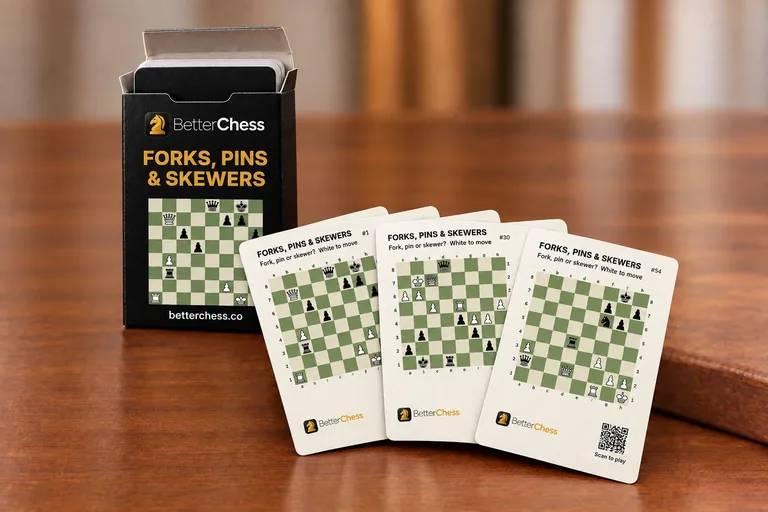
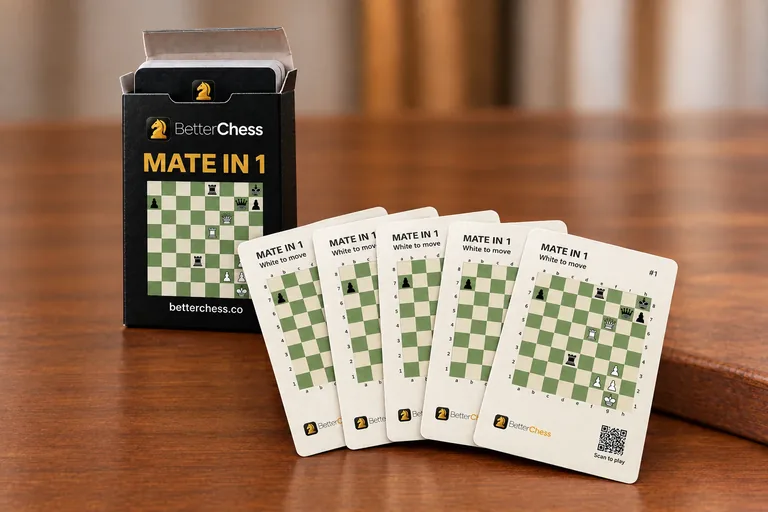
PRINTED CHESS PUZZLE CARDS
Chess puzzle playing card decks
54 poker-size cards in a tuck box. Puzzle on the front, solution on the back.