Boris Spassky
“The universal player and Cold War icon”
Losing the 1972 'Match of the Century' to Bobby Fischer at the height of the Cold War
2690Peak ratingpeak FIDE rating (1971)
World #1late 1960s–early 1970s
Born–died1937–2025
CountrySoviet Union / France
Active era1947–1990s
Title10th World Champion (1969–1972)
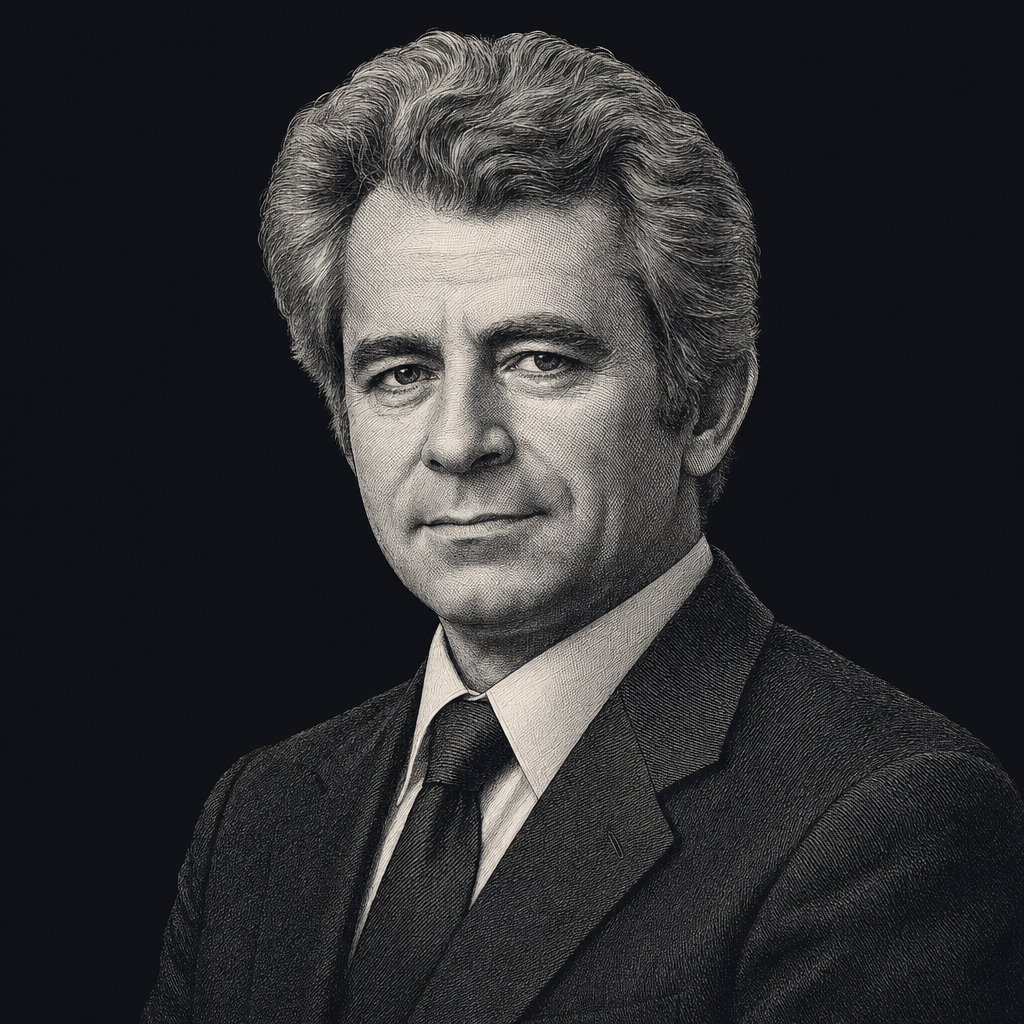
Boris Vasilyevich Spassky was born on January 30, 1937, in Leningrad. His childhood was shaped by the trauma of the Second World War, including evacuation during the siege of his home city, but his chess talent emerged early and strikingly. He learned the game at five, and as a teenager he became, in 1955, the world's youngest grandmaster up to that time and a finalist in the World Junior Championship.
Spassky earned a reputation as a 'universal' player, equally at home in sharp tactical battles and quiet positional maneuvering, and free of the stylistic dogma that limited many of his peers. After a frustrating period in the late 1950s and early 1960s when he twice narrowly missed qualifying for the world title cycle, he matured into a formidable match player, defeating a procession of elite grandmasters in the Candidates events of the 1960s.
He earned his first crack at the title in 1966, losing a close match to the reigning champion Tigran Petrosian. Undeterred, he won the next Candidates cycle and challenged Petrosian again in 1969, this time prevailing to become the 10th World Champion. His blend of versatility, deep opening preparation, and competitive toughness made him a worthy holder of the crown.
His reign is forever defined by the 1972 World Championship match against the American Bobby Fischer in Reykjavik. Billed as the 'Match of the Century' and freighted with Cold War symbolism as a Soviet versus an American, it became a global media spectacle. Fischer's erratic behavior nearly derailed the contest before it began — he forfeited the second game and threatened to withdraw — but Spassky, in a celebrated gesture of sportsmanship, agreed to continue. Fischer ultimately won 12½–8½, ending 24 years of unbroken Soviet hold on the title.
Spassky returned home to a chilly reception and a sense of official disfavor, and in 1976 he emigrated to France, later taking French citizenship and competing under its flag. He played the famous 1992 'revenge' rematch against Fischer in Yugoslavia and remained an admired elder statesman of the game for decades. He once remarked that he felt relief rather than grief at losing the title, having set down a heavy burden. Spassky died in Moscow on February 27, 2025, at the age of 88.
Playing style
Spassky was the archetypal universal player, able to switch fluidly between fierce attacking chess and patient positional grinding according to what the position and the opponent demanded. In his prime he was a superb practical player with formidable opening preparation — the King's Gambit and aggressive systems featured among his weapons — yet he could equally outplay opponents in dry, technical endings. This adaptability, combined with his psychological resilience as a match player, made him exceptionally difficult to prepare against and one of the most well-rounded champions in chess history.
Signature openings
Ruy LopezKing's GambitSicilian DefenseNimzo-Indian DefenseTartakower Variation, Queen's Gambit Declined
“You can't imagine how relieved I was when Fischer took the title off me. Honestly, I don't recall that day as unhappy. On the contrary, I've thrown off a very strong burden and breathed freely.”
— Boris Spassky, on losing the 1972 match to Bobby Fischer
Rivalries & key opponents
- Bobby Fischer
- Tigran Petrosian
- Anatoly Karpov
- Viktor Korchnoi
Career highlights
- Became the world's youngest grandmaster at the time, aged 18 (1955)
- Challenged for the World Championship, losing narrowly to Petrosian (1966)
- Defeated Tigran Petrosian to become the 10th World Champion (1969)
- Reached a peak FIDE rating of 2690 (1971)
- Contested the 1972 'Match of the Century' against Bobby Fischer in Reykjavik
- Won multiple Soviet Championships and numerous Chess Olympiad medals
- Emigrated to France and competed under its flag from the late 1970s
- Played the 1992 rematch against Bobby Fischer in Yugoslavia
Famous games on BetterChess
Petrosian's Championship Immortal (1966)
Tigran Petrosian vs Boris Spassky · 1966 · King's Indian / Fianchetto
Replay & play ›Spassky's King's Gambit (1960)
Boris Spassky vs David Bronstein · 1960 · King's Gambit
Replay & play ›Fischer's Positional Masterpiece (1972)
Bobby Fischer vs Boris Spassky · 1972 · Queen's Gambit Declined
Replay & play ›More players



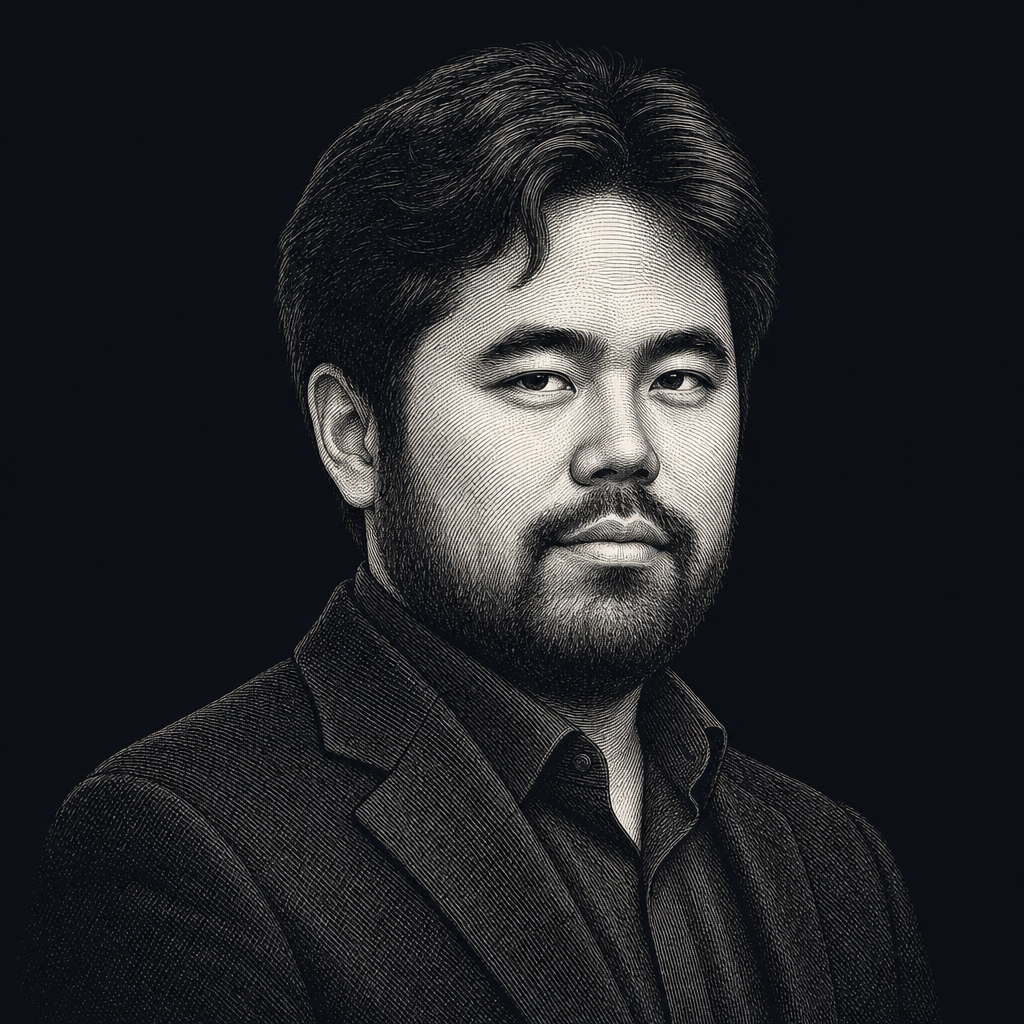
Biographical summary compiled by BetterChess. BetterChess is a practice tool — we make no guarantee you'll reach 1800 or any rating.
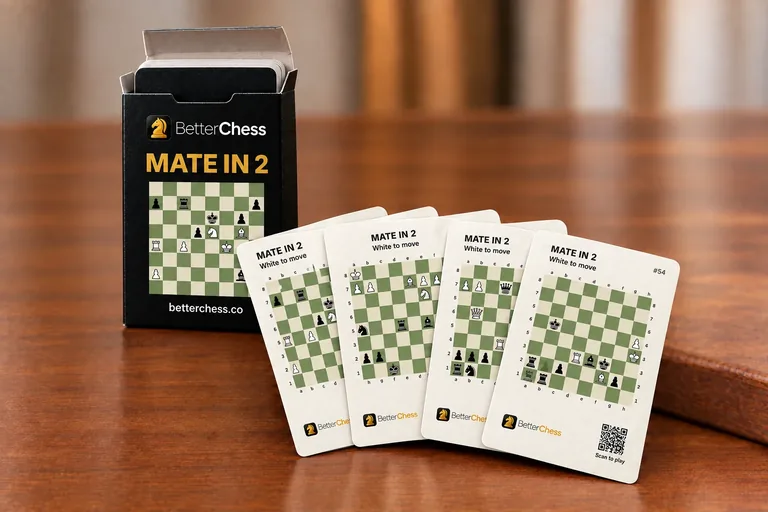
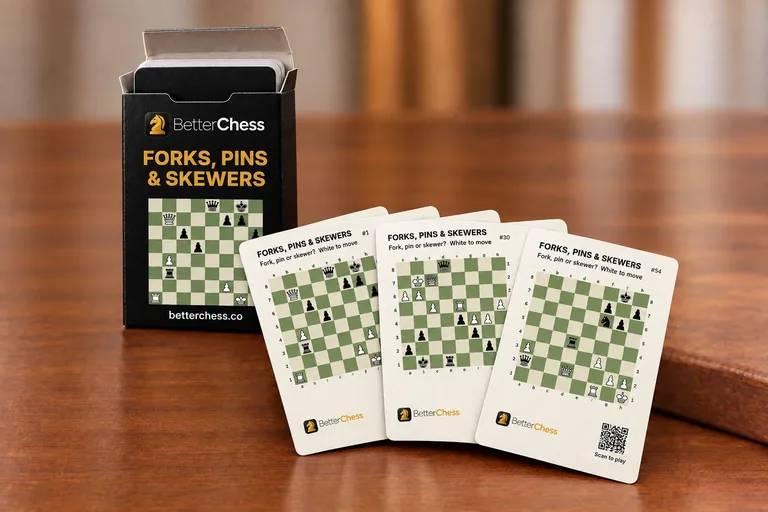
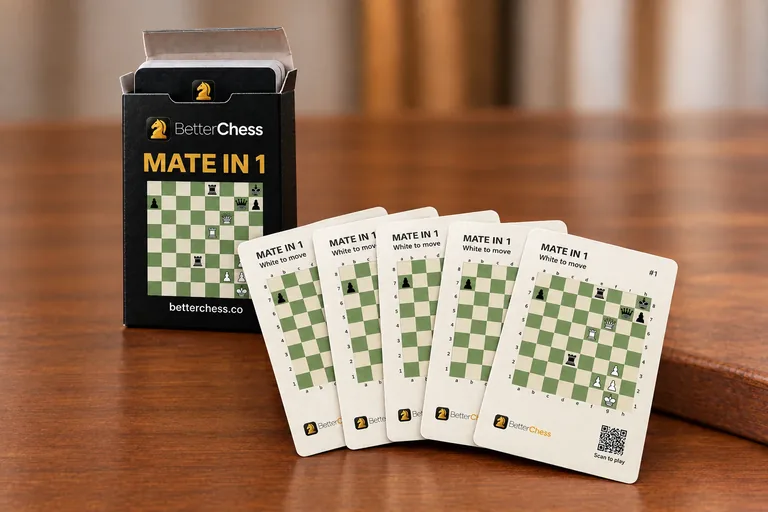
PRINTED CHESS PUZZLE CARDS
Chess puzzle playing card decks
54 poker-size cards in a tuck box. Puzzle on the front, solution on the back.