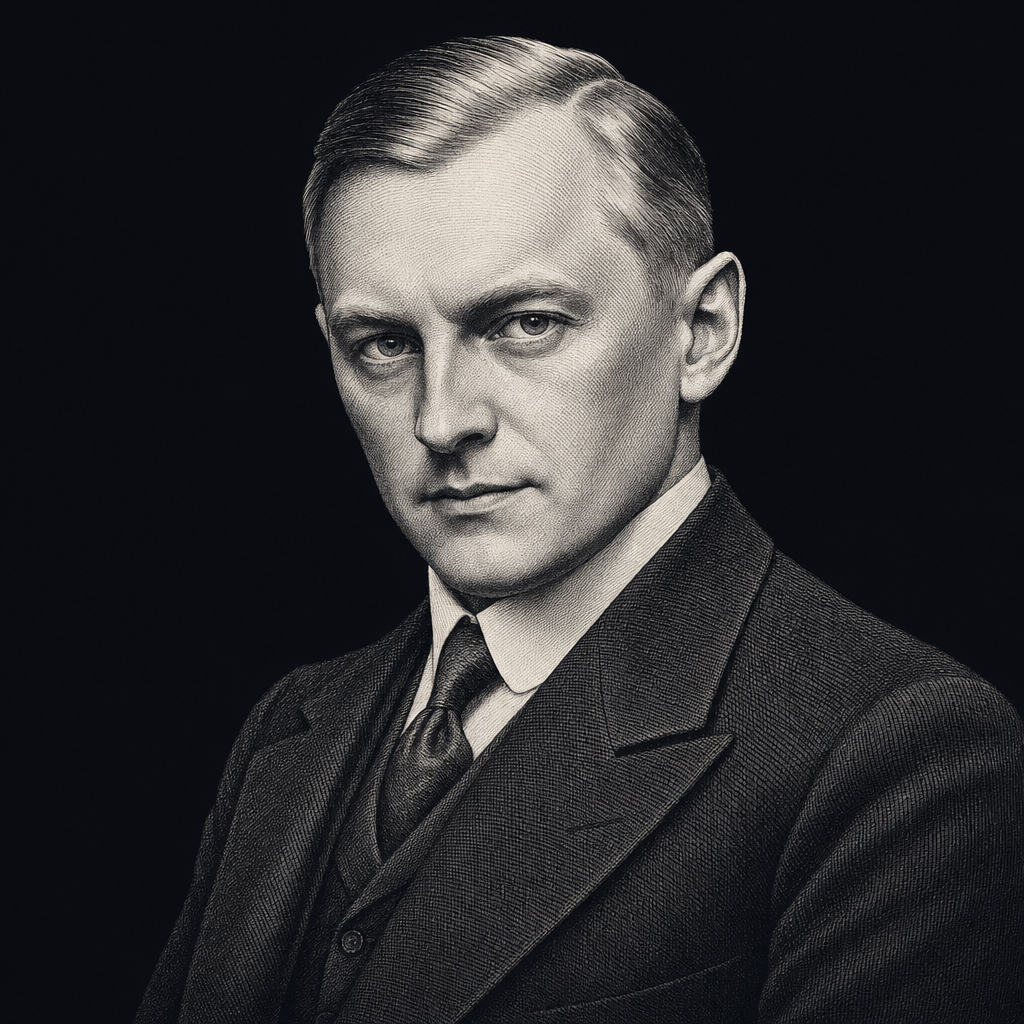
Aron Nimzowitsch
“The prophet of the hypermodern revolution”
Author of 'My System' and the founder of hypermodern strategic theory
2785Peak ratingChessmetrics historical estimate
Born–died1886–1935
CountryLatvia / Denmark
Active era1904–1934
TitleGrandmaster; leading theorist of hypermodern chess
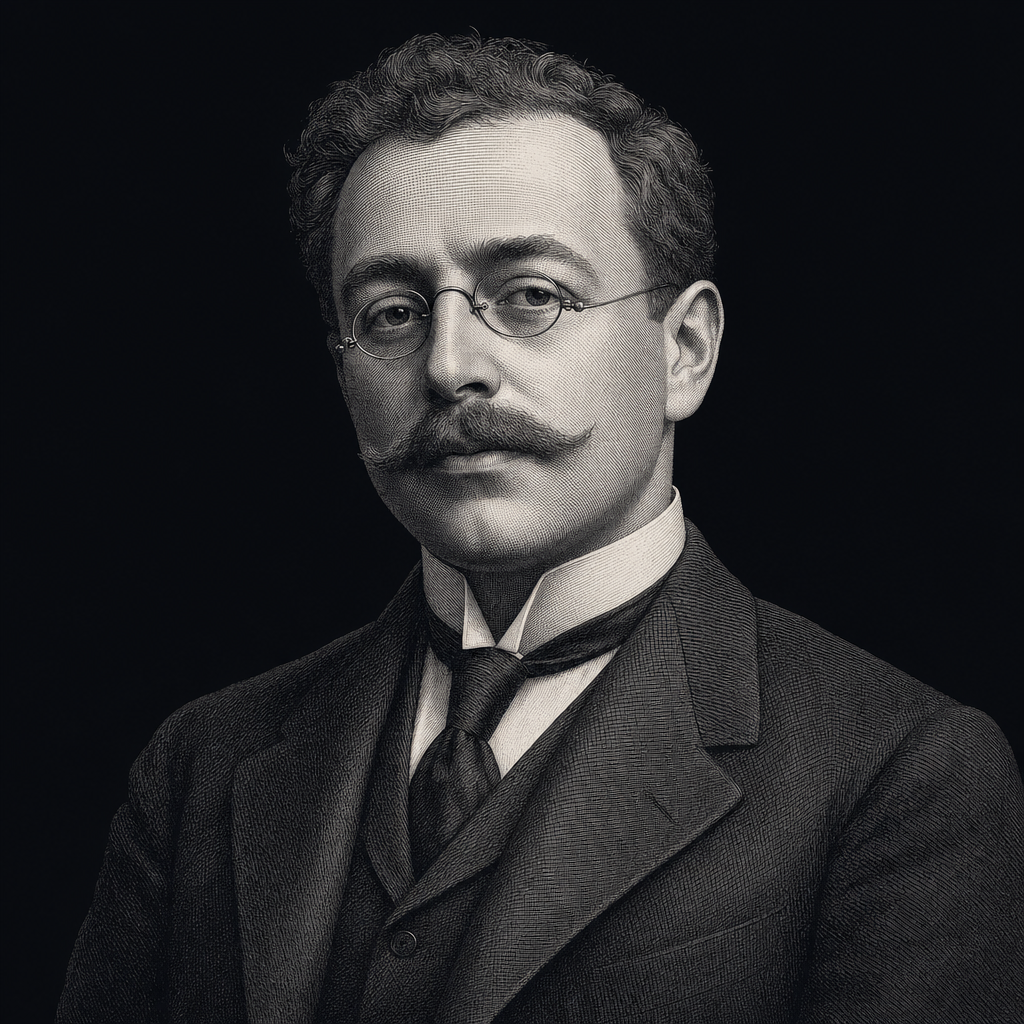
Aron Nimzowitsch was born on November 7, 1886, in Riga, then part of the Russian Empire, into a prosperous Jewish merchant family. His father, himself a strong amateur player, taught him the game as a boy, and Nimzowitsch showed early talent before being sent to Germany ostensibly to study, where chess soon eclipsed every other pursuit. By his late teens he was competing in master tournaments, and he spent the years before the First World War establishing himself among the strongest players in Europe.
What set Nimzowitsch apart was not merely his results but his ideas. Reacting against the rigid classical doctrine of Siegbert Tarrasch — which insisted on early occupation of the centre with pawns — Nimzowitsch became the foremost theorist of the 'hypermodern' school, arguing that the centre could be controlled from a distance with pieces and then undermined. His concepts of the blockade, prophylaxis, overprotection, the passed pawn's 'lust to expand,' and play against and along open files reshaped how chess was understood.
He set these ideas down in two of the most influential chess books ever written: My System (1925) and Chess Praxis (1929). Written in a vivid, combative, often eccentric style, they turned strategy into a teachable system and have been studied by ambitious players ever since. Few books have shaped the strategic understanding of generations of masters so profoundly.
As a competitor Nimzowitsch reached his peak in the late 1920s, when he was widely regarded as one of the two or three best players in the world behind Alexander Alekhine and José Raúl Capablanca. His greatest tournament triumphs came at Dresden in 1926 and, above all, at Carlsbad in 1929, a marathon event he won ahead of an elite field. He felt, with some justification, that he deserved a shot at the World Championship, a match that financial and political circumstances never allowed.
Nimzowitsch settled in Copenhagen after the war and became a fixture of Danish chess. His health declined in the early 1930s, and he died of pneumonia on March 16, 1935, at just 48. He left behind a body of theory so durable that the openings bearing his name — the Nimzo-Indian Defence above all — remain among the most respected in the game, and 'My System' is still in print nearly a century on.
Playing style
Nimzowitsch played a deeply original positional game built on restraint rather than confrontation. He would provoke and then blockade enemy pawns, overprotect his own key points, and manoeuvre his pieces to dominate squares his opponent could not contest — often accepting cramped or unusual-looking positions in the certainty that they were strategically sound. His handling of prophylaxis, preventing the opponent's plans before launching his own, was decades ahead of its time, and his masterpieces frequently ended not in a mating attack but in total positional paralysis.
Signature openings
Nimzo-Indian DefenceNimzowitsch Defence (1.e4 Nc6)Queen's Indian DefenceFrench DefenceNimzo-Larsen Attack (1.b3)
“The passed pawn is a criminal, who should be kept under lock and key. Mild measures, such as police surveillance, are not sufficient.”
— Aron Nimzowitsch, 'My System' (1925)
Rivalries & key opponents
- Siegbert Tarrasch
- Alexander Alekhine
- José Raúl Capablanca
- Akiba Rubinstein
Career highlights
- Won the great Carlsbad international tournament (1929)
- Won Dresden (1926) ahead of an elite field
- Won Marienbad (1925, shared) and London (1927)
- Authored My System (1925), one of the most influential chess books ever written
- Authored Chess Praxis (1929), expanding his strategic theories
- Founded the hypermodern school of strategic thought alongside Réti and Tartakower
- Originated the Nimzo-Indian Defence, still a mainstay of elite chess
- Ranked among the top two or three players in the world in the late 1920s
Famous games on BetterChess
The Immortal Zugzwang Game (1923)
Friedrich Sämisch vs Aron Nimzowitsch · 1923 · Queen's Indian Defence
Replay & play ›Alekhine vs Nimzowitsch (1930)
Alexander Alekhine vs Aron Nimzowitsch · 1930 · French Defence (Winawer)
Replay & play ›More players






Biographical summary compiled by BetterChess. BetterChess is a practice tool — we make no guarantee you'll reach 1800 or any rating.
PRINTED CHESS PUZZLE CARDS
Chess puzzle playing card decks
54 poker-size cards in a tuck box. Puzzle on the front, solution on the back.