Siegbert Tarrasch
“Praeceptor Germaniae — the Teacher of Germany”
Codifying classical chess strategy as the most influential teacher of his era
2785Peak ratingChessmetrics historical estimate
World #1early 1890s (arguably the world's strongest active player)
Born–died1862–1934
CountryGermany
Active era1880s–1920s
TitleWorld title challenger (1908); leading master and theoretician
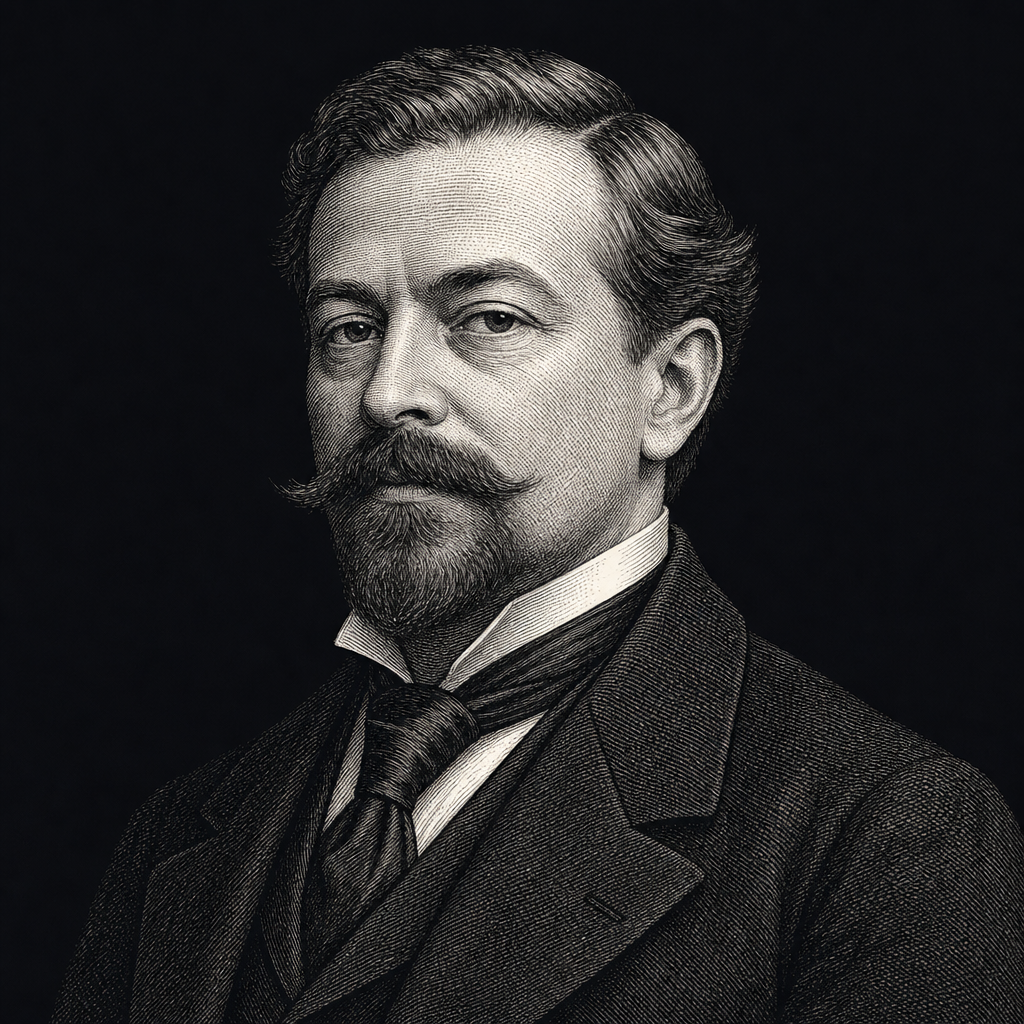
Siegbert Tarrasch was born on March 5, 1862, in Breslau, in what was then Prussian Silesia. He learned chess as a schoolboy and showed early promise, but he pursued a full medical career, studying in Berlin and Halle before settling into a successful practice as a physician in Nuremberg and later Munich. For most of his life chess remained, at least nominally, a serious avocation rather than a profession.
Despite that, Tarrasch became one of the strongest players in the world. In the early 1890s, after a string of dominant results, many considered him the best active player on the planet — a reputation built on winning four major international tournaments in succession: Breslau 1889, Manchester 1890, Dresden 1892, and Leipzig 1894. Tellingly, he twice declined the chance to challenge Wilhelm Steinitz for the World Championship, citing the demands of his medical practice, a decision later generations have second-guessed on his behalf.
His influence on the game rests less on any single result than on his teaching. Tarrasch translated and popularized the positional principles of Steinitz into clear, memorable, dogmatic rules, propagated through a stream of books and annotations. Works such as Die moderne Schachpartie and his hugely successful final book Das Schachspiel (The Game of Chess, 1931) taught two generations of players. For this he was nicknamed Praeceptor Germaniae — the Teacher of Germany.
His prescriptions — develop pieces actively, control the centre, give every piece its best square, avoid cramped positions, fear the isolated pawn but value the bishop pair and open lines — became the catechism of classical chess. He preferred clarity to mystery and was famously suspicious of the cramped, provocative setups that the hypermodern school would later champion, leading to sharp public disagreements with players like Aron Nimzowitsch and Richard Réti.
Tarrasch did finally play a World Championship match, in 1908 against Emanuel Lasker, but by then he was past his peak and lost decisively. He remained a force for years afterward, finishing fourth at the elite St. Petersburg 1914 tournament — behind only Lasker, Capablanca and Alekhine, and ahead of Marshall, Rubinstein and Nimzowitsch — a remarkable result for a man in his fifties.
He died on February 17, 1934, in Munich. Several openings bear his name, most famously the Tarrasch Defence to the Queen's Gambit and the Tarrasch Variation of the French. But his true monument is the body of strategic doctrine he left behind; nearly every modern player has, knowingly or not, learned the game through ideas Tarrasch was the first to state so plainly.
Playing style
Tarrasch was the great codifier of classical positional play. He prized active piece development, control of the centre, mobility, and the bishop pair, and he distrusted cramped or passive positions on principle — he famously preferred a slightly weak but free position to a solid but constricted one. His play was clear, logical and instructive rather than mysterious; he sought to place every piece on its most active square and only then to strike with a pawn break or attack. This rule-based clarity made him both a formidable practical player and the most effective teacher of his generation, though his dogmatism left him ill-disposed toward the provocative ideas of the hypermoderns.
Signature openings
Tarrasch Defence (Queen's Gambit Declined)Ruy LopezTarrasch Variation (French Defence)Open GameQueen's Gambit
“Chess, like love, like music, has the power to make men happy.”
— Siegbert Tarrasch, The Game of Chess (Das Schachspiel)
Rivalries & key opponents
- Emanuel Lasker
- Mikhail Chigorin
- Aron Nimzowitsch
- Akiba Rubinstein
Career highlights
- Won four major international tournaments in succession: Breslau (1889), Manchester (1890), Dresden (1892), Leipzig (1894)
- Regarded by many as the world's strongest active player in the early 1890s
- Won the great match-tournament at Ostend (1907) ahead of a world-class field
- Challenged Emanuel Lasker for the World Championship (1908)
- Finished fourth at the elite St. Petersburg tournament (1914), ahead of Marshall and Rubinstein
- Authored hugely influential works, including Die moderne Schachpartie and The Game of Chess
- Earned the title Praeceptor Germaniae as the foremost chess teacher of his age
- Gave his name to the Tarrasch Defence and the Tarrasch Variation of the French
Famous games on BetterChess
More players



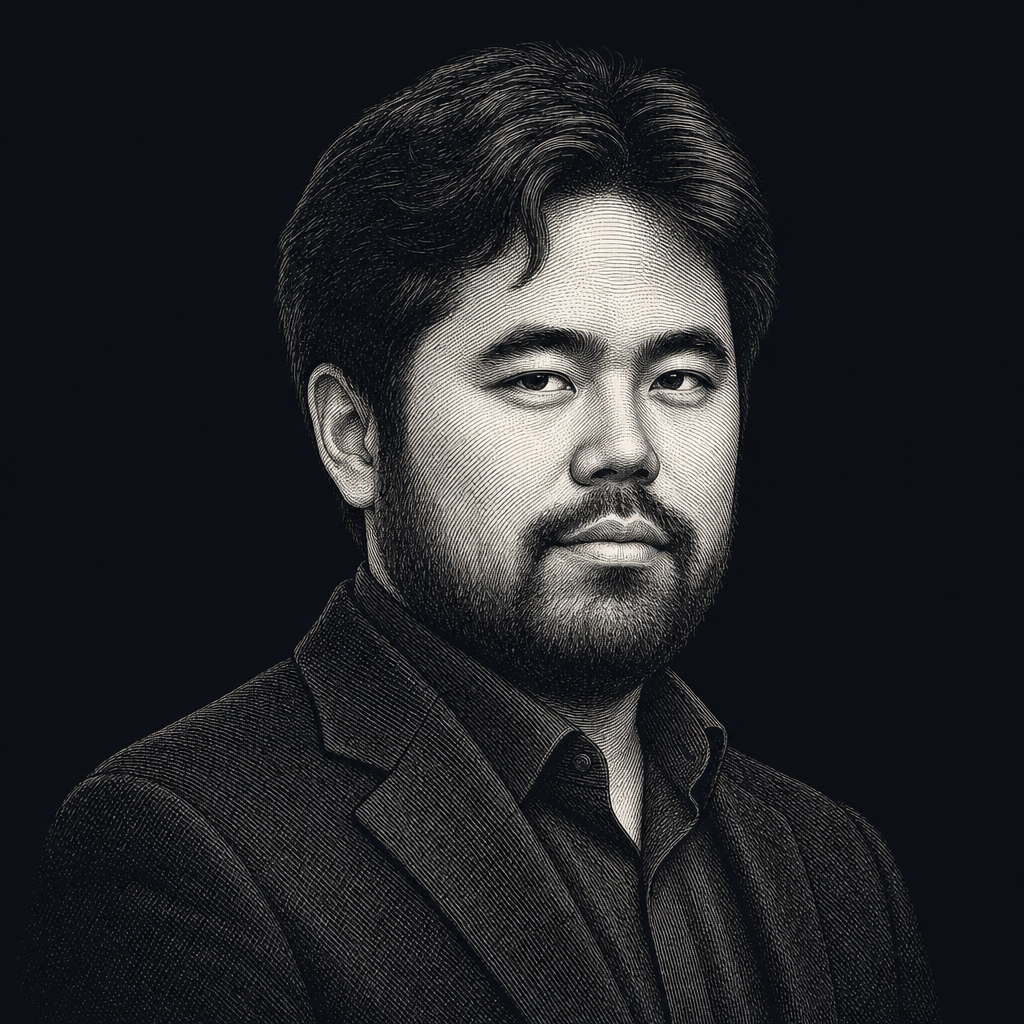
Biographical summary compiled by BetterChess. BetterChess is a practice tool — we make no guarantee you'll reach 1800 or any rating.
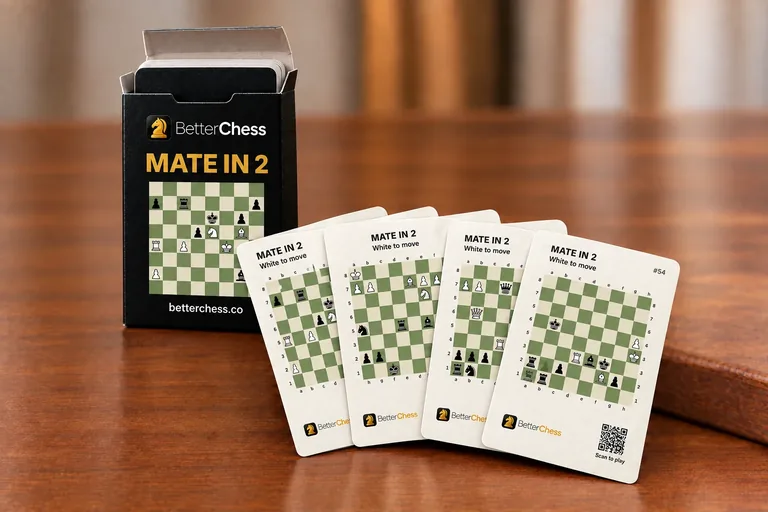
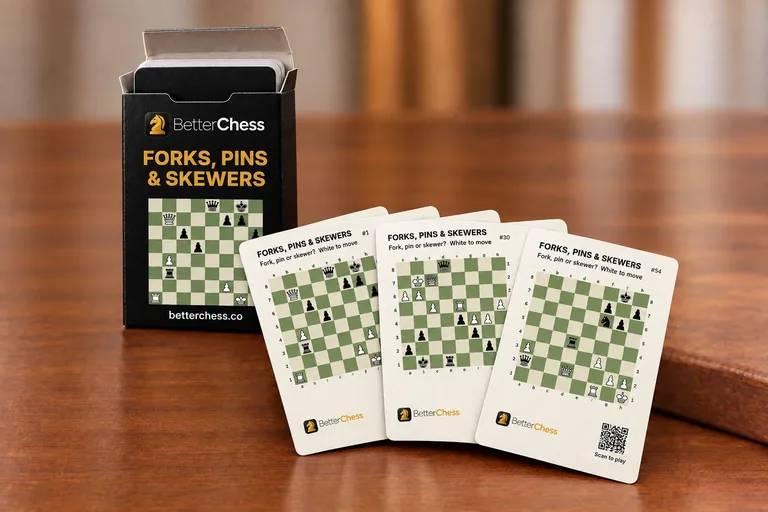
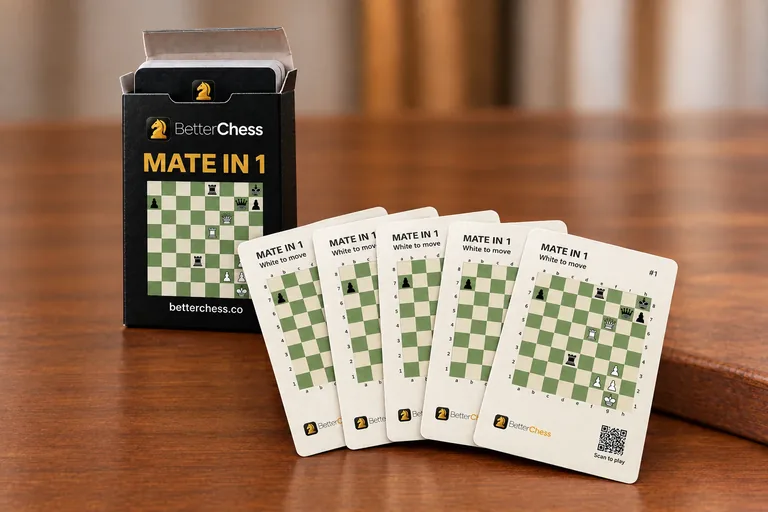
PRINTED CHESS PUZZLE CARDS
Chess puzzle playing card decks
54 poker-size cards in a tuck box. Puzzle on the front, solution on the back.