Efim Bogoljubov
“Two-time World Championship challenger”
Winning the great New York and Moscow tournaments of 1925 and twice challenging Alekhine for the world title
2720Peak ratingChessmetrics historical estimate
Born–died1889–1952
CountryRussia / Germany
Active era1910–1952
TitleGrandmaster; World Championship challenger (1929, 1934)
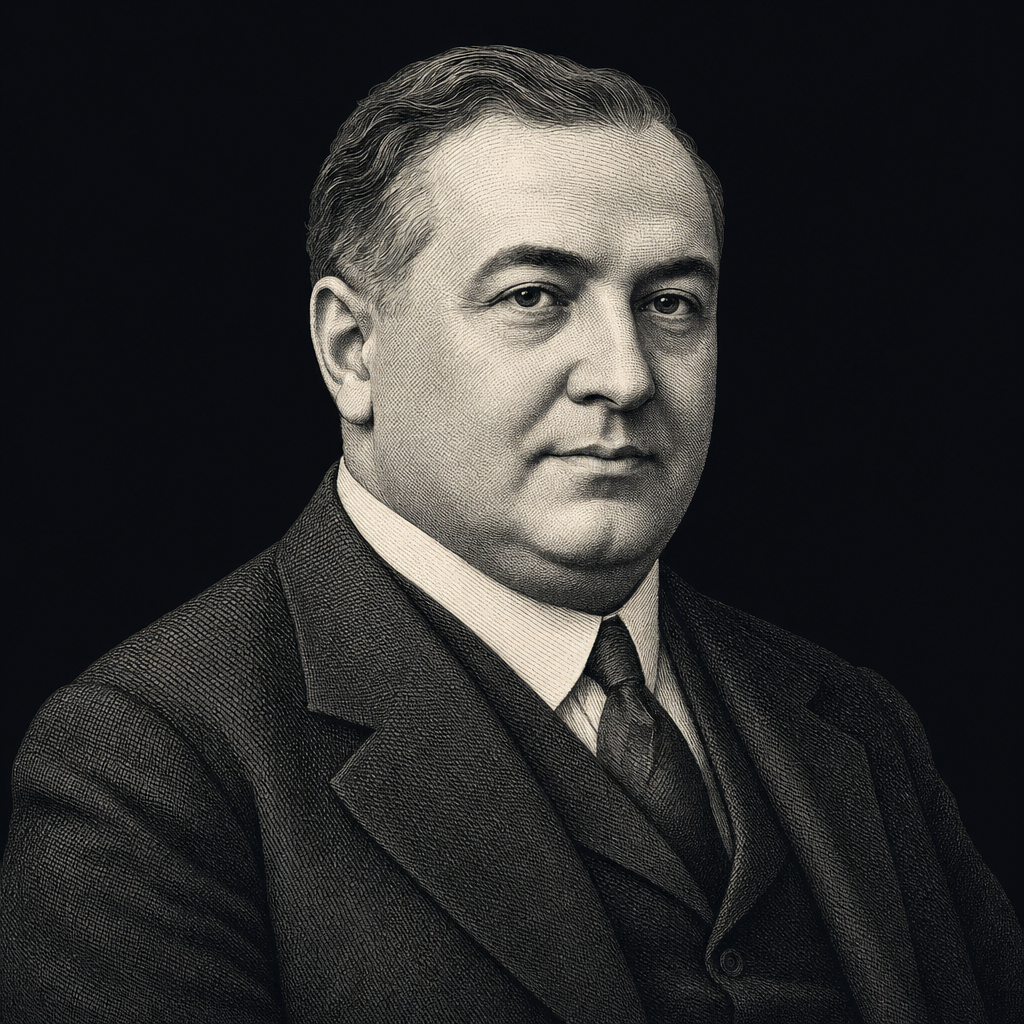
Efim Dmitriyevich Bogoljubov was born on April 14, 1889, near Kiev in the Russian Empire. He trained briefly for the priesthood before chess took over his life. His career took an extraordinary turn in 1914, when he travelled to a tournament in Germany and was interned there as an enemy alien at the outbreak of the First World War. Marooned for the duration, he played in a series of tournaments in Triberg in the Black Forest, won most of them, married a local woman, and ultimately made Germany his home.
Through the 1920s Bogoljubov rose to the very top of world chess. His finest hour came in 1925, when he won the immensely strong Moscow international tournament ahead of both Emanuel Lasker and José Raúl Capablanca, and he had earlier triumphed at New York. For a few years around the middle of the decade he was, on results, arguably the strongest tournament player in the world, and he became a Soviet champion before emigrating permanently to Germany.
His ambition carried him to two World Championship matches against Alexander Alekhine, in 1929 and again in 1934. Bogoljubov was a fighter who never lacked self-belief, but Alekhine was at the height of his powers, and Bogoljubov lost both matches decisively. They remain, nonetheless, a mark of his standing: only a handful of players of his era earned even one shot at the title.
Bogoljubov's reputation has been complicated by history. He took German citizenship and continued to play in tournaments during the Nazi period, which damaged his standing internationally after the war, though he was never an enthusiast of the regime's ideology. His self-confidence was legendary and good-humoured, captured in his famous remark that he won with White because he was White, and with Black because he was Bogoljubov.
He was awarded the International Grandmaster title by FIDE in 1951, near the end of his life. Efim Bogoljubov died of a heart attack on June 18, 1952, in Triberg, the town that had become his home almost four decades earlier after his wartime internment. He is remembered as one of the strongest and most combative players of the inter-war years, and as a worthy, if outgunned, challenger to the great Alekhine.
Playing style
Bogoljubov was an energetic, aggressive player with great fighting spirit and an appetite for complications. He favoured open, dynamic positions and direct attacking play, and his deep opening preparation and tactical sharpness made him dangerous against anyone. His weakness, exposed in his matches with Alekhine, was a certain optimism and over-confidence that could lead him to overpress; but at his best, in tournaments like Moscow 1925, his combination of energy and technique was world-class.
Signature openings
“When I am White I win because I am White; when I am Black I win because I am Bogoljubov.”
— Efim Bogoljubov, widely attributed in chess literature
Rivalries & key opponents
- Alexander Alekhine
- José Raúl Capablanca
- Emanuel Lasker
- Max Euwe
Career highlights
- Won the great Moscow 1925 international tournament ahead of Lasker and Capablanca
- Won the New York 1924 brilliancy battles and strong events through the 1920s
- Soviet Champion before emigrating to Germany
- Challenged Alexander Alekhine for the World Championship (1929)
- Challenged Alekhine for the World Championship a second time (1934)
- Gave his name to the Bogo-Indian Defence
- Awarded the International Grandmaster title by FIDE (1951)
- One of the world's strongest tournament players in the mid-1920s
Famous games on BetterChess
Réti vs Bogoljubov (1924)
Richard Réti vs Efim Bogoljubov · 1924 · Réti / English Opening
Replay & play ›Bogoljubov vs Alekhine (1922)
Efim Bogoljubov vs Alexander Alekhine · 1922 · Dutch Defence (Nimzo-Dutch)
Replay & play ›More players





Biographical summary compiled by BetterChess. BetterChess is a practice tool — we make no guarantee you'll reach 1800 or any rating.
PRINTED CHESS PUZZLE CARDS
Chess puzzle playing card decks
54 poker-size cards in a tuck box. Puzzle on the front, solution on the back.