Slav Defense
Starting position
Engine ready — step through to see live evals.
Press ▶ Watch to play the line out, or Next to step through it — the engine evaluates every position.
The Slav is the rock-solid way to meet the Queen's Gambit. Black supports the d5 pawn with ...c6 instead of ...e6 — the key difference, because it leaves the light-squared bishop free to develop outside the pawn chain to f5. The result is the soundness of the Queen's Gambit Declined without the QGD's traditional 'problem bishop.'
The idea in one line
Support d5 with ...c6, develop the light-squared bishop to f5 before ...e6 locks it in, then capture ...dxc4 at the right moment and complete a solid, harmonious setup.
Key ideas
- ...c6 props up d5 the way ...e6 does in the QGD — but keeps the c8-bishop's diagonal open, so it never gets buried.
- Getting the light-squared bishop out to f5 (or g4) before playing ...e6 is the whole point — no bad bishop, unlike the Queen's Gambit Declined.
- The ...dxc4 capture isn't about winning a pawn — it's timed so that after White recaptures, Black has a free bishop and easy, comfortable development.
- It's a sound, low-weakness structure: Black accepts a touch less space for a position that's very hard to crack.
Plans for each side
White: Develop naturally and reclaim the c4 pawn (a4 stops ...b5 holding it), keep a small space edge, and try to use the centre and queenside before Black is fully coordinated.
Black: Free the light-squared bishop to f5, take ...dxc4 at the right moment, then play ...e6, develop the rest, and castle into a solid, harmonious position.
Common mistakes to avoid
- Play ...Bf5 before ...e6 — lock the bishop in first and you've thrown away the Slav's whole advantage over the QGD.
- Don't try to cling to the c4 pawn with ...b5 here: after a4 it usually overextends and White wins it back with a better game.
- Drifting passively lets White's extra central space tell — finish development and castle rather than admiring the solid shell.
The main line, explained
1… d5...d5 — Black meets 1.d4 in the centre, just like the Queen's Gambit Declined.
2… c6...c6 — the Slav move. It supports d5 but, crucially, keeps the c8-bishop's diagonal open.
3… Nf6...Nf6 — develops and fights for e4, natural and flexible.
4… dxc4...dxc4 — Black grabs the pawn now that the bishop can get out; the point is free development, not keeping the pawn.
5. a4a4 — White stops ...b5 from defending the c4-pawn and prepares to win it back. A standard Slav move.
5… Bf5...Bf5! — the bishop escapes outside the chain before ...e6 ever locks it in. This is exactly what the Slav promises.
Frequently asked
Slav Defense vs Queen's Gambit Declined — what's the difference?
Both defend the d5 pawn, but with different pawns. The QGD plays ...e6, which can trap the light-squared bishop behind it. The Slav plays ...c6 instead, keeping that bishop free to come to f5 or g4. If you dislike the QGD's bad bishop, the Slav is the fix.
Is the Slav too passive or drawish?
It's solid, not passive. Black accepts slightly less space for a structure with very few weaknesses and an active light-squared bishop, then plays for a win from a sound position. It's a regular guest at the top level.
Why does Black give back the c4 pawn?
Because holding it is rarely worth the trouble — after a4 the ...b5 defence overextends. Instead, ...dxc4 is timed so the bishop is already free, and White spends a move recapturing while Black develops comfortably.
More openings to explore
Queen's Gambit Declined
Black vs 1.d4 · D30–D69
Learn & play ›Caro-Kann Defense
Black vs 1.e4 · B10–B19
Learn & play ›Knowing the moves of the Slav Defense is not the same as knowing why they work. Use Claude? BetterChess gives it a real engine, so it explains this opening from the board in front of you instead of from memory.
BetterChess is a practice tool — we make no guarantee you'll reach 1800 or any rating. The lines here are standard, well-established opening theory, and every move is checked legal with the same engine the board runs.
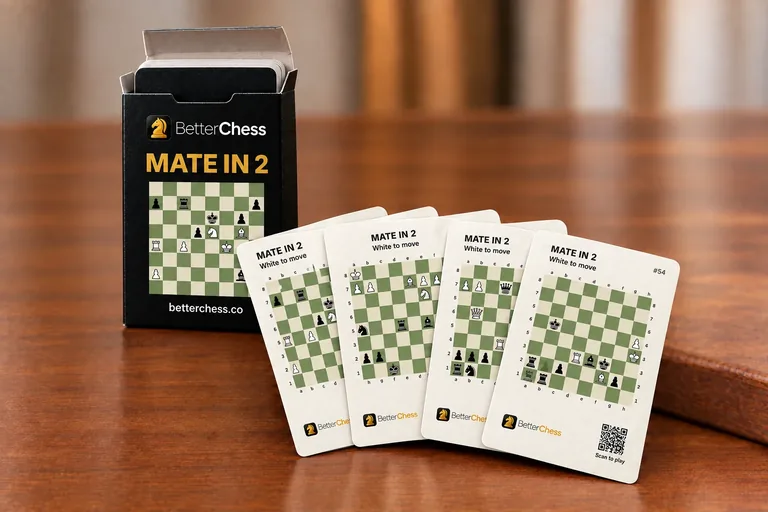
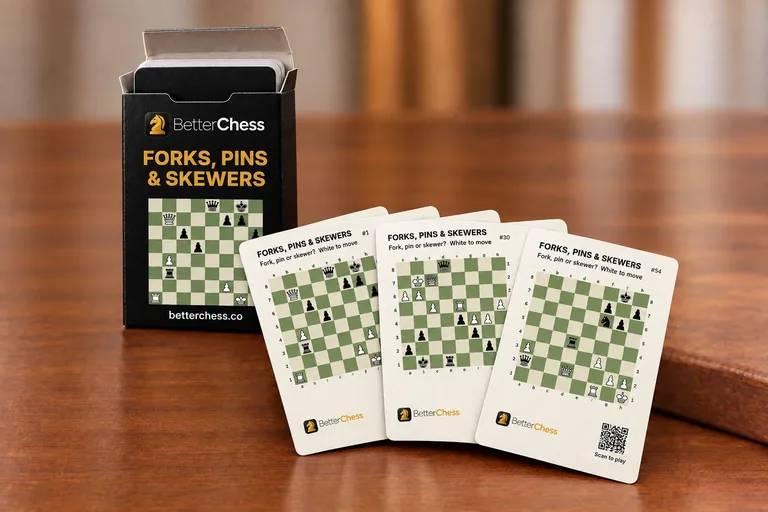
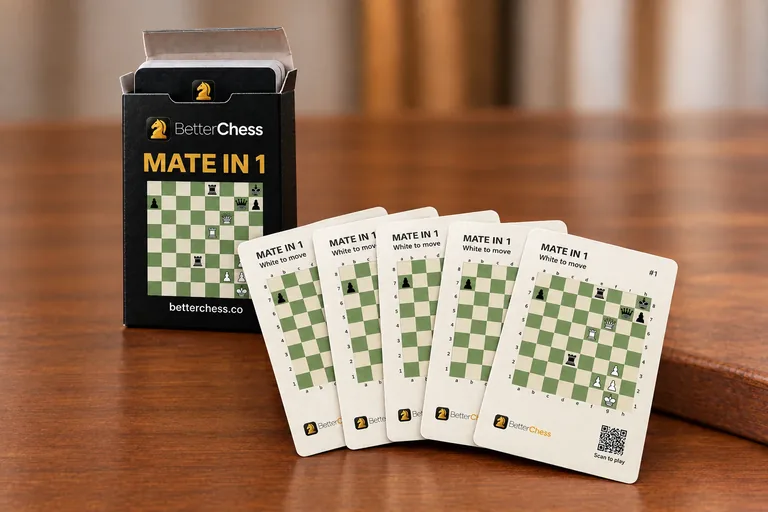
PRINTED CHESS PUZZLE CARDS
Chess puzzle playing card decks
54 poker-size cards in a tuck box. Puzzle on the front, solution on the back.