Dawid Janowski
“The wizard of the two bishops”
His brilliant attacking play with the bishop pair and his ill-fated 1910 World Championship match with Lasker
2720Peak ratingChessmetrics historical estimate
Born–died1868–1927
CountryPoland / France
Active era1890s–1920s
TitleWorld Championship challenger (1910)
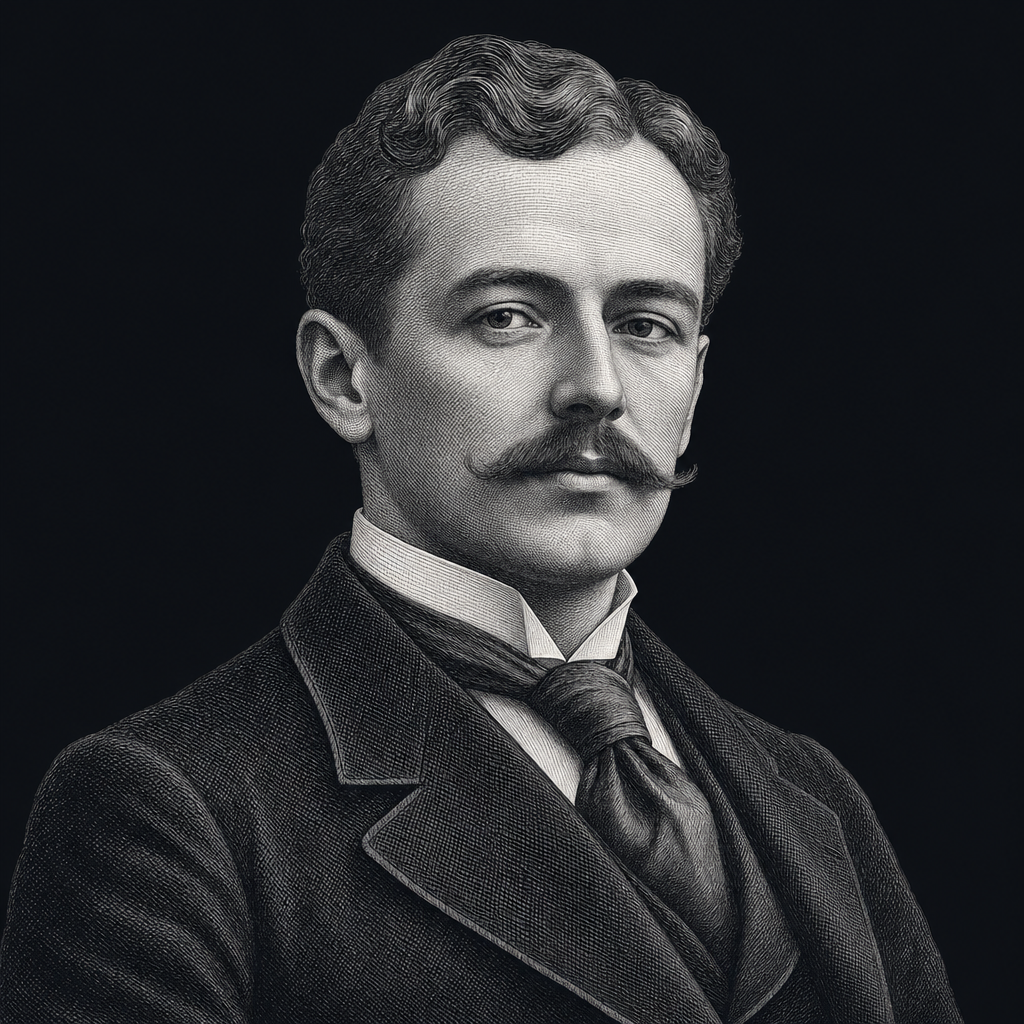
Dawid Markelowicz Janowski was born on May 25, 1868, in Wołkowysk, then in the Russian Empire and now in Belarus, into a Jewish-Polish family. He moved to Paris around 1890 and made the French capital his home, beginning his professional chess career there in the mid-1890s. Elegant, combative and famously temperamental, he became one of the most feared attacking players of the era.
Janowski was a brilliant tactician with a special, almost romantic devotion to the bishop pair: he handled two bishops with a virtuosity few have matched, and his best games are showcases of dynamic piece play and crushing attacks. He played quickly and confidently, and on his day he could beat anyone — Capablanca, no easy judge, called him one of the most dangerous opponents who could exist when in form.
His tournament results in the early 1900s placed him firmly among the world's elite. He won at Monte Carlo 1901 and Hanover 1902, tied for first at Vienna 1902, and finished near the top of many of the strongest events of the day, regularly battling Lasker, Pillsbury, Schlechter, Maróczy and the rest of the leading masters.
His career was shaped, and ultimately compromised, by his relationship with the wealthy French art patron Léo Nardus, who bankrolled Janowski's chess and his other great passion, gambling. With Nardus's backing, Janowski arranged a series of matches against Emanuel Lasker. Two informal contests in 1909 were closely fought, but the formal World Championship match in 1910 was a disaster: Lasker crushed him without losing a game.
Janowski's great weakness was the endgame, a phase he openly disdained — he is supposed to have declared, 'I detest the endgame.' Capablanca identified precisely this flaw, noting that Janowski's superb middlegame play was too often squandered through careless or impatient technique once the queens came off. It was the recurring tragedy of his career: brilliant attacks undone by indifferent endings.
After the war he continued to compete, and he scored a fine result at the Marienbad tournament of 1925, proving he was still dangerous in his late fifties. But his health and finances declined, and he died of tuberculosis on January 15, 1927, in Hyères, France. He is remembered as one of the great attacking artists of the classical era and the supreme practitioner of the two bishops.
Playing style
Janowski was a dashing, aggressive attacker and a superb tactician, celebrated above all for his mastery of the bishop pair — few players have ever wielded two bishops with such devastating effect. He played quickly and with great confidence, seeking open positions where his pieces could generate threats, and his best games are model attacking displays. His glaring weakness was the endgame, which he frankly detested and frequently mishandled; brilliant middlegame advantages were too often frittered away through impatient technique, a flaw that kept an immensely gifted player from achieving more than he did.
Signature openings
Ruy LopezQueen's Gambit DeclinedGiuoco PianoFrench DefenceQueen's Pawn openings with the bishop pair
“I detest the endgame.”
— Dawid Janowski, recounted by José Raúl Capablanca
Rivalries & key opponents
- Emanuel Lasker
- Carl Schlechter
- Frank Marshall
- Akiba Rubinstein
Career highlights
- Won the international tournament at Monte Carlo (1901)
- Won at Hanover (1902) and tied for first at Vienna (1902)
- Finished consistently among the elite at the great tournaments of the 1900s
- Played two closely contested informal matches against Emanuel Lasker (1909)
- Challenged Emanuel Lasker for the World Championship (1910)
- Scored a strong result at the Marienbad tournament in his late fifties (1925)
- Acknowledged by Capablanca as among the most dangerous attacking players alive
- Remembered as the supreme master of the bishop pair in the classical era
Famous games on BetterChess
More of Dawid Janowski's games are on the way.
More players





Biographical summary compiled by BetterChess. BetterChess is a practice tool — we make no guarantee you'll reach 1800 or any rating.
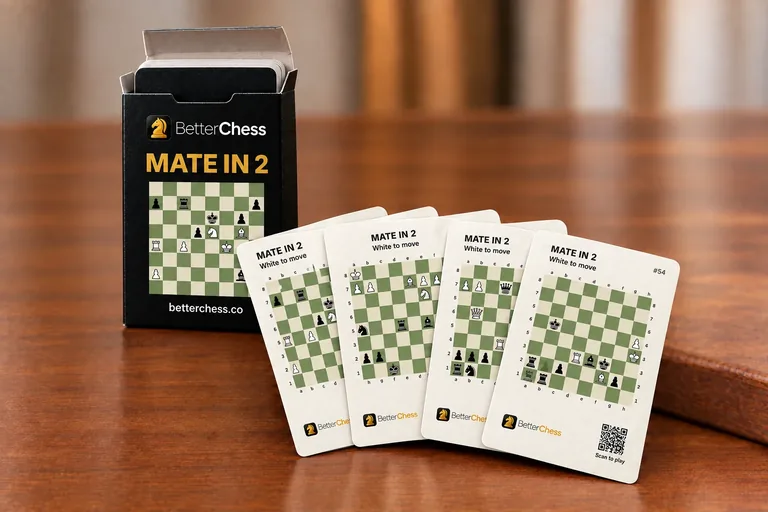
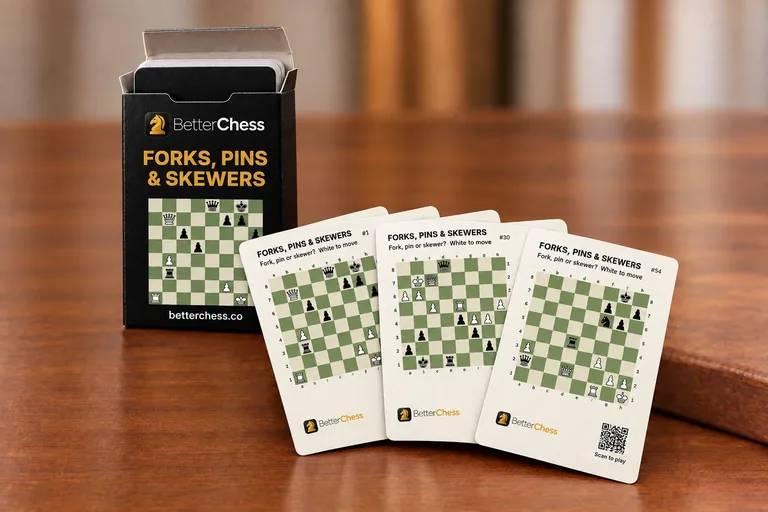
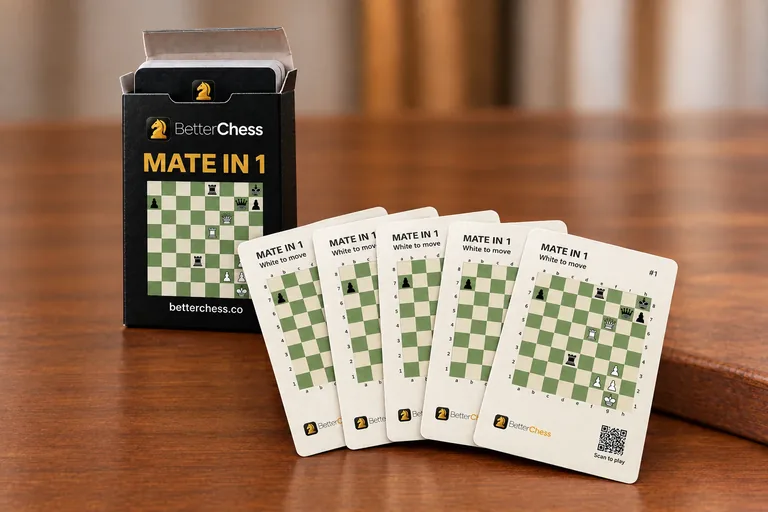
PRINTED CHESS PUZZLE CARDS
Chess puzzle playing card decks
54 poker-size cards in a tuck box. Puzzle on the front, solution on the back.