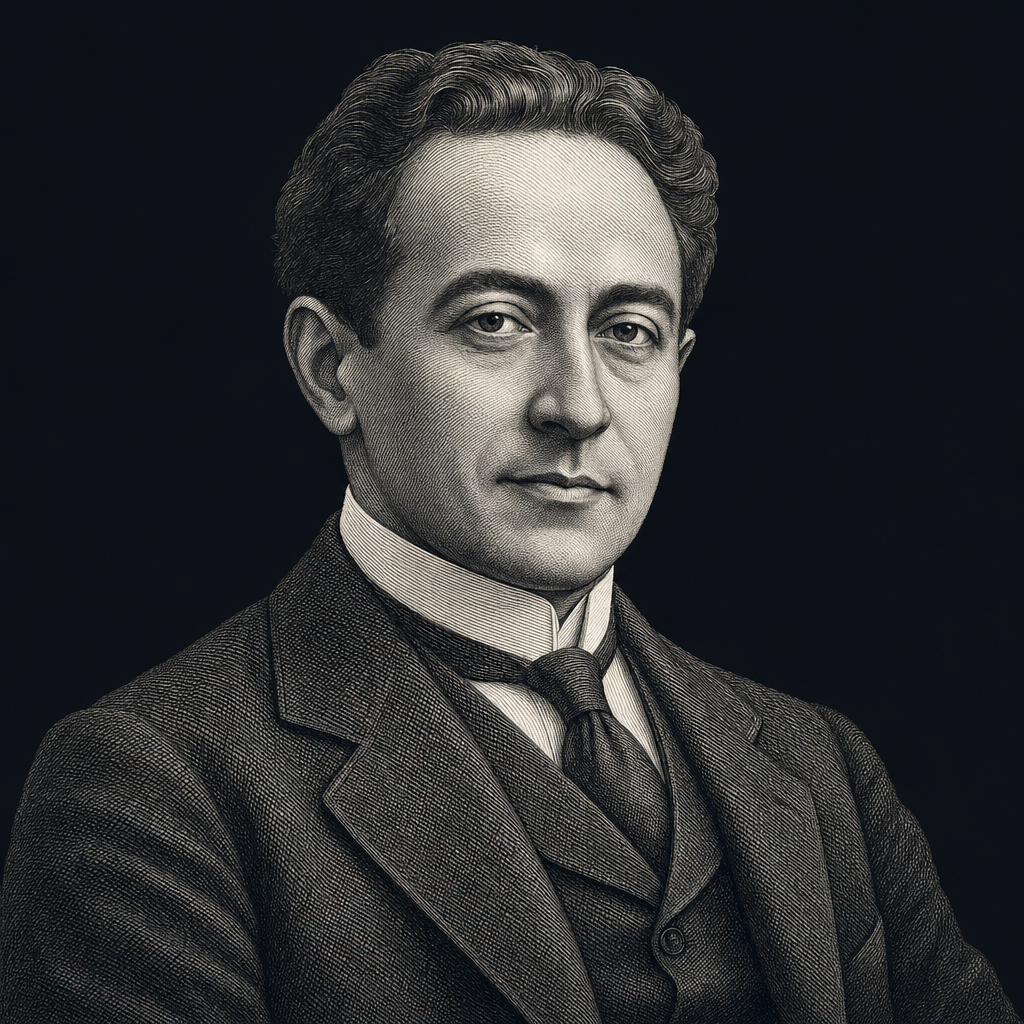
Akiba Rubinstein
“The greatest champion who never was”
His sublime endgame technique and 'Rubinstein's Immortal' combination of 1907
2778Peak ratingChessmetrics historical estimate
World #1by Chessmetrics estimate, mid-1912 to mid-1914
Born–died1880–1961
CountryPoland
Active erac. 1903–1932
TitleGrandmaster (1950); World Championship challenger
Akiba Kiwelowicz Rubinstein (1 December 1880 – 14 March 1961) was a Polish grandmaster, born in Stawiski in Congress Poland into a poor Jewish family. The youngest of twelve children, he was originally destined for the rabbinate and only learned chess at the relatively late age of fourteen.
He honed his game in Łódź alongside the master Gersz Salwe, and in 1903 abandoned his religious studies to devote himself entirely to chess. Within a few years he had become one of the strongest players in the world, famous for combining deep strategic understanding with peerless endgame technique.
Rubinstein's peak years, roughly 1907 to 1914, were extraordinary: he won major tournaments across Europe and defeated leading players including the young José Raúl Capablanca and Carl Schlechter. Retrospective rating systems such as Chessmetrics place him as world No. 1 in the years immediately before the First World War, ahead even of World Champion Emanuel Lasker.
A World Championship match with Lasker was arranged for 1914 but cancelled when war broke out, and the title shot never came again. For this reason Rubinstein is universally regarded as the greatest player never to become World Champion.
His later life was clouded by mental illness, which gradually forced him out of competitive play by the early 1930s. He was awarded the grandmaster title when FIDE created it in 1950. His 1907 game against Rotlewi in Łódź — 'Rubinstein's Immortal' — and his model rook endgames remain staples of chess instruction.
Playing style
Rubinstein was the classic positional player: he built up small advantages with flawless logic, traded into favourable endgames, and handled rook endings with a precision that has never been surpassed. Yet, as his Immortal Game shows, he was also capable of breathtaking combinative beauty when the pieces were perfectly placed.
Signature openings
Queen's Gambit DeclinedTarrasch DefenceRubinstein variations of the French and Nimzo-IndianSymmetrical openings
Rivalries & key opponents
- Emanuel Lasker
- José Raúl Capablanca
- Carl Schlechter
Career highlights
- Widely regarded as the strongest player in the world around 1912–1914
- Won or shared first at San Sebastián, Carlsbad, Vienna and many other elite events
- World Championship match with Lasker arranged for 1914 (cancelled by World War I)
- Won the Polish Championship (Łódź, 1927)
- Awarded the Grandmaster title by FIDE (1950)
- Black in 'Rubinstein's Immortal' (Rotlewi–Rubinstein, Łódź 1907)
Famous games on BetterChess
Rubinstein's Immortal (1907)
Georg Rotlewi vs Akiba Rubinstein · 1907 · Tarrasch Defence
Replay & play ›Rubinstein's Endgame Clinic (1912)
Akiba Rubinstein vs Carl Schlechter · 1912 · Queen's Gambit Declined, Semi-Tarrasch
Replay & play ›Rubinstein's Positional Squeeze (1908)
Akiba Rubinstein vs Georg Salwe · 1908 · Tarrasch Defence
Replay & play ›More players




Biographical summary compiled by BetterChess. BetterChess is a practice tool — we make no guarantee you'll reach 1800 or any rating.
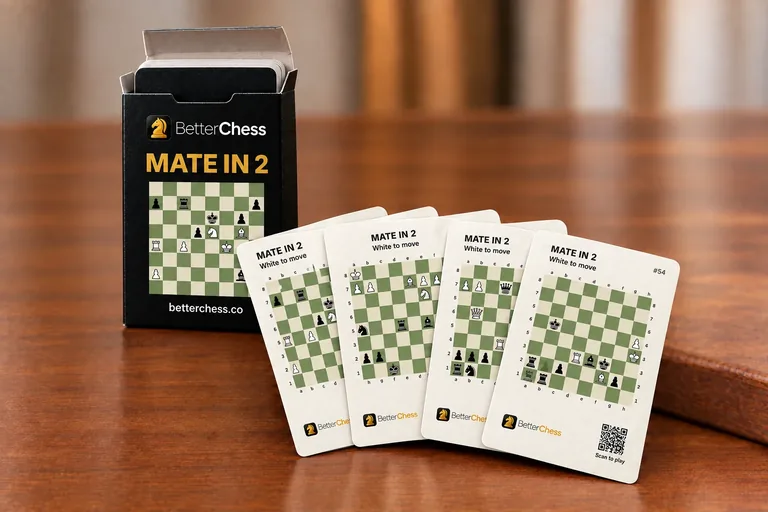
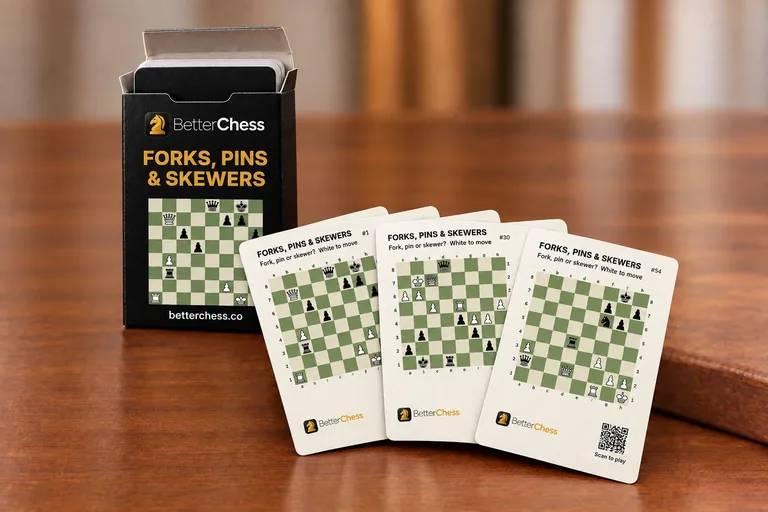
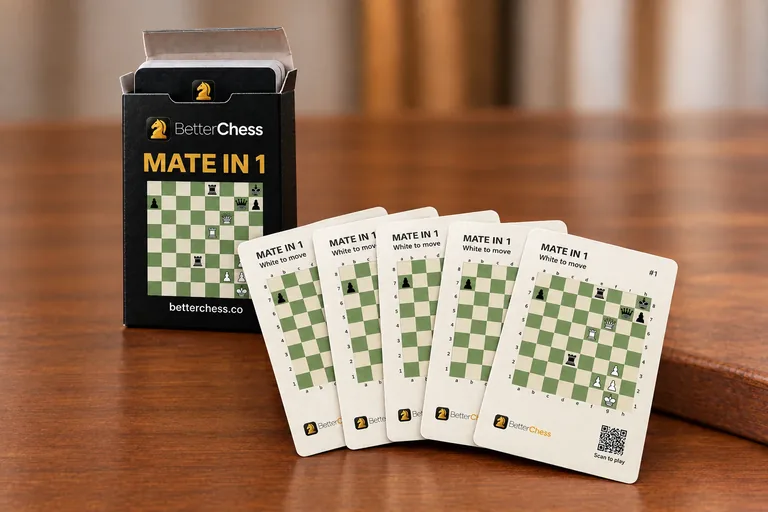
PRINTED CHESS PUZZLE CARDS
Chess puzzle playing card decks
54 poker-size cards in a tuck box. Puzzle on the front, solution on the back.