Rubinstein's Positional Squeeze (1908)
- White
- Akiba Rubinstein
- Black
- Georg Salwe
- Event
- Łódź
- Year
- 1908
- Result
- 1–0
- Opening
- Tarrasch Defence
14… Be6
White to move. Black's d5-pawn is a fixed weakness and Rubinstein wants to trade off Black's active bishop. Can you find the move that swaps the dark-squared bishops and tightens the grip?
Why this game matters
Łódź, 1908. This is the textbook game on how to play against an isolated queen's pawn. Akiba Rubinstein, the greatest endgame artist of his era, methodically blockaded Georg Salwe's d-pawn, traded off the right pieces, piled up on the weakness, and converted with flawless technique. Generations of players have learned the blockade-and-besiege method from this single game.
The lesson
An isolated pawn is a long-term weakness if you can stop it from advancing. Rubinstein's method: blockade the pawn with a piece on the square in front of it, trade off the attacking pieces that give the isolani its activity, then mass your forces against the now-static weakness. Restrain, blockade, destroy — the classic three-step plan.
Move by move
4. cxd54.cxd5 exd5 — the structure that defines the game: Black is left with an isolated queen's pawn on d5 (a Tarrasch-style isolani). Rubinstein will play against it for the rest of the game.
8. Nxd48...Qb6 9.Nxc6 bxc6 — Rubinstein trades to leave Black with the weak hanging/isolated pawns and a static target.
11. Na411.Na4 — the knight heads for c5, the perfect blockade-and-pressure square in front of and beside the weakness.
15. Bc515.Bc5! Offering to trade Black's most active piece, the dark-squared bishop. Removing the defenders is step two of the plan.
17. Bxe717.Bxe7 Rxe7 — with the bishops off, Black has no active counterplay; the d5-pawn just sits there as a permanent liability.
18. Qd418.Qd4 — the queen takes up the ideal blockading square, daring Black to do something about the frozen pawn. He can't.
21. Nc521.Nc5 — the knight returns to the dominant outpost. Every white piece now bears on the c6/d5 weaknesses.
23. Rfc223.Rfc2 — doubling rooks on the c-file. Rubinstein is methodically tripling pressure on the targets.
27. Rxc627.Rxc6! The harvest. The weakness finally falls; Rubinstein wins the pawn and, with it, the game by force.
38. b738.b7 — Black resigned. A passed b-pawn is about to queen. The model game on the isolated queen's pawn, won by pure technique.
Frequently asked
Why is this game so famous for teaching?
It is the textbook example of playing against an isolated queen's pawn. Rubinstein demonstrates the entire method — blockade the pawn, trade off the active pieces, then besiege the weakness — so clearly that it appears in nearly every strategy course.
What is the plan against an isolated pawn?
Restrain it (stop it advancing), blockade it with a piece directly in front, trade off the pieces that give it activity, and then attack the now-immobile pawn with everything. Rubinstein executes each step in textbook order.
Can I take over Rubinstein's side?
Yes — pick up the board as White around 15.Bc5 and try to find the trades and the squeeze, or replay the whole game move by move, no sign-up.
Similar games
Rubinstein's Immortal (1907)
Georg Rotlewi vs Akiba Rubinstein · 1907 · Tarrasch Defence
Replay & play ›Rubinstein's Endgame Clinic (1912)
Akiba Rubinstein vs Carl Schlechter · 1912 · Queen's Gambit Declined, Semi-Tarrasch
Replay & play ›Botvinnik's AVRO Masterpiece (1938)
Mikhail Botvinnik vs José Raúl Capablanca · 1938 · Nimzo-Indian Defence
Replay & play ›Want this on your own games? BetterChess puts a real engine inside Claude, so it finds the moves that actually decided the game instead of listing every inaccuracy.
BetterChess is a practice tool. We make no guarantee you'll reach 1800 or any rating. This is a historical game; the analysis is our own.
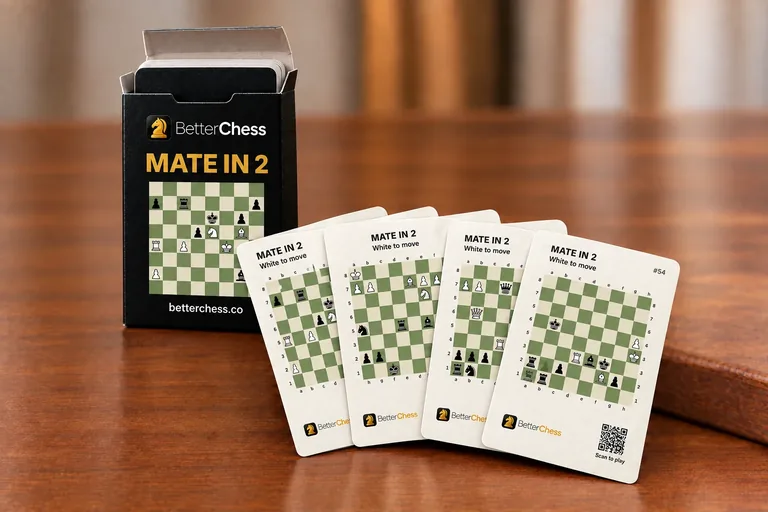
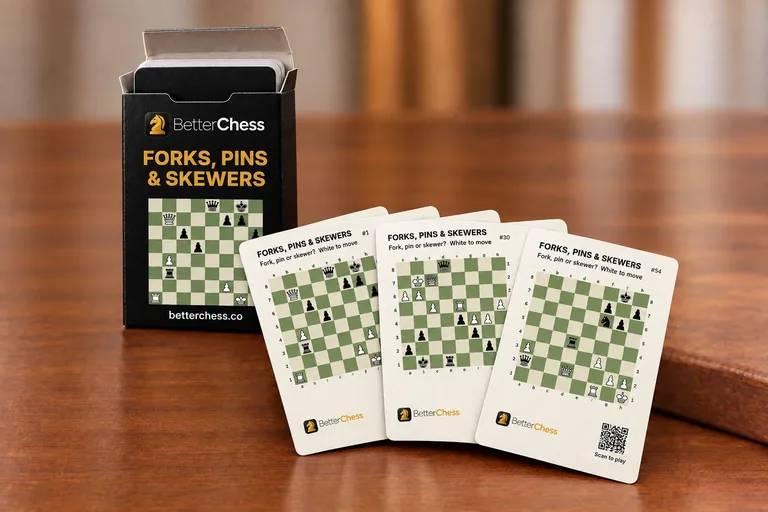
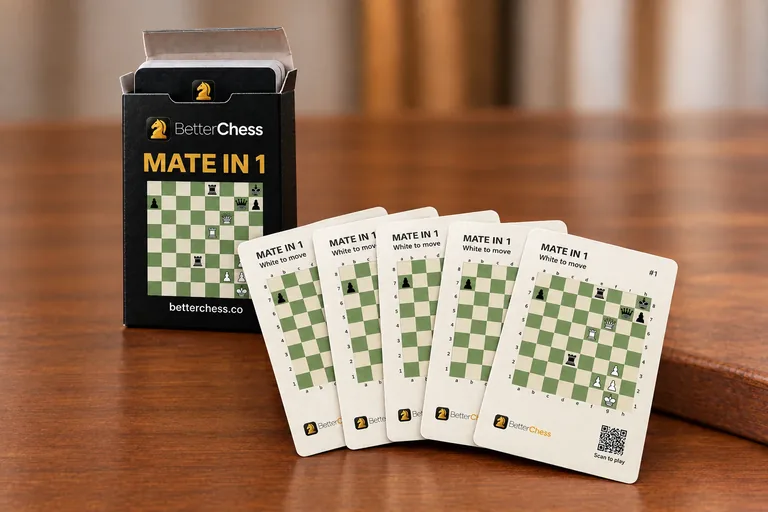
PRINTED CHESS PUZZLE CARDS
Chess puzzle playing card decks
54 poker-size cards in a tuck box. Puzzle on the front, solution on the back.