Lionel Kieseritzky
“Of the Café de la Régence”
Being Anderssen's opponent in the Immortal Game and a leading Paris professional.
2738Peak ratingChessmetrics historical estimate
Born–died1806–1853
CountryFrance (born in Tartu, Russian Empire)
Active erac. 1838–1853
TitleMaster of the Café de la Régence
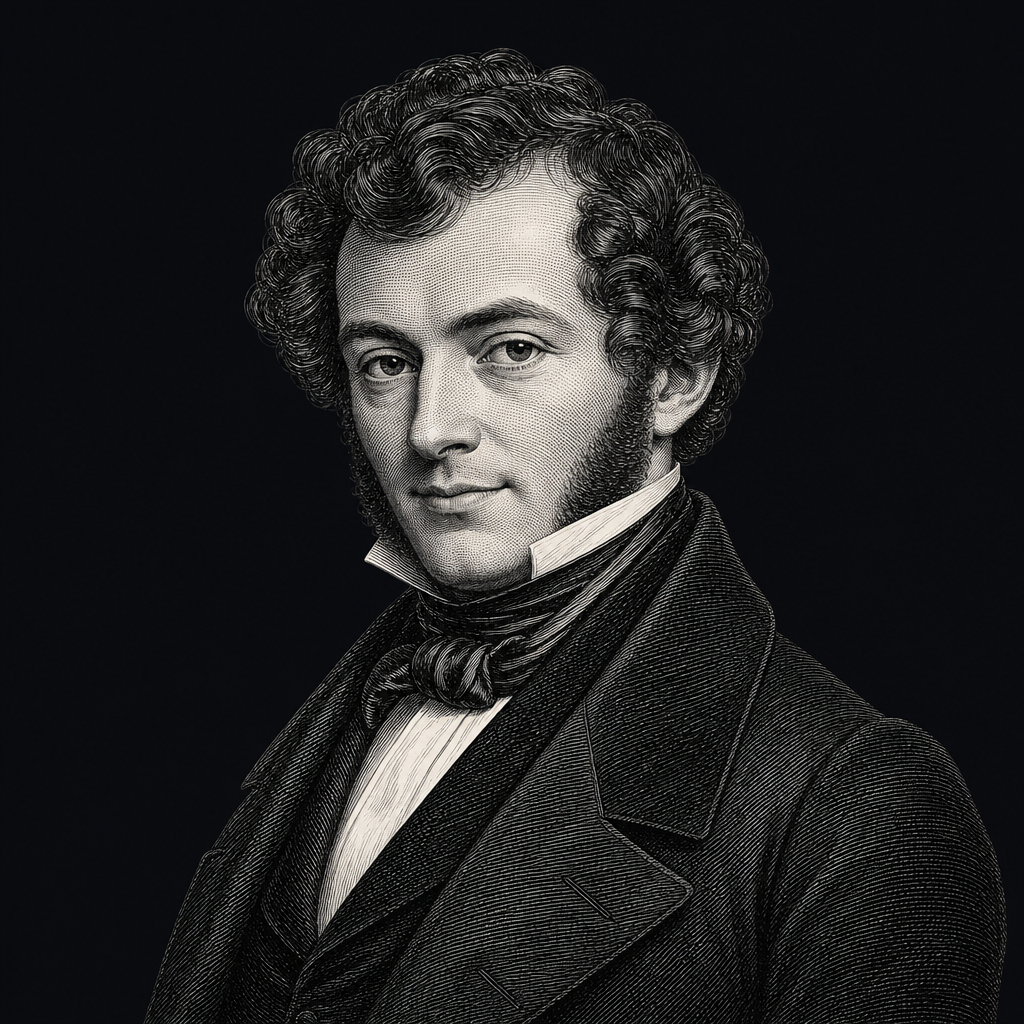
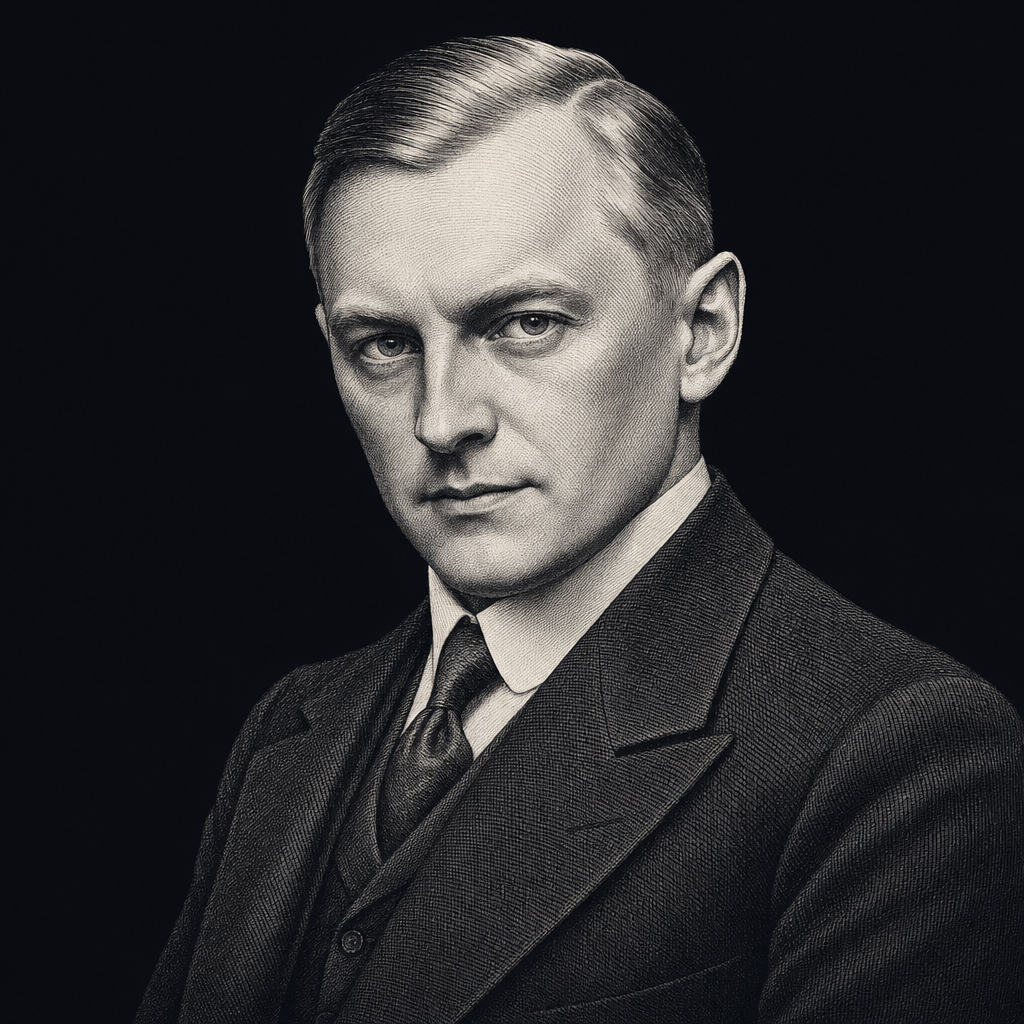
Lionel Adalbert Bagration Felix Kieseritzky was born on January 1, 1806, in Dorpat (now Tartu, Estonia), then part of the Russian Empire, into a Baltic German family. He studied at the Imperial University of Dorpat from 1825 to 1829 and worked for a time as a mathematics teacher. Chess, however, increasingly took over his life, and in 1839 he moved to Paris, the centre of the European game.
In Paris Kieseritzky established himself at the legendary Café de la Régence, the gathering place of every great master of the era, where Philidor and later Morphy and Anderssen all played. He made his living there as a chess professional — giving lessons reportedly for five francs a game, taking on all comers at odds, and dazzling spectators with blindfold and simultaneous play, at which he was especially celebrated. For years he was reckoned among the strongest players in France.
Kieseritzky also contributed to chess theory and literature. He gave his name to a line of the King's Gambit (the Kieseritzky Gambit) and from 1849 published a chess periodical called La Régence, a games-heavy magazine that used an idiosyncratic notation of his own devising. The journal struggled financially and folded after about a year, a setback that deepened his money troubles.
His enduring fame rests on a single game he lost. On June 21, 1851, during the London tournament, he sat down for a casual game against Adolf Anderssen and was swept off the board by a torrent of sacrifices — bishop, both rooks and queen — that ended in checkmate. Kieseritzky was so struck by it that he reportedly telegraphed the moves back to his friends in Paris, and the game was published in his own magazine; it later became immortalised, quite literally, as the 'Immortal Game.'
Kieseritzky's final years were bleak. The planned redevelopment of Paris threatened the Café de la Régence, his livelihood and home base, and contemporaries reported that he suffered a mental decline, perhaps aggravated by his exhausting blindfold exhibitions. He died in poverty on May 18, 1853, in the Hôpital de la Charité in Paris, aged 47, and was buried in a pauper's grave with few mourners.
Though he never won a great tournament and is remembered chiefly as a celebrated victim, Kieseritzky was a genuinely strong master and an important fixture of mid-century French chess. His name survives in opening theory and, above all, on the losing side of the most famous game ever played — an ironic immortality for a gifted player who died forgotten.
Playing style
Kieseritzky was a tactician of the Romantic school who relished sharp, open positions and gambit play, and he had a particular gift for blindfold and rapid play that made him a star attraction at the Café de la Régence. He embraced the swashbuckling attacking ideals of his time, was comfortable in the wildest complications of the King's Gambit, and contributed analysis to the gambit lines that still bear his name. As the Immortal Game shows, he could also defend resourcefully and grab material greedily — it was precisely his willingness to snatch Anderssen's offered pieces that set up the legendary finish.
Signature openings
Rivalries & key opponents
- Immortal Game vs Adolf Anderssen (1851): the famous off-hand loss that made him immortal.
- Correspondence match with Carl Jaenisch (1838–39): left unfinished when he departed for Paris.
Career highlights
- A leading professional at the Café de la Régence in Paris from 1839
- Renowned for blindfold and simultaneous exhibitions
- Founded and edited the chess magazine La Régence (1849–50)
- Gave his name to the Kieseritzky Gambit in the King's Gambit
- Played Black in the Immortal Game vs Anderssen (1851)
- Ranked among the strongest players in France in the 1840s
Famous games on BetterChess
More players






Biographical summary compiled by BetterChess. BetterChess is a practice tool — we make no guarantee you'll reach 1800 or any rating.
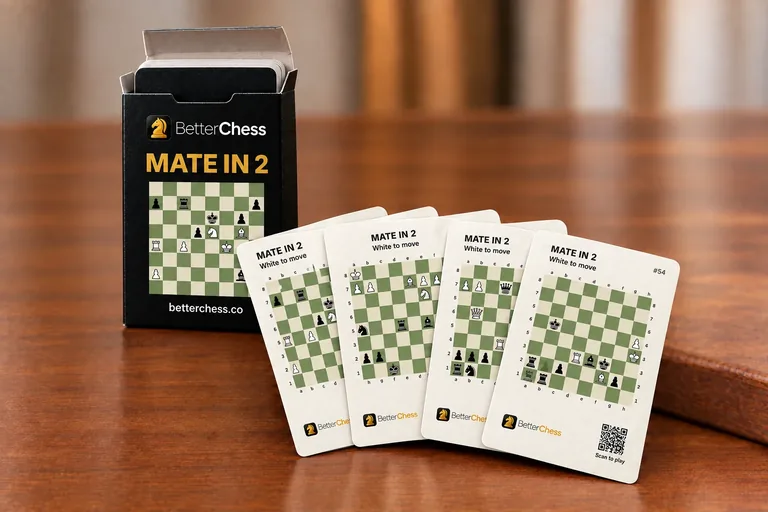
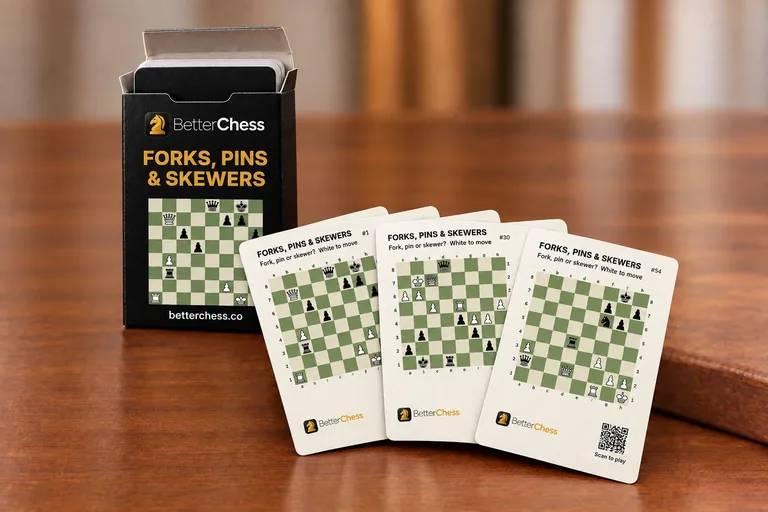
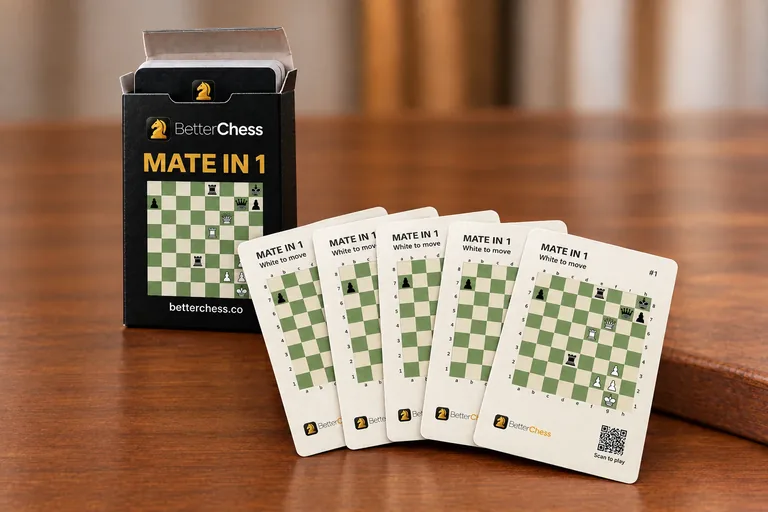
PRINTED CHESS PUZZLE CARDS
Chess puzzle playing card decks
54 poker-size cards in a tuck box. Puzzle on the front, solution on the back.