Sir George Thomas
“Champion at chess and badminton”
Two British chess titles and giving his name to badminton's Thomas Cup.
2610Peak ratingChessmetrics historical estimate (peak January 1923)
Born–died1881–1972
CountryUnited Kingdom
Active erac. 1910–1950
TitleBritish Chess Champion (1923, 1934)
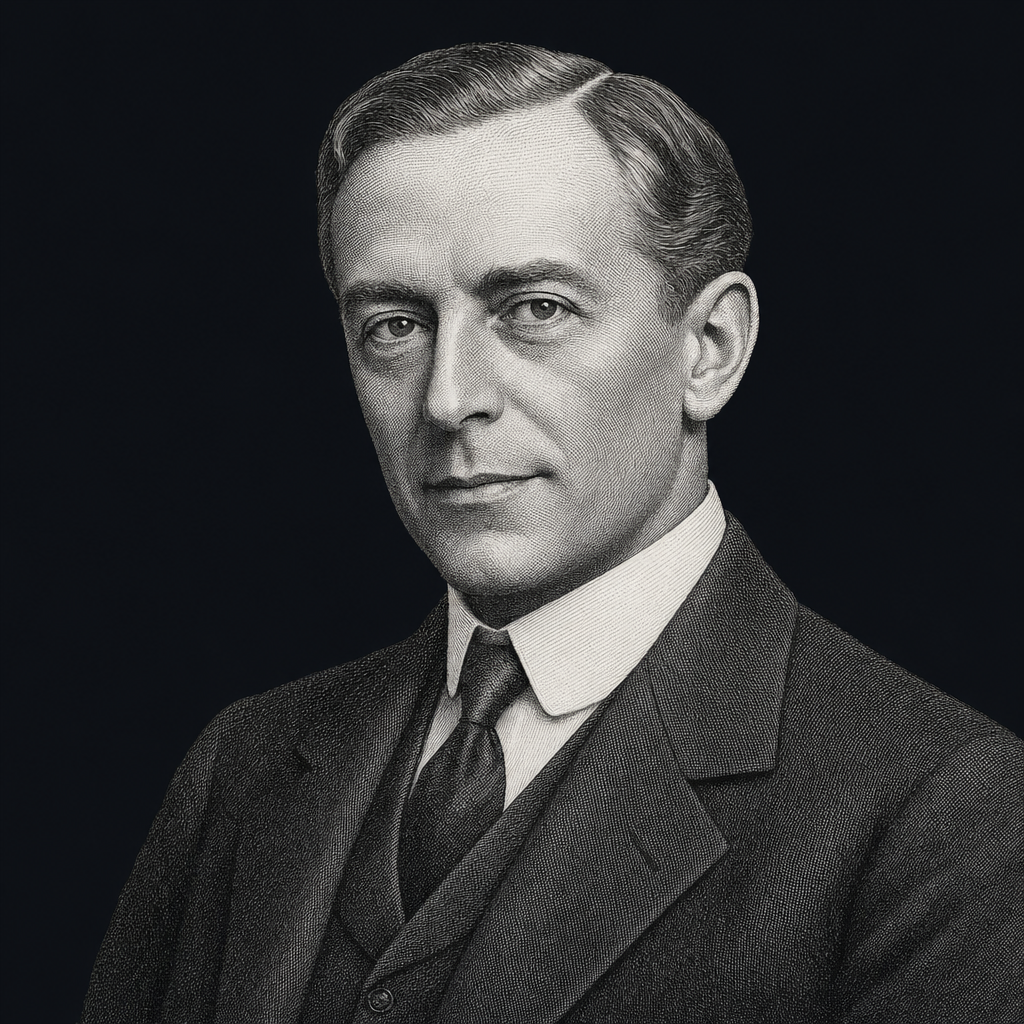
Sir George Alan Thomas, 7th Baronet, was born on June 14, 1881, in Istanbul (then Constantinople), where his English parents were living, and inherited his baronetcy in 1918. He became one of the most remarkable all-round sportsmen of his age, reaching the highest levels in two very different games — chess and badminton — and competing creditably at a third, lawn tennis, where he reached the singles quarter-finals and doubles semi-finals at Wimbledon in 1911.
As a chess player Thomas was a fixture of English chess for some four decades. He won the British Chess Championship twice, in 1923 and 1934, and represented England in numerous Chess Olympiads and international tournaments. He was known for his sportsmanship and gentlemanly conduct, qualities that made him a beloved figure in the game even when he was not winning.
His single greatest chess result came at the Hastings International Congress of 1934/35, one of the strongest tournaments of the decade. There Thomas shared first place with the future World Champion Max Euwe and Salo Flohr, finishing ahead of the legends José Raúl Capablanca and Mikhail Botvinnik — and, astonishingly, defeating both Capablanca and Botvinnik in their individual games on consecutive days. For an amateur to beat two world-class players in succession at that level was a sensation.
In badminton Thomas was utterly dominant in the Edwardian and inter-war eras, winning a remarkable tally of All-England titles across singles, doubles and mixed doubles — a haul of championships that stood among the greatest in the sport's history. He also became a leading administrator, serving as the first president of the International Badminton Federation. In 1939 he donated the trophy for the men's world team championship, which was named the Thomas Cup in his honour and remains badminton's premier team event.
Thomas continued in chess administration and play after the Second World War. FIDE awarded him the International Master title in 1950 and made him an International Arbiter in 1952, recognising both his playing strength and his service to the game. He died on July 23, 1972, at the age of 91.
Sir George Thomas occupies a unique place in sporting history as a genuine champion in two unrelated games. In chess he is remembered for his two British titles and his giant-killing at Hastings; in badminton his name is enshrined forever in the Thomas Cup. He is also, of course, the gracious loser in Edward Lasker's famous 1912 king hunt — a footnote that, like so many of these Romantic brilliancies, has outshone the careers of stronger players.
Playing style
Thomas was a solid, sound and sporting master rather than a swashbuckling attacker, with a careful positional approach honed over a long amateur career. He was capable of rising to great heights against the very best, as his wins over Capablanca and Botvinnik at Hastings show, combining patient defence with the ability to seize a chance when offered. His play reflected the values he was known for off the board — discipline, fair play and quiet determination — and he remained a respected competitor and ambassador for the game well into his later years.
Signature openings
Rivalries & key opponents
- Hastings 1934/35: shared first with Euwe and Flohr, beating Capablanca and Botvinnik in their games.
- King-hunt game vs Edward Lasker (1912): the famous loss in which his king was mated after a queen sacrifice.
Career highlights
- British Chess Champion (1923 and 1934)
- Shared first at the strong Hastings tournament (1934/35), beating Capablanca and Botvinnik
- Represented England in numerous Chess Olympiads
- Awarded the International Master title by FIDE (1950) and International Arbiter (1952)
- Multiple-time All-England badminton champion and first president of the IBF
- Donated badminton's Thomas Cup (1939), named in his honour
- Played Black in Edward Lasker's famous 1912 king-hunt game
Famous games on BetterChess
More players




Biographical summary compiled by BetterChess. BetterChess is a practice tool — we make no guarantee you'll reach 1800 or any rating.
PRINTED CHESS PUZZLE CARDS
Chess puzzle playing card decks
54 poker-size cards in a tuck box. Puzzle on the front, solution on the back.