Bobby Fischer
“11th World Chess Champion”
Beating Boris Spassky in 1972 to become World Champion and end Soviet dominance.
2785Peak ratingpeak FIDE rating (1972)
World #11971–1975
Born–died1943–2008
CountryUnited States
Active erac. 1955–1972, 1992
TitleWorld Chess Champion (1972–1975)
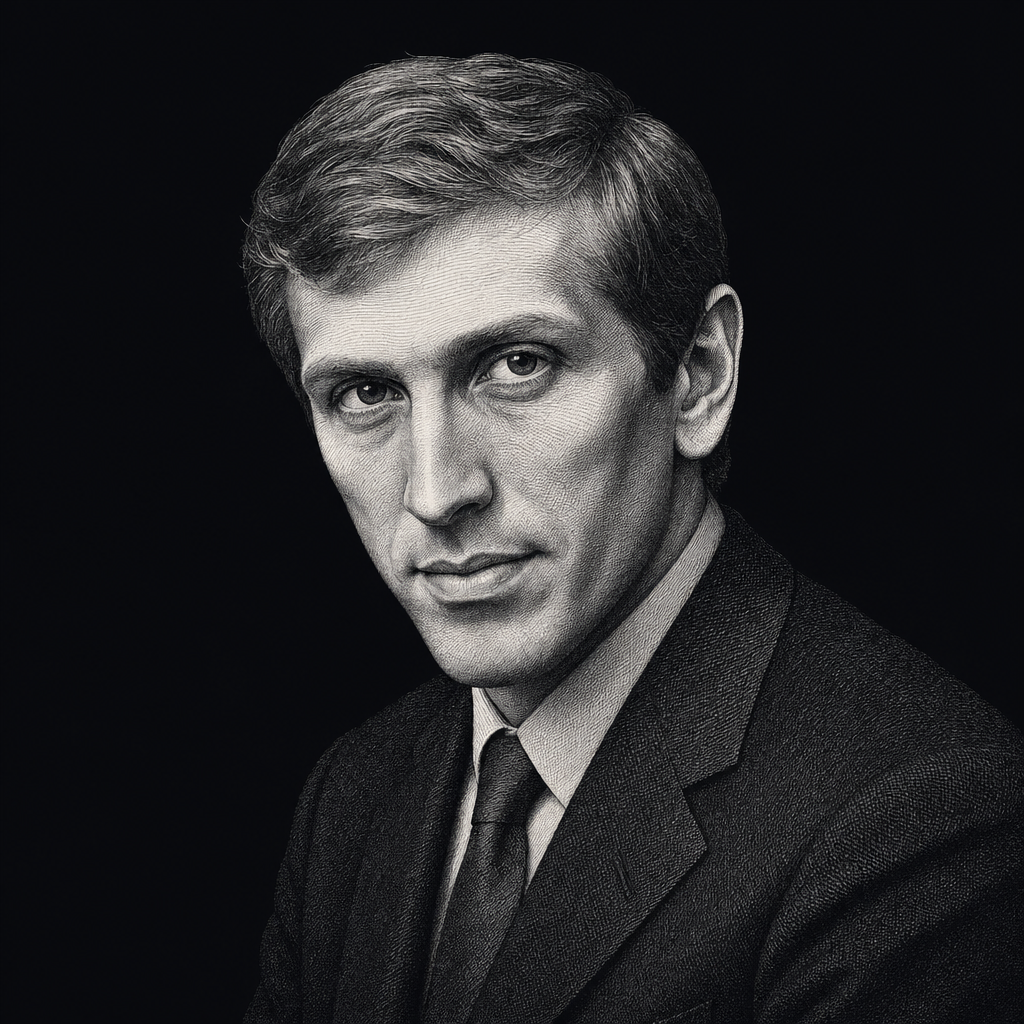
Robert James Fischer was born on March 9, 1943, in Chicago and raised mainly in Brooklyn, New York, by his mother Regina. He learned the moves at six and was soon consumed by the game, studying obsessively and devouring chess literature in several languages. By his early teens he was already a force, and in 1956, aged thirteen, he played the 'Game of the Century' against Donald Byrne, a brilliancy that made him a national sensation.
Fischer's rise was meteoric. He won the US Championship in the 1957/58 season at the age of fourteen — still the youngest US champion ever — and in 1958, by qualifying for the Candidates Tournament at Portorož, he became the youngest grandmaster in history to that point, at 15 years and 6 months. He went on to win all eight US Championships he entered, a feat capped by an unprecedented 11/11 perfect score in the 1963/64 event, the only clean sweep in the tournament's history. His book My 60 Memorable Games (1969) became a classic of chess literature.
His pursuit of the world title produced one of the most dominant runs the game has seen. In the 1970 Interzonal and the 1971 Candidates matches he swept aside the world's best, beating Mark Taimanov 6–0 and Bent Larsen 6–0 — two consecutive shutouts of elite grandmasters that stunned the chess world — before defeating former champion Tigran Petrosian to earn a title shot. In 1972, at Reykjavík, he faced the reigning champion Boris Spassky of the Soviet Union in a match billed as the 'Match of the Century.' Amid Cold War tension and Fischer's own theatrical disputes over conditions, he won 12½–8½ to become the 11th World Champion and the first American to hold the title, ending a quarter-century of unbroken Soviet supremacy.
His reign was as brief as it was brilliant. Fischer never defended his title: in 1975, after a protracted dispute with FIDE over the match format and conditions, he refused to play the challenger Anatoly Karpov and was stripped of the championship without making a move. He then withdrew almost entirely from public life and competitive chess for nearly two decades.
Fischer resurfaced in 1992 for an unofficial rematch with Spassky in war-torn Yugoslavia, winning the highly paid contest but defying a US sanctions order that forbade Americans from doing business there. This made him a fugitive from American justice, and he never returned to the United States. He spent his final years wandering between Hungary, the Philippines and Japan, where he was detained in 2004 over his passport, before Iceland — the scene of his greatest triumph — granted him citizenship in 2005. His later public statements were marked by bizarre and virulent outbursts. He died in Reykjavík on January 17, 2008, of kidney failure, aged 64.
Despite the turbulence of his life, Fischer's standing as one of the greatest players of all time is secure. He revolutionised the professional approach to the game with his preparation, work ethic and demands for better playing conditions and prize money, and his clear, dynamic style influenced generations. He also invented Chess960 (Fischer Random Chess) and a chess clock with an increment, both of which remain in use. He is remembered as a genius whose brilliance on the board was matched only by the tragedy of his later years.
Playing style
Fischer combined razor-sharp tactical calculation with a deep, universal positional understanding and relentless objectivity. He played a comparatively narrow but exhaustively prepared opening repertoire — 1.e4 as White, which he called 'best by test,' and the Sicilian Najdorf and King's Indian as Black — and knew his systems to extraordinary depth. What set him apart was his clarity and will to win: he ground out wins from the smallest edges, defended tenaciously, and converted technical endgames with machine-like precision. His games have a transparent, logical quality, and his unprecedented professionalism in study and preparation set the standard for the modern grandmaster.
Signature openings
Ruy Lopez (Spanish Game)Sicilian Defence, Najdorf VariationKing's Indian DefenceFischer also created Chess960 (Fischer Random)
“Best by test.”
— Bobby Fischer on 1.e4, in My 60 Memorable Games (1969)
Rivalries & key opponents
- World Championship match vs Boris Spassky (1972): won 12½–8½ to take the title.
- Candidates match vs Mark Taimanov (1971): won 6–0, an unheard-of shutout.
- Candidates match vs Bent Larsen (1971): won 6–0, a second consecutive sweep.
- Candidates final vs Tigran Petrosian (1971): won to earn his title shot.
- Unofficial rematch vs Spassky (1992): won the controversial Yugoslavia contest.
Career highlights
- Youngest US Champion at 14 (1957/58); won all eight US Championships he entered
- Youngest grandmaster in history at the time, aged 15 (1958)
- Scored a record 11/11 in the US Championship (1963/64)
- Swept Taimanov 6–0 and Larsen 6–0 in the 1971 Candidates matches
- Defeated Boris Spassky to become 11th World Champion (1972)
- Peak FIDE rating of 2785, a record for its era
- Invented Chess960 (Fischer Random Chess) and the increment chess clock
Famous games on BetterChess
The Game of the Century (1956)
Donald Byrne vs Bobby Fischer · 1956 · Grünfeld Defence
Replay & play ›Fischer's Positional Masterpiece (1972)
Bobby Fischer vs Boris Spassky · 1972 · Queen's Gambit Declined
Replay & play ›Fischer Crushes Larsen (1971)
Bobby Fischer vs Bent Larsen · 1971 · Sicilian Defence
Replay & play ›More players
Biographical summary compiled by BetterChess. BetterChess is a practice tool — we make no guarantee you'll reach 1800 or any rating.
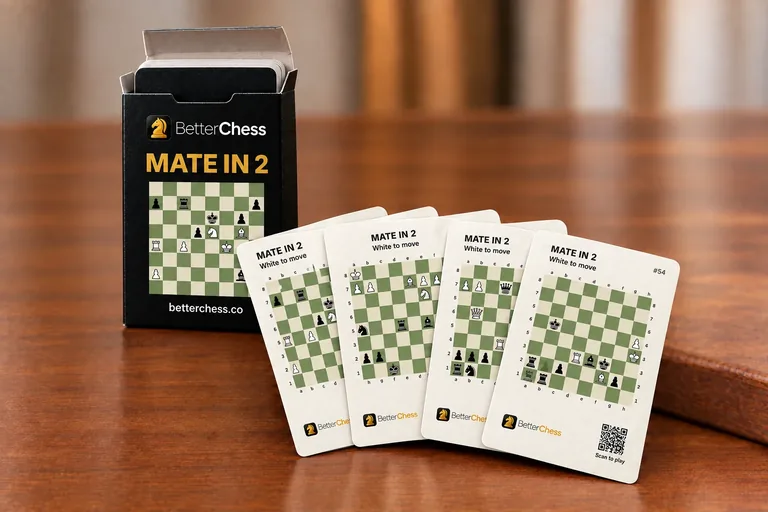
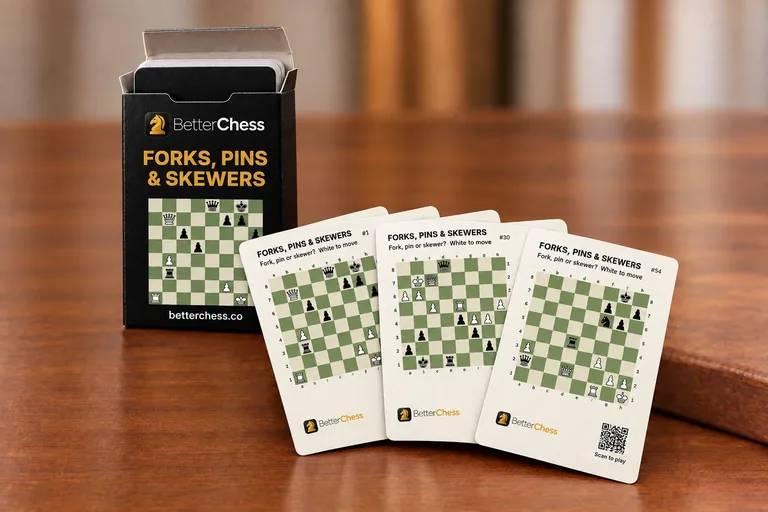
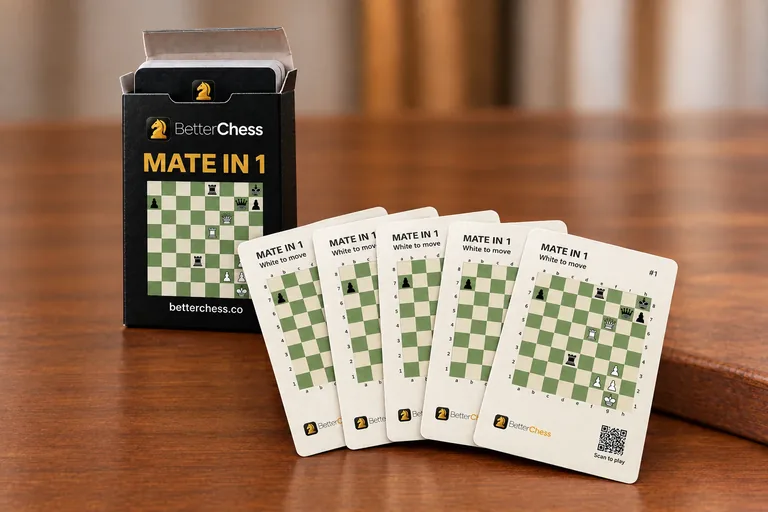
PRINTED CHESS PUZZLE CARDS
Chess puzzle playing card decks
54 poker-size cards in a tuck box. Puzzle on the front, solution on the back.