← Back to BetterChess
How to analyze your chess mistakes (a practical method)
Most players "analyze" a lost game like this: open the engine, scroll through the moves watching the eval bar wiggle, wince at the red move, close the tab. Ten minutes spent, nothing learned. The problem isn't laziness — it's that nobody ever gave them a method. Here is one that works at club level, takes about fifteen minutes per game, and compounds: every game you analyze makes the next analysis faster, because you start recognizing your own patterns.
The method in one paragraph. Find the single move where the evaluation flipped — not every inaccuracy, the turning point. Classify it into one of three buckets: a missed tactic, a bad trade, or a slow move played while under attack. Log the bucket. After ten or fifteen games, one bucket will dominate — that's your pattern. Then run one targeted drill against that pattern instead of studying everything at once.
Step 1: find the turning point
Below master level, games are almost never lost gradually. They're lost at one moment — the eval graph shows a cliff, not a slope. Your first job is to find that cliff: the single move where the position went from fine (or winning) to bad.
Before you turn the engine on, guess. Replay the game in your head or on a board and ask: "where did it start feeling bad?" Write down your guess. Then check it against an engine's evaluation graph: Lichess's analysis is free and unlimited, your chess site's built-in review does it too (limited on the free tier), and BetterChess's free roast tool finds the exact losing move from a pasted PGN in about 30 seconds, no sign-up. The gap between your guess and the engine's answer is itself information: if you consistently think you lost five moves later than you actually did, you're not noticing when positions go wrong — which is a fixable skill.
Ignore the small stuff. An inaccuracy that moved the eval from +0.6 to +0.2 did not lose you the game. Resist the urge to "fix" all twelve flagged moves; you're looking for the one move where the eval swung by a pawn and a half or more and never came back.
Step 2: classify the mistake
Now ask the question that actually matters: what kind of mistake was it? At club level nearly every turning point falls into one of three buckets:
- Missed tactic. There was a concrete sequence — yours that you didn't play, or your opponent's that you walked into. A fork, a pin, a hanging piece, a back-rank trick. This is a board-vision and calculation problem.
- Bad trade. No tactic, but you misjudged an exchange: traded your active bishop for a passive knight, grabbed a pawn and handed over an open file, swapped queens into a lost endgame. This is an evaluation problem — you didn't know what the resulting position was worth.
- Slow move under attack. You played a quiet "useful" move — a pawn nudge, a tidy-up — while your opponent was actively building threats against you. The move wasn't bad in a vacuum; it was bad right then. This is a threat-awareness and urgency problem.
To classify, reconstruct what you were thinking when you played the move. "I didn't see the knight could come to that square" → missed tactic. "I thought winning the pawn was free" → bad trade. "I didn't realize I was in danger" → slow move under attack. The honest answer is usually obvious within a minute.
A worked example
Take a typical 10-minute game from a player rated around 1300. Playing White, they come out of the opening comfortably — the engine says roughly +0.8, pieces developed, king safe. On move 19, Black lifts a rook to the third rank, clearly intending to swing it toward White's king. White responds with a quiet queenside pawn push — gaining space, "useful," the kind of move that's fine in a calm position. Three moves later the rook lands in front of the king, a knight joins the attack, and White spends the rest of the game defending mate threats until one slips through. The eval graph shows a slide from +0.8 to −3 across moves 19 to 23.
The lazy read: "I got mated, I should study king safety." The turning-point read: the cliff starts at move 19. The pawn push didn't hang anything — it spent a tempo White needed for defense the moment the rook lift announced the attack. Classification: slow move under attack. And when this player checks their last ten losses, they find the same label on six of them: quiet moves played at exactly the moments that demanded a response. That's not ten different problems. It's one problem, ten times — which is great news, because one problem is fixable.
Step 3: find the pattern across games
One classified mistake is an anecdote. Ten are a diagnosis. Keep a dumb little log — a note on your phone is fine: date, color, turning-point move number, bucket. After ten to fifteen games, count the buckets. Almost everyone finds a skewed distribution: it's rarely 33/33/33, it's usually one bucket at 50–70%. That dominant bucket is worth more to your rating than any opening course, because it's the thing actually deciding your games.
Step 4: one drill per pattern
Match the drill to the bucket — don't study generically:
- Missed tactics → motif-specific puzzles. Not random puzzle rush: filter for the motifs you actually miss (forks, back rank, discovered attacks) and do a set daily. See also how to stop blundering and how to stop hanging pieces.
- Bad trades → study evaluation, not calculation. Play through annotated master games paying attention to which trades the annotations praise or condemn and why; after your own games, ask of every exchange "who got the better minor piece / structure / file?"
- Slow moves under attack → build the "what's the threat?" habit. Before every move, name your opponent's idea out loud. This is the cheapest, highest-yield habit in club chess — and it's exactly the kind of thing that sticks faster when something corrects you in the moment rather than after the game.
Tools, honestly
You can run this entire method for free. Lichess gives you unlimited engine analysis with an eval graph and a "Learn from your mistakes" replay; the big chess sites have solid built-in reviews too, with limits on their free tiers. What free tools won't do is the classification and the pattern-tracking — that's on you and your log.
Where BetterChess fits: the free roast automates step 1 (paste a PGN, it finds the exact losing move and explains it — free, no sign-up). The full coach automates the rest of the loop: it classifies your mistakes as you play, builds the weakness log for you across games, and generates the targeted drills — the same method, with the bookkeeping done for you. If you'd rather do it by hand with free tools, the method works either way; the method is the point.
Frequently asked
Should I analyze every game I play?
No. Analyze the games that felt wrong — the ones you lost from a good position, or won without understanding why. One game analyzed properly (turning point found, mistake classified, pattern logged) beats ten games skimmed with the engine bar on.
Should I analyze with the engine on or off?
Off first, then on. Spend five minutes guessing where the game turned before you check. The guess-then-verify step is where the learning happens; if the engine is on from move one, you just nod along to numbers.
How many mistakes should I review per game?
One, maybe two. At club level most games are decided by a single turning point. Reviewing every inaccuracy is how analysis turns into a chore you quit doing — find the move that flipped the eval and go deep on that one.
What is the fastest way to find the move where I lost?
Look at the evaluation graph and find the single biggest drop. Lichess's free analysis shows this graph; BetterChess's free roast tool does the same in about 30 seconds from a pasted PGN, no sign-up, and points at the exact move.
Related: Why engine lines don't make you better · Real-time feedback without cheating · Chess improvement tools in 2026 · BetterChess vs DecodeChess
BetterChess is a practice tool — we make no guarantee you'll reach 1800 or any rating. Improvement depends on your own practice and effort. Product names are trademarks of their respective owners.
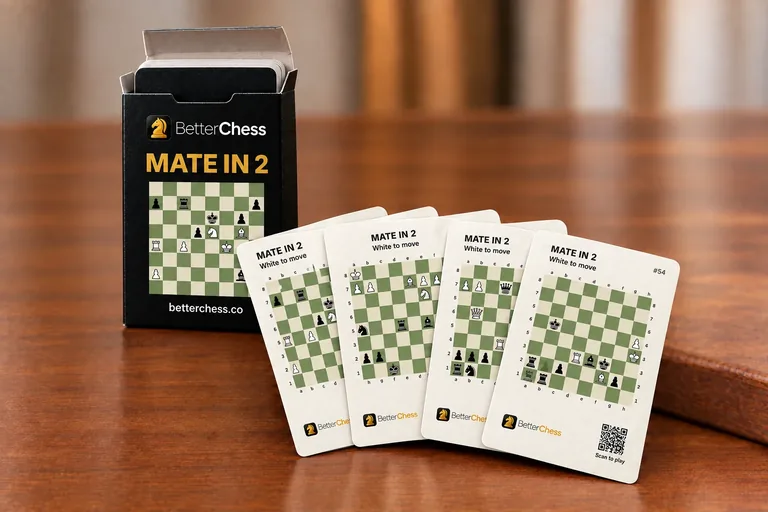
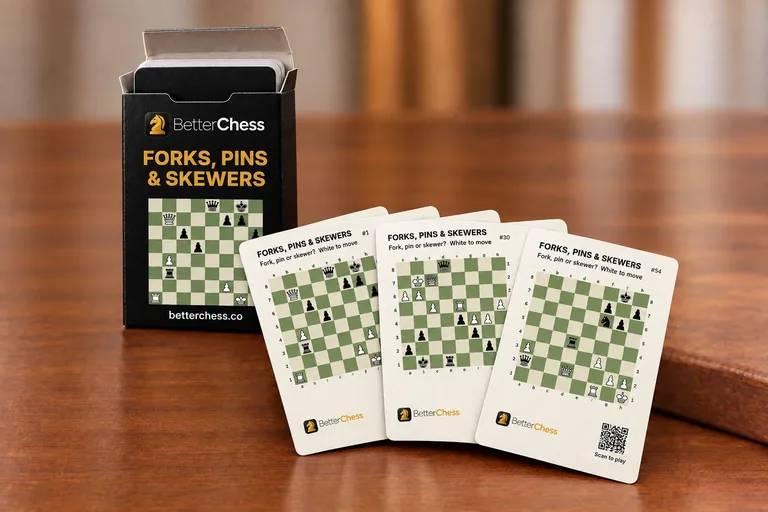
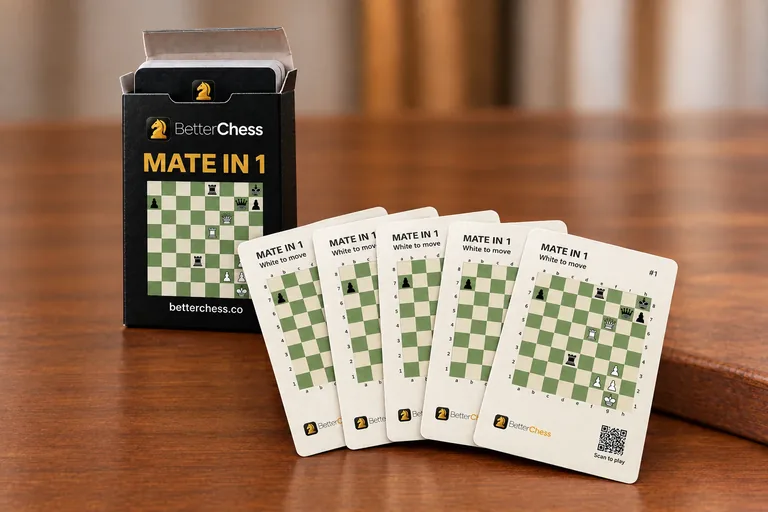
PRINTED CHESS PUZZLE CARDS
Chess puzzle playing card decks
54 poker-size cards in a tuck box. Puzzle on the front, solution on the back.