← Back to BetterChess
How to get real-time feedback on your chess (without cheating)
Real-time feedback is how almost every physical skill is taught. A tennis coach corrects your grip mid-rally, not in an email the next day. Chess coaching has traditionally been the odd one out: you play alone, you lose alone, and you find out why afterward — if you review at all. So it's natural to want feedback during the game. But in chess, "during the game" is exactly where the integrity line runs, and you need to know where it is before you set anything up.
The line, plainly. Any outside assistance — engine, eval bar, analysis tab, a stronger friend whispering moves — during a rated game against a human is cheating. No exceptions, no "just this once." Real-time feedback belongs in training: coached practice games against an engine, walkthroughs, and review immediately after rated games. Everything below stays on the right side of that line.
First, the part that isn't negotiable
Lichess and the other big chess sites all prohibit engine assistance in rated play under their fair-play policies. That covers the obvious (an engine suggesting moves) and the less obvious: an eval bar visible while you play, an analysis board open in another tab, "advisory" browser extensions, even consulting an opening database mid-game where the rules disallow it. Detection has gotten genuinely good — move-matching analysis, timing patterns, browser behavior — and closed accounts are often flagged publicly. Beyond the rules: a rating inflated by assistance just queues you against opponents who will beat you, and it destroys the one feedback signal that tells you whether your training works. If you care enough about improvement to read this guide, cheating is self-defeating on its own terms.
This principle is built into BetterChess too: when a game counts toward your rating estimate, coaching is off. The walkthrough and blunder-catching exist for practice, and the product disables them in rated play — because a rating you got with help isn't yours, even inside a training app.
Why you'd want real-time feedback anyway
Because post-game review arrives too late to change the habit. By the time the engine shows you the blunder, you've already rehearsed the bad decision once — committed to it, felt fine about it. Correction at the moment of decision works differently: you're about to play the lazy move, something stops you, and you experience the better thought process in the situation where you'll need it next time. This is why over-the-board coaches have always played training games with their students and interrupted them. The question isn't whether in-the-moment feedback works; it's how to get it without a human coach at $30–150 an hour — and without breaking fair play.
Setup 1: coached training games against an engine
The cleanest answer: play practice games against an engine opponent inside a tool whose whole job is to coach you while you play. This is what BetterChess is — you play against an engine set to a chosen strength, and the coach works in real time: it ranks your candidate moves, explains your opponent's plan, and when you're about to blunder, it interrupts before you commit, labels the mistake, shows the better move, and explains why in plain English (text or voice). You can take the move back and try again — rehearsing the correct decision, not just hearing about the wrong one. Because the opponent is an engine and the game is practice, there's no integrity issue at all: it's a lesson, not a contest. Mistakes it catches feed a weakness model that turns into targeted puzzles later. You can start with the free assessment to see your level first.
A free, lower-tech version of the same idea: play against Stockfish on Lichess with the analysis board open. The eval tells you when you erred — though not why, which is the actual lesson (more on that gap here).
Setup 2: review immediately after the game
For rated games against humans, the closest legitimate thing to real-time is right after — within minutes, while you still remember what you were thinking on the critical move. That memory is the ingredient that makes review work, and it decays fast. The routine: the moment a rated game ends, find the turning point and ask what you believed at the time. Lichess's free "Learn from your mistakes" replays your errors and makes you find the better move; the automated game review on the big chess sites does similar (free tiers are limited); BetterChess's free roast takes a pasted PGN and points at the exact move where the game flipped, with an explanation, in about 30 seconds — no account needed. Whichever tool, the habit is the same: one game, one turning point, classified while fresh. We've written up the full method.
Setup 3: a human watching you play
The traditional setups still work. A coach or stronger friend watching your training games and stopping you at key moments is the original real-time feedback — superb if you have access to it ($30–$150+/hr for a coach; see the trade-offs). Casual formats do a budget version: hand-and-brain (a partner names a piece type, you choose the square — you hear a stronger player's priorities in real time), or simply talking through unrated casual games with a friend. Note the pattern: all of these happen in unrated or training contexts. Nobody whispers moves in a tournament.
Setup 4: guided walkthroughs of master games
A quieter form of in-the-moment feedback: play through an annotated master game, guess each move before revealing it, and get corrected instantly by the annotation. You're making real decisions and getting immediate verdicts — the feedback loop of a coached game, against history's best players. Our free library of annotated games is built for exactly this: each game replays move by move with plain-English notes, and you can take over the board at any point and play it out against an engine.
What to avoid
To say it once, concretely: no eval bars during rated games, no analysis tab "just to check," no extensions that hint or highlight, no asking a stronger player mid-game, no consulting books or databases where the format forbids it. If a tool offers you any of this during rated play against a human, that's a tool to uninstall. The legitimate version of every one of these exists on the training side — that's where to put it.
Frequently asked
Is using an engine during an online chess game cheating?
In any rated game against a human, yes — unambiguously. Every major chess site bans it under its fair-play policy, and that includes 'just glancing' at an eval bar, an analysis board in another tab, or a browser extension. Detection systems are good, and bans are public.
Is it cheating to use a coaching app while I play?
Not if you're playing against an engine inside a training tool — that's practice, like a lesson with a coach at the board. It becomes cheating the moment any assistance touches a rated game against a human. In BetterChess, coaching is available in practice games; rated games are unassisted by design.
What's the fastest legitimate way to get feedback on a rated game?
Review it immediately after it ends, while your reasoning is still fresh — Lichess's 'Learn from your mistakes,' the automated review built into the big chess sites, or BetterChess's free roast, which finds the exact losing move from a pasted PGN in about 30 seconds with no sign-up.
Does real-time feedback actually help more than post-game review?
For habit formation, yes — correction at the moment of decision is how habits change, which is why over-the-board coaches have always sat with students during training games. Post-game review is still essential; the two cover different things.
Related: How to analyze your chess mistakes · Why engine lines don't make you better · Best AI chess coaches in 2026
BetterChess is a practice tool — we make no guarantee you'll reach 1800 or any rating. Always follow the fair-play rules of any platform you play on. Product names are trademarks of their respective owners.
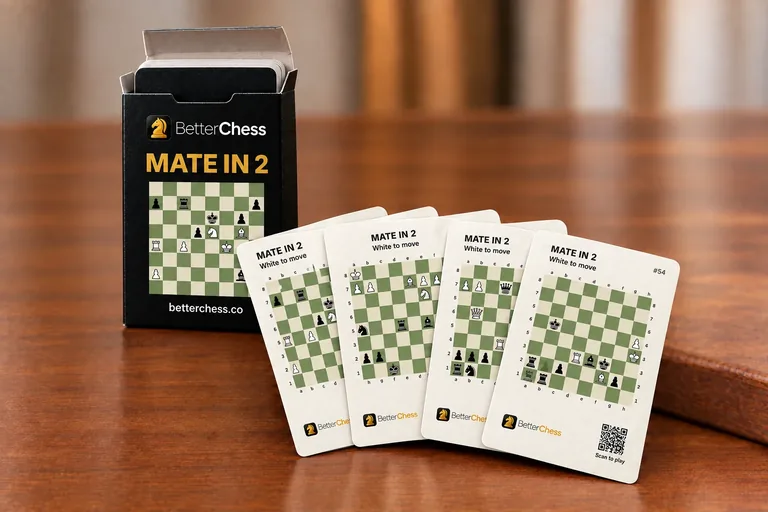
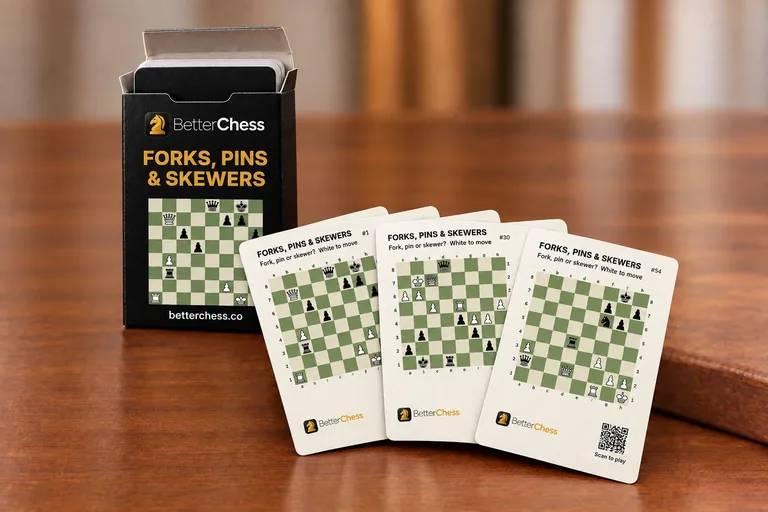
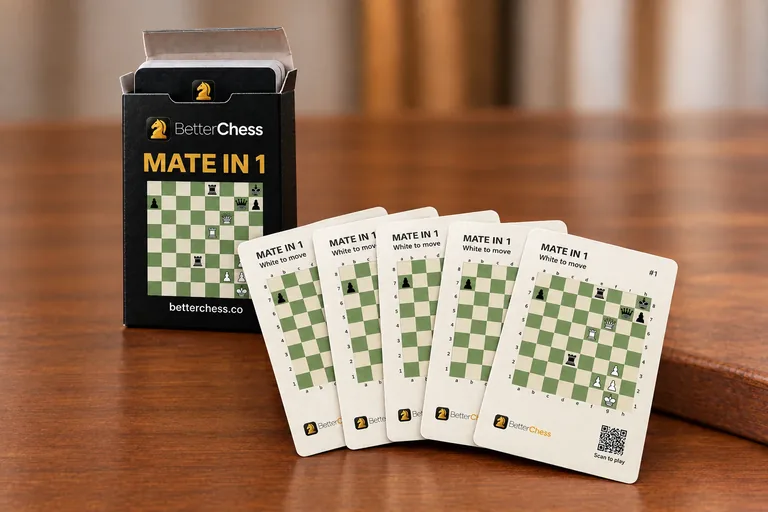
PRINTED CHESS PUZZLE CARDS
Chess puzzle playing card decks
54 poker-size cards in a tuck box. Puzzle on the front, solution on the back.