← Back to BetterChess
Chess improvement tools in 2026: what actually moves your rating
There are more chess training tools than ever, and most reviews of them are either affiliate lists or ads. Here's a different framing: tools fall into five categories, each category fixes a different problem, and what moves your rating depends on which problem you actually have. Buying an opening course when your games are decided by hung pieces is the most common way club players waste money on chess.
Short answer. Under ~1400: a tactics habit plus honest review of your losses beats everything, and free tools (Lichess) are enough. 1400–1800: your bottleneck is recurring, personal mistakes — this is where coaching (AI or human) earns its price. Openings courses matter most after that. No tool replaces playing and reviewing; the good ones just make those hours count more.
Tactics trainers
What they are: puzzle engines — Lichess puzzles (free, unlimited), the puzzles on the big chess sites, and the trainer modes built into most apps.
What they fix: board vision and pattern recognition — seeing forks, pins, and hanging pieces before they happen. Below 1400 this is the highest-leverage training there is, because most games at that level are decided by exactly these patterns.
The honest catch: random puzzles plateau. Puzzle sites tell you a tactic exists ("White to play and win"), which your real games never do, and they don't target the motifs you specifically miss. The fix is motif-filtered practice tied to your own mistakes — which you can do manually (log your missed tactics, filter puzzles by theme) or have done for you (Aimchess infers it from your online games statistically; BetterChess builds drills from mistakes it watched you make).
Opening courses
What they are: structured repertoire material, dominated by Chessable — spaced-repetition courses (MoveTrainer) authored by strong players. PRO is ~$5/mo, but the real cost is the courses themselves, roughly $10–60 each.
What they fix: getting playable middlegame positions and not burning clock in the first ten moves. For memorizing a repertoire, Chessable's spaced repetition genuinely works.
The honest catch: below ~1400, openings almost never decide games — the player who blunders less wins, regardless of who left book first. Opening study is the most enjoyable form of chess procrastination. Buy a course when opponents start punishing your openings specifically, not before.
Engine analysis
What it is: Stockfish on your finished games — free and unlimited on Lichess, bundled into the automated game review on the big chess sites (limited on free tiers).
What it fixes: truth. The engine tells you exactly where the game turned and what was objectively better. Used with a method — find the turning point, classify the mistake, track the pattern (we wrote up the full method here) — it's the backbone of self-study.
The honest catch: engines give you the what and never the why. A line of computer moves doesn't teach you the idea behind them, and eval-bar scrolling feels like study while teaching almost nothing — enough of a problem that we wrote a separate guide on it.
AI coaches
What they are: tools that add explanation and personalization on top of engine truth. The label covers genuinely different products:
- DecodeChess (~$8/mo, free tier) — load a finished game, get deep plain-language explanations of the engine's reasoning: threats, plans, piece roles. The strongest pure post-game explainer. Full comparison →
- Aimchess (~$8/mo, free tier) — connects to your online chess accounts and turns your history into weakness statistics with drills. The best data-driven view of where you bleed rating. Full comparison →
- BetterChess ($5.99/mo, no free trial) — that's us, so weigh this paragraph accordingly. A coach you play games against: it catches a blunder before you commit it, explains the better move in plain English (with voice), and turns your recurring mistakes into targeted puzzles. The most hands-on option in the category; built for 1100–1800 players who want correction in the moment rather than a report afterward.
What they fix: the "why" gap that raw engines leave, and the bookkeeping of tracking your own weaknesses. The honest catch: they're multipliers on effort, not substitutes for it — and the three above are different enough that picking by price alone is a mistake. Our full comparison of AI coaches goes use case by use case.
Human coaches
What they are: the traditional answer — $30–$150+ per hour for a titled or experienced player who reviews your games and builds you a study plan. (We compared the trade-offs in detail here.)
What they fix: everything the other categories can't: accountability, a curriculum that adapts to you as a person, and judgment about what to ignore. A good coach is still the gold standard if the budget supports weekly sessions.
The honest catch: cost and availability. One hour a week means your coach sees a fraction of your games, and the mid-game moments where habits actually form happen alone. That's the gap AI coaching tools exist to fill — not a replacement for a strong human coach, but coverage for the other 167 hours.
And the traditional methods?
Books and annotated master games predate every app and still work. Playing through well-annotated games — guessing the next move, reading why the chosen move was better — trains evaluation and planning in a way puzzles don't. The classic collections are cheap; we also host a free library of famous games annotated move by move with boards you can replay or take over against an engine. The apps didn't replace this method; the good ones just made it more interactive.
Which you need, by rating
- Under 1000: play lots of rapid, do daily tactics, review your losses. Lichess covers all of it free. Skip courses and coaches for now.
- 1000–1400: the blunder-reduction band. Tactics habit, the turning-point review method on every loss, simple opening principles over memorized lines. An AI coach starts paying off here if you keep repeating the same mistakes and can't see the pattern yourself.
- 1400–1800: personalization matters most. Your losses now come from your specific recurring weaknesses, not general sloppiness. This is the sweet spot for coaching — AI (live correction and targeted drills) or human (if the budget allows) — plus a first serious opening course if your openings are getting punished.
- 1800+: structured study: serious repertoire work (Chessable shines here), endgame theory, annotated master games, and ideally a human coach for direction. Generic tools flatten out at this level.
Frequently asked
What is the best free chess improvement tool?
Lichess, and it isn't close: unlimited play, unlimited puzzles, unlimited engine analysis with an eval graph, and opening exploration — all free. If you spend nothing else, Lichess plus a consistent post-game review habit covers a lot.
Do I need to pay anything to improve at chess?
No. Free tools cover playing, puzzles, and engine analysis. Paid tools buy you structure, personalization, and time: courses organize the material, AI coaches explain your specific mistakes, human coaches add accountability. Whether that's worth it depends on your budget and how much you value the hours saved.
What single tool gives the most rating gain?
Below about 1400, whatever cuts your blunder rate — consistent tactics practice plus reviewing the turning point of every loss. Above 1400, the answer shifts toward whatever targets your specific recurring weakness, which is what coaching (AI or human) is for.
Are AI chess coaches worth it?
If you use them. DecodeChess (~$8/mo) is worthwhile if you'll actually read deep post-game explanations; Aimchess (~$8/mo) if you'll act on weakness stats; BetterChess ($5.99/mo, no free trial) if you want correction live during play and drills built from your own mistakes. None of them work if the games don't get played.
Related: Best AI chess coaches in 2026 · Why engine lines don't make you better · Real-time feedback without cheating · The private-coach alternative
Prices are approximate and change; check each provider for current pricing. All product names are trademarks of their respective owners; this guide is our independent opinion. BetterChess is a practice tool — we make no guarantee you'll reach 1800 or any rating.
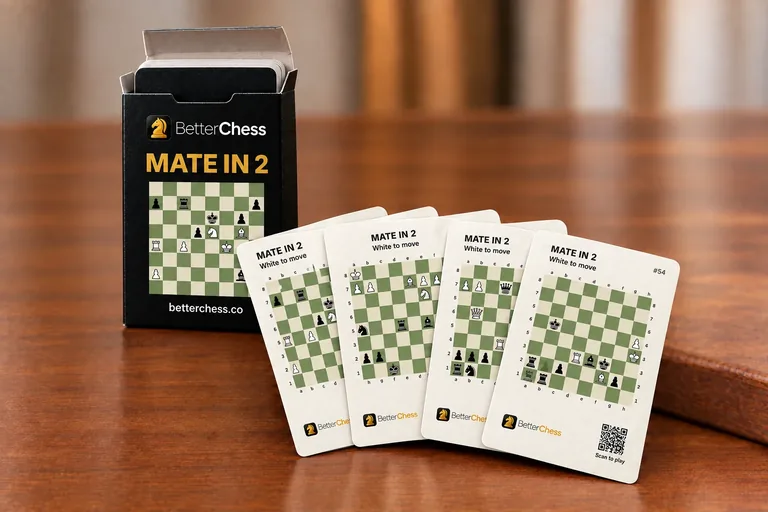
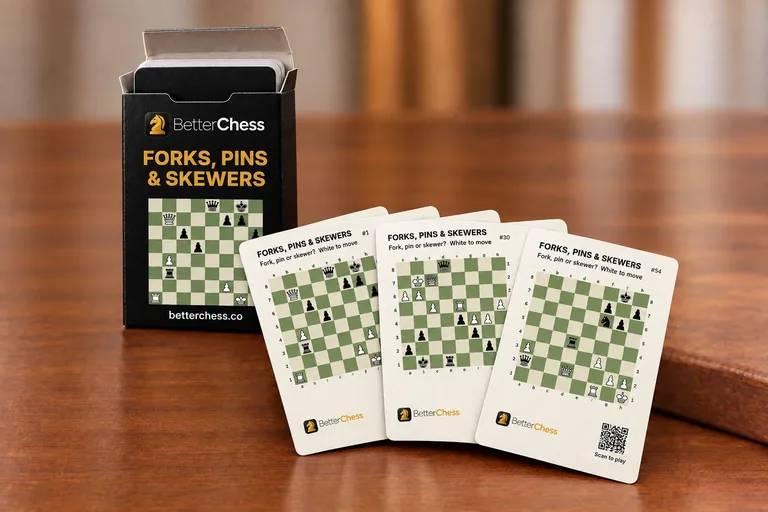
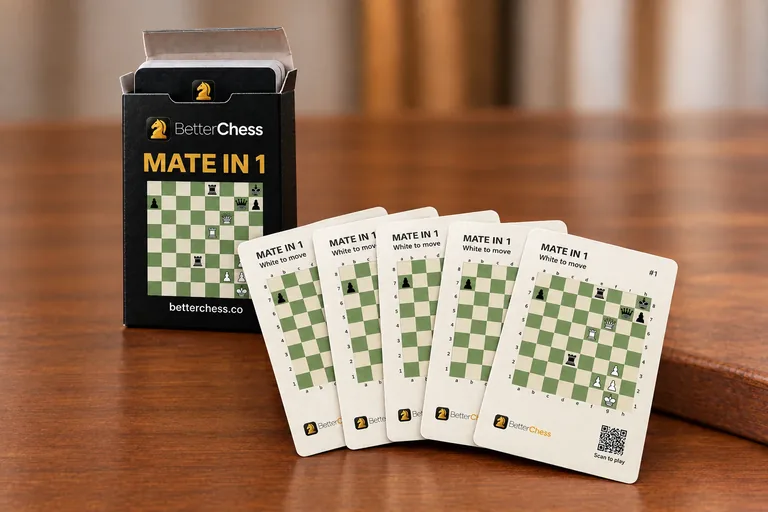
PRINTED CHESS PUZZLE CARDS
Chess puzzle playing card decks
54 poker-size cards in a tuck box. Puzzle on the front, solution on the back.