← Back to BetterChess
How to stop blundering in chess
You don't need new openings to gain rating; you need to blunder less. At the club level, the player who makes the second-to-last mistake usually wins. Cutting your blunder rate is the highest-leverage thing you can do.
The three blunder types
(1) Hanging something — leaving a piece or pawn free (see how to stop hanging pieces). (2) Missing the opponent's threat — you saw your idea, not theirs. (3) Miscalculating a sequence — you went two moves deep and the third move refutes it. Most rating is lost to (1) and (2), which are pure attention, not skill.
The pre-move checklist
Every move, before you commit: What does my opponent threaten? (check their last move for new attacks), then is my move safe? (does it hang anything, does it walk into a check, fork, or pin). Saying "what's the threat?" out loud on the opponent's move is the single most effective anti-blunder habit there is.
Manage your clock
Blunders spike under time pressure. Don't play only bullet/blitz if you want to improve — play rapid (10+ min) so you have time to run the checklist, and don't move instantly in "obvious" positions, which is exactly where one-movers hide.
How BetterChess helps
BetterChess catches blunders the moment you're about to make one: it flags the move, labels it (blunder / mistake / inaccuracy), shows what your opponent would play, and explains the safer choice — then turns your recurring blunder patterns into targeted puzzles. You build the checklist habit with a coach watching, instead of only finding out after you've lost.
Frequently asked
Why do I blunder so much in chess?
Usually attention, not ability: you focus on your own plan and miss the opponent's threat or leave something hanging. A consistent pre-move check fixes most of it.
How do I stop blundering in time trouble?
Play longer time controls while you build the habit, and budget your clock so you're not making the critical decisions with seconds left. Blunder rate rises sharply under 30 seconds.
How long until my blunder rate drops?
Most players see a real drop within a few weeks of running a pre-move check every game — but it depends entirely on your own consistency. There's no guaranteed timeline.
Related: How to stop hanging pieces · Why do I lose at chess? · Stop losing winning positions
BetterChess is a practice tool — we make no guarantee you'll reach 1800 or any rating. Improvement depends on your own practice and effort.
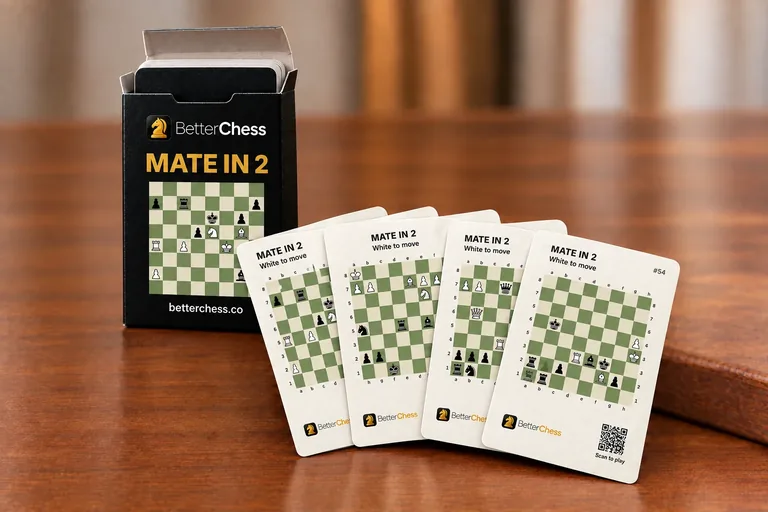
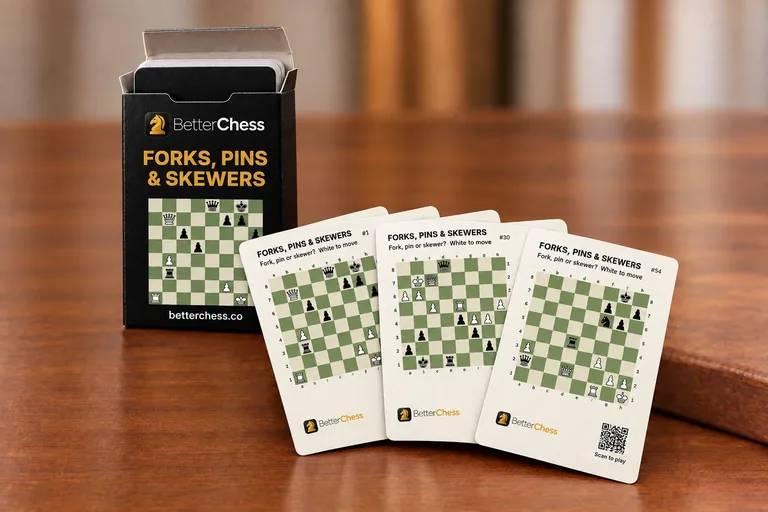
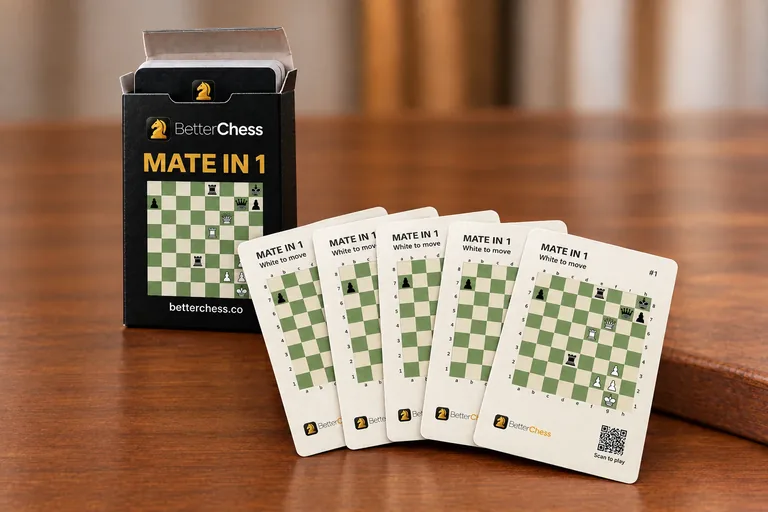
PRINTED CHESS PUZZLE CARDS
Chess puzzle playing card decks
54 poker-size cards in a tuck box. Puzzle on the front, solution on the back.