← Back to BetterChess
Why engine lines don't make you better (and what to use instead)
Every club player has done this: lose a game, open the engine, watch the eval bar dive at move 23, click through the line Stockfish wanted — knight goes to an odd square, a quiet pawn move, suddenly +4 — close the laptop feeling vaguely educated. Do that for a year and your rating will be roughly where it started. Not because engines are wrong (they're never wrong, that's the problem) but because of what an engine line is: an answer key with no working shown.
Short answer. Engines tell you what was best, never why. Learning lives entirely in the why. Use the eval as a signal — it locates the moment your game went wrong with perfect accuracy — then get the lesson from something that explains: an explanation tool, an annotated master game, or your own analysis done before the engine confirms it.
What engines are genuinely great at
Let's be fair to the engine first, because the answer here isn't "unplug Stockfish." Engines are unbeatable at three things: locating mistakes — the eval graph shows the exact move where your game flipped, no human coach is more accurate; refuting wishful thinking — you thought your sacrifice was sound, the engine shows the defense you ignored; and settling arguments — was that endgame actually drawn? Now you know. All three are about truth, and as a truth-teller the engine has no equal. Keep it for exactly that.
Why the lines don't teach
They give moves, not ideas. The engine says the right move was a rook lift. What it can't say is the idea — that your opponent's last move weakened the dark squares and the rook was heading for the third rank to exploit them. Without the idea, you can't recognize the same situation next week wearing a different costume. You've memorized one answer to one position you will never see again.
The best move is often the wrong lesson. Engine top choices frequently depend on a ten-move tactical justification you couldn't find over the board and shouldn't try to. For a 1400, the humanly-findable second-best move with a clear plan behind it is worth more than the brilliancy — but the engine has no concept of "findable by you." It optimizes the position, not your learning.
Recognition masquerades as learning. When the engine shows the better move, it looks obvious — of course, the fork, how did I miss it. That feeling of "of course" is recognition, and it's almost worthless: seeing an answer is a different mental act from generating one. This is the same reason reading solved puzzles doesn't train tactics but solving them does. Engine review keeps you permanently on the easy side of that divide.
The eval bar becomes a crutch. Train with the bar always visible and you outsource the core skill of chess — judging who's better and why — to a number you won't have during a real game. Players raised on the bar often literally cannot evaluate a quiet position without it.
The right division of labor: signal vs lesson
Here's the model that makes engines useful instead of useless. The eval is a signal: it tells you where to look — one move, one cliff on the graph. The lesson is everything the signal doesn't contain: what you were thinking, what the position actually demanded, what kind of mistake it was, and how often you make that kind. Concretely: find the single turning point of the game, reconstruct your reasoning at that moment, classify the error (missed tactic, bad trade, slow move under attack), and track which class keeps recurring across your games. That's a five-minute loop and it's the highest-yield use of an engine that exists — we've written it up step by step in how to analyze your chess mistakes. Notice the engine's role in it: one data point. Everything that teaches happens after the engine has spoken.
What to use instead of raw lines
Explanation tools. A category of tools now exists specifically to translate engine truth into human ideas. DecodeChess (~$8/mo, free tier) does it after the game: load a finished game and it unpacks the engine's reasoning — threats, plans, what each piece is doing. BetterChess does it during play: you play coached games against an engine opponent, and the coach explains the why in plain English at the moment you're deciding — catching the blunder before you commit it rather than annotating it afterward — then turns your recurring mistakes into targeted puzzles. (That's our product, priced at $5.99/mo, no free trial; the honest comparison of the whole category is here.) Both rest on the same premise as this guide: the engine supplies the truth, something else has to supply the understanding.
Annotated master games. The pre-engine technology that still outperforms engine lines for building judgment: a strong player explaining their own moves. Cover the moves, guess each one, read why the actual choice was better than yours. Every guess is a rep of decision-making with instant correction — the thing engine review never gives you. Classic game collections work; our free annotated library does this interactively, with plain-English notes on every move and boards you can take over and play out against an engine.
Your own analysis, engine last. The old training-partner method, solo: after a serious game, write down where you think it turned and why, in sentences, before any engine sees it. Then check. When the engine disagrees with your story, that disagreement is the most precisely targeted lesson you'll ever get — it's pointing at a specific flaw in your evaluation, not a generic one. Ten minutes per game, free, and it compounds.
A simple weekly routine
Putting it together for a club player: play your games with no assistance of any kind (in rated play that's not optional — here's where the integrity line runs). After each loss, run the turning-point loop — guess, check, classify, log. Once a week, look at the log, pick the dominant mistake type, and aim one drill at it. Alongside, one annotated master game a week, guessing moves. The engine appears in this routine exactly twice — confirming your turning-point guess and checking your written analysis — and never as the teacher. That's the proportion that moves ratings.
Frequently asked
Should I stop using engines completely?
No — engines are the best truth-tellers in chess. Use them to locate your mistakes (where the eval flipped) and to check your own analysis after you've done it. The failure mode isn't using engines; it's letting engine output substitute for understanding.
What's the best alternative to engine analysis for learning chess?
Explanation, in some form: a tool that translates engine truth into ideas (DecodeChess after the game, BetterChess during it), annotated master games where a strong player explains the why, or your own written analysis checked against the engine afterward.
Are engine lines useful for learning openings?
Raw lines, mostly not at club level — you'll memorize moves whose purpose you can't explain, and be lost the first time an opponent deviates. Opening study works when each move comes with its idea, which is what good courses and annotated games provide.
Why am I not improving even though I review every game with an engine?
Probably because the review produces recognition, not learning — you see the better move and nod, but never extract the reason or the pattern. Switch to finding one turning point per game, classifying it, and tracking which mistake type recurs. That loop changes results; scrolling lines doesn't.
Related: How to analyze your chess mistakes · Chess improvement tools in 2026 · BetterChess vs DecodeChess · Annotated game library
BetterChess is a practice tool — we make no guarantee you'll reach 1800 or any rating. Prices are approximate and change. Product names are trademarks of their respective owners; this guide is our independent opinion.
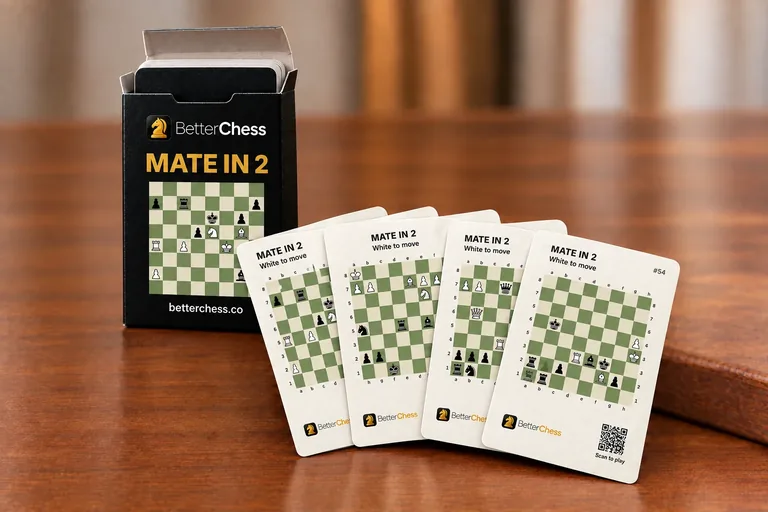
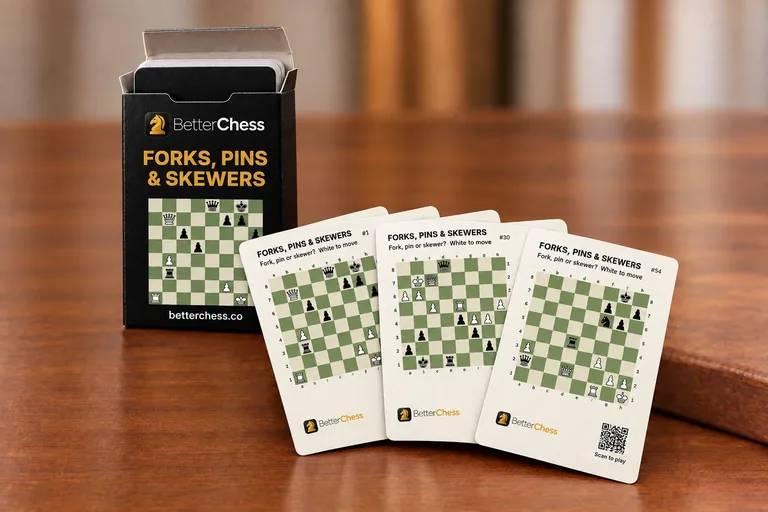
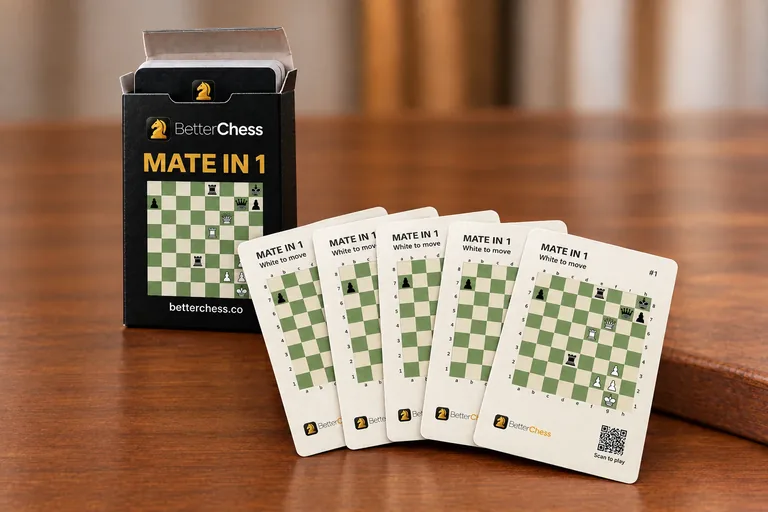
PRINTED CHESS PUZZLE CARDS
Chess puzzle playing card decks
54 poker-size cards in a tuck box. Puzzle on the front, solution on the back.