Sicilian Sveshnikov
Starting position
Engine ready — step through to see live evals.
Press ▶ Watch to play the line out, or Next to step through it — the engine evaluates every position.
The Sveshnikov breaks a rule on purpose: Black plays 5...e5, kicking the knight but leaving a gaping hole on d5 and a backward pawn on d6. For decades that looked like bad chess; then Evgeny Sveshnikov proved the activity Black gets in return is worth it, and Magnus Carlsen made it his main defence in a world championship match. It is a concrete, self-confident opening where Black plays for the initiative from move five.
The idea in one line
Kick the d4-knight with 5...e5, accept the d5 hole and backward d6-pawn, then generate piece activity with ...a6, ...b5 and the ...f5 break before White's positional bind settles.
Key ideas
- 5...e5 gains a tempo and space; the d5 hole is real but Black argues one square cannot hold White's whole position together.
- White's knight tour Ndb5-a3 (after ...a6) leaves it offside on a3; Black's ...b5 gains queenside space and keeps it there a while.
- The ...f5 break is Black's main lever: it attacks e4, opens lines toward White's king, and turns the static weaknesses into dynamic play.
- Typical main lines see Bg5xf6 giving Black doubled f-pawns and the bishop pair: another rule-breaking trade the Sveshnikov gladly accepts because the pawns control key central squares.
Plans for each side
White: Occupy d5: Ndb5 and Bg5 pressure f6 so a knight can sit on d5 permanently, often after Bxf6. Then blockade, restrain the ...f5 break, and slowly convert the better structure. Nd5 followed by c3 and a4 against Black's queenside pawns is the standard positional treatment.
Black: Chase the b5-knight with ...a6, expand with ...b5, develop the f8-bishop actively (often to e7 or via g7 after ...g6), castle, and prepare ...f5. Piece activity and kingside space must keep compensating for the d5 hole; passive play loses positionally.
Common mistakes to avoid
- Do not play the Sveshnikov half-heartedly: if you never achieve ...f5 or real activity, you are just worse with a bad pawn on d6.
- Watch the c6-square and the a4 break: after ...b5, White's a4 can undermine the whole queenside if ...b4 or ...bxa4 is not calculated.
- As White, do not grab material and open lines while behind in development; the Sveshnikov punishes greed with raking bishops and a crashing ...f5.
The main line, explained
2… Nc6...Nc6 develops toward d4 and keeps maximum flexibility inside the Open Sicilian.
4… Nf6...Nf6 attacks e4 and provokes Nc3 before Black shows the real idea.
5… e5...e5 is the Sveshnikov: Black kicks the knight, grabs space, and volunteers the d5 hole in exchange for activity.
6. Ndb5Ndb5 is the critical reply, eyeing the d6-square and forcing Black to spend a move on ...d6.
6… d6...d6 covers the c7 and e7 entry points; next comes ...a6 pushing the knight to a3 and ...b5 expanding.
Frequently asked
Isn't the d5 hole in the Sveshnikov just bad?
It is a genuine weakness, and Black knows it. The argument is dynamic: the tempo gained by 5...e5, the queenside expansion with ...b5, and the ...f5 break add up to activity that outweighs one square. Carlsen trusted it in a world championship match, which settles the soundness question.
Is the Sveshnikov good for club players?
Yes, if you like active piece play and can accept structural ugliness. The plans are clear (...a6, ...b5, ...f5), and club opponents rarely know the precise theory needed to exploit d5. If you need tidy pawn structures to feel safe, pick another Sicilian.
What should White play against the Sveshnikov?
The main line with 7.Bg5 and 9.Nd5 (or 9.Bxf6) aiming to own d5 forever is the critical test. Sidesteps like the Rossolimo move order (3.Bb5 against 2...Nc6) avoid the discussion entirely, which is exactly why many White players choose them.
More openings to explore
Sicilian Najdorf
Sicilian Defence (1.e4 c5) · B90-B99
Learn & play ›Sicilian Rossolimo
Sicilian Defence (1.e4 c5) · B30-B31
Learn & play ›Knowing the moves of the Sicilian Sveshnikov is not the same as knowing why they work. Use Claude? BetterChess gives it a real engine, so it explains this opening from the board in front of you instead of from memory.
BetterChess is a practice tool — we make no guarantee you'll reach 1800 or any rating. The lines here are standard, well-established opening theory, and every move is checked legal with the same engine the board runs.
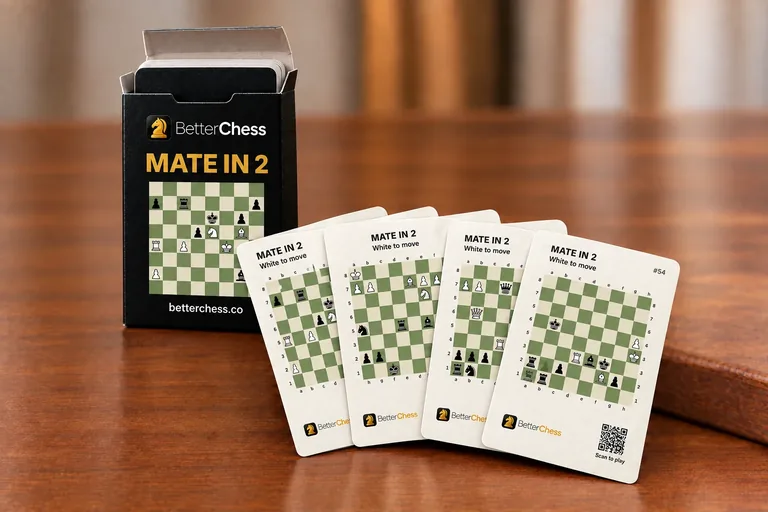
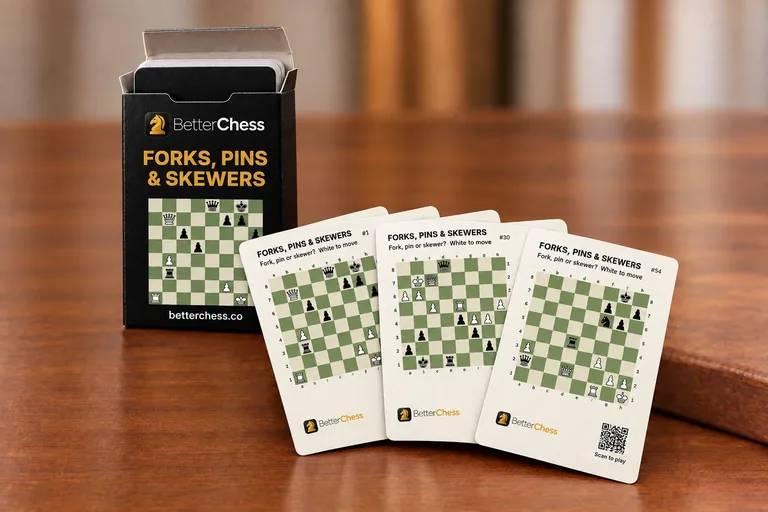
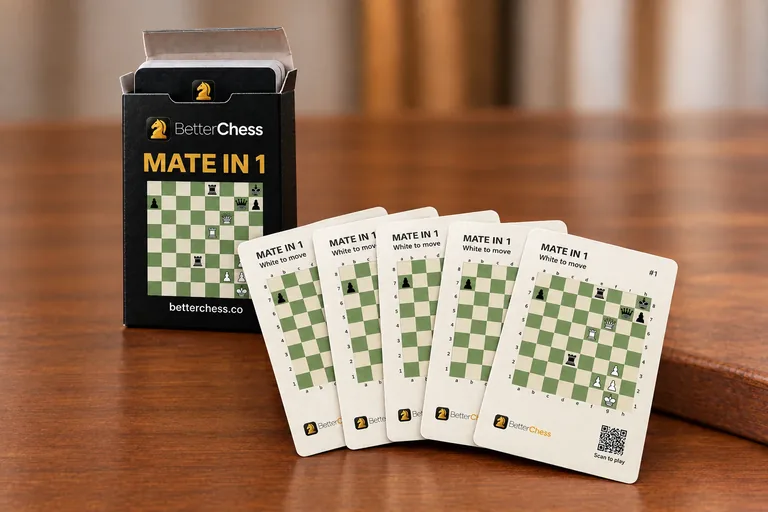
PRINTED CHESS PUZZLE CARDS
Chess puzzle playing card decks
54 poker-size cards in a tuck box. Puzzle on the front, solution on the back.