Sicilian Rossolimo
Starting position
Engine ready — step through to see live evals.
Press ▶ Watch to play the line out, or Next to step through it — the engine evaluates every position.
The Rossolimo is the anti-Sicilian that world champions actually play: against 2...Nc6, White develops the bishop to b5 instead of entering the Open Sicilian with 3.d4. The threat to take on c6 and wreck Black's pawns is positional, not tactical, and it steers the game away from Najdorf and Sveshnikov preparation entirely. Carlsen, Caruana and generations of elite players have used it as a primary weapon, so it is both a theory-saver and completely sound.
The idea in one line
Develop Bb5 against the c6-knight, castle quickly, and choose: trade on c6 to give Black doubled pawns and play against them, or keep the bishop and build with c3 and d4 under better circumstances.
Key ideas
- Bb5 pressures the knight that guards both d4 and e5; the mere option of Bxc6 shapes Black's whole setup.
- The Bxc6 structures are the heart of the opening: Black gets the bishop pair, White gets the healthier pawns and clear plans (blockade the doubled pawns, play d3 or d4 at the right moment, target them in the endgame).
- White castles by move four in most lines, so sharp Black tries backfire: development is the Rossolimo's tactical insurance.
- Against the main 3...g6, ideas include Bxc6 followed by h3, Nc3 and d3 with a grip, or keeping the bishop with Re1, c3 and d4 taking the centre under good conditions.
Plans for each side
White: Castle fast, then pick a structure: Bxc6 followed by d3, h3, Nc3 and a long squeeze against the doubled c-pawns, or retain the bishop and play c3 and d4, meeting ...e5 setups with a timely b4 or d4 break. Rooks belong on e1 and the queenside files where the play opens.
Black: Choose a setup against the pin-that-is-not-a-pin: 3...g6 with ...Bg7 and ...e5 builds a big dark-square grip, 3...e6 keeps pawns flexible and prepares ...Nge7, and 3...d6 heads for quieter play. If White takes on c6, use the bishop pair and half-open b-file actively before the pawn weaknesses tell.
Common mistakes to avoid
- As White, do not trade on c6 without a follow-up plan: the bishop pair is real compensation, and aimless play lets Black's bishops take over.
- Do not push d4 too early when Black has ...cxd4 and pressure ready; the Rossolimo's promise is getting d4 in under better circumstances, not at any cost.
- As Black, avoid ...a6 at the wrong moment: unlike the Ruy Lopez, White often just takes on c6 with a smile, since the doubled-pawn structure is the whole point.
The main line, explained
2… Nc6...Nc6 is the move the Rossolimo targets: the knight defends e5 and supports ...d4 breaks, so White questions it immediately.
3. Bb5Bb5 develops with a positional threat: Bxc6, doubling Black's pawns, hangs over the position from now on.
3… g6...g6 is the main line: the bishop will fight for the long diagonal and support ...e5.
4. O-OO-O already: White's fast development is what makes the Rossolimo tactically bulletproof.
5. Re1Re1 supports e4 and prepares c3 and d4, taking the centre while Black is still setting up.
5… e5...e5 grabs the centre and fixes the dark-square grip, the consistent follow-up to the fianchetto.
Frequently asked
Is the Rossolimo better than the Open Sicilian?
It is a different bargain. The Open Sicilian promises more if you know mountains of theory; the Rossolimo gives a sound, slightly favourable game from one page of ideas. Elite players use both, which tells you the Rossolimo concedes nothing important.
Should White always take on c6?
No. Bxc6 is strongest when Black must recapture with a pawn and the resulting structure suits White's setup. In other lines keeping the bishop and building with c3 and d4 is better. Deciding when to trade is the key skill of the opening.
How does the Rossolimo differ from the Ruy Lopez?
The bishop move looks the same, but there is no pawn on e5 to defend, so Black cannot chase the bishop with the same effect. Against the Sicilian the trade on c6 creates doubled pawns that are genuinely weak, which is why ...a6 often just invites Bxc6.
More openings to explore
Ruy Lopez (Spanish)
King's Pawn (1.e4 e5) · C60–C99
Learn & play ›Sicilian Sveshnikov
Sicilian Defence (1.e4 c5) · B33
Learn & play ›Knowing the moves of the Sicilian Rossolimo is not the same as knowing why they work. Use Claude? BetterChess gives it a real engine, so it explains this opening from the board in front of you instead of from memory.
BetterChess is a practice tool — we make no guarantee you'll reach 1800 or any rating. The lines here are standard, well-established opening theory, and every move is checked legal with the same engine the board runs.
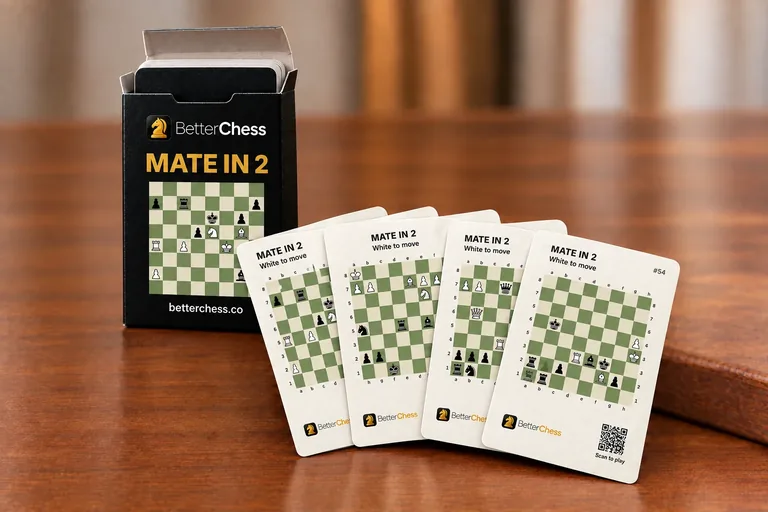
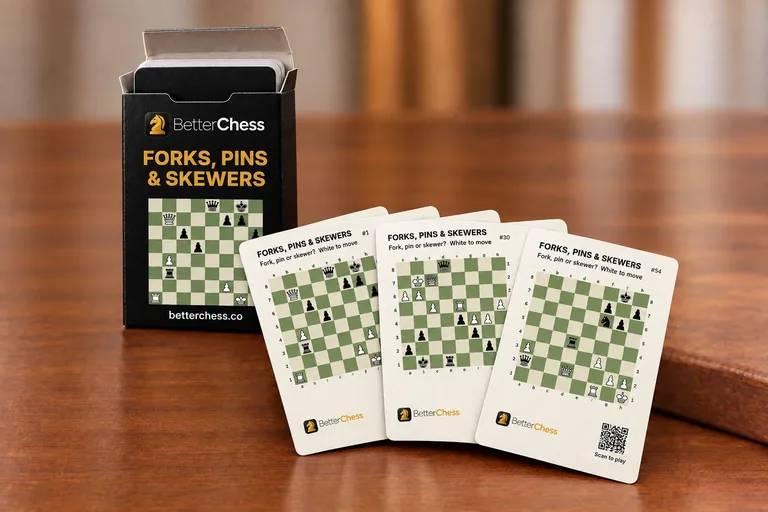
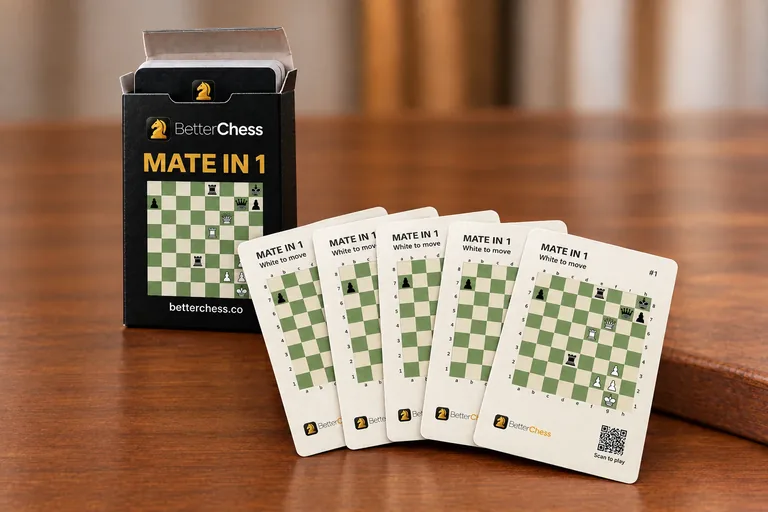
PRINTED CHESS PUZZLE CARDS
Chess puzzle playing card decks
54 poker-size cards in a tuck box. Puzzle on the front, solution on the back.