Sicilian Alapin
Starting position
Engine ready — step through to see live evals.
Press ▶ Watch to play the line out, or Next to step through it — the engine evaluates every position.
The Alapin is the most respectable way to refuse the Sicilian fight on Black's terms. Instead of 2.Nf3 and 3.d4, when Black recaptures with the c-pawn and gets the famous Sicilian counterplay, White plays 2.c3 first: now d4 will be met by cxd4 and White keeps a full pawn centre. Black's counter-chances shrink, the theory shrinks with them, and White gets sensible, slightly better positions that are easy to play at club level.
The idea in one line
Prepare d4 with 2.c3 so the centre can be rebuilt with a pawn: White gets space and clean development, Black gets a solid but slightly passive game with targets to defend.
Key ideas
- The whole point is the recapture: after c3 and d4 cxd4, cxd4 keeps pawns on d4 and (often) e5, denying Black the open c-file play that defines the Open Sicilian.
- Against 2...Nf6 (the main reply), e5 gains a tempo on the knight; the d5-knight then gets questioned by d4 and sometimes c4, and White develops with easy natural moves.
- Against 2...d5, White trades on d5 and gains time on the queen with d4 and Nf3, reaching an isolated-queen-pawn game with active pieces.
- The Alapin is a theory-saver, not a drawing weapon: White plays for a real edge with space and better development, and the resulting middlegames reward the better-prepared side.
Plans for each side
White: Build and keep the pawn centre: d4 supported by c3, e5 gaining space when Black allows it. Develop Nf3, Bc4 or Be2, castle short, and use the space advantage. If the centre gets traded, play actively around the isolated d-pawn with piece pressure.
Black: Hit the centre before it settles: 2...Nf6 or 2...d5 are both principled. Then chip at d4 and e5 with ...d6 or ...Nc6 and ...e6, trade a pair of central pawns, and aim for a solid equal middlegame where White's space means little.
Common mistakes to avoid
- Do not defend the e5-pawn at all costs: overextending with f4 and piece contortions turns a space edge into a target gallery.
- Watch the d4-pawn once the c-file opens; if Black gets ...Nc6, ...d6 and pressure in time, the proud centre can become a weakness.
- As Black, avoid passivity: meeting 2.c3 with slow moves like 2...e6 and 3...d6 hands White the full centre for free, which is exactly what the Alapin wants.
The main line, explained
2. c3c3 is the Alapin: White spends a tempo so that d4 can be answered cxd4 with a pawn recapture, keeping the big centre.
2… Nf6...Nf6 is Black's most popular answer, hitting e4 immediately since c3 took the natural square from White's queenside knight.
3. e5e5 gains a tempo on the knight and grabs kingside space, the consistent follow-up.
3… Nd5...Nd5 centralizes; White usually leaves it alone rather than kicking with c4, since the c3-pawn is earmarked for recapturing on d4.
4. d4d4 builds the intended centre; White is happy to trade this pawn knowing c3 recaptures.
6. cxd4cxd4 is the point of move two: White restores a healthy pawn on d4 and keeps central space with the e5-pawn.
Frequently asked
Is the Alapin a serious try for an advantage?
Yes. It avoids the heaviest Sicilian theory, but it is no cop-out: White gets a genuine space advantage and easier development in the main lines. Many strong grandmasters use it as their primary anti-Sicilian.
What is Black's best reply to 2.c3?
The two principled moves are 2...Nf6, hitting e4 at once, and 2...d5, striking the centre before d4 arrives. Both are fully sound. Quiet moves that ignore the centre let White build exactly the position 2.c3 was designed for.
Why not just play the Open Sicilian as White?
The Open Sicilian is excellent but demands enormous theory against the Najdorf, Dragon, Sveshnikov and friends. The Alapin gives you one set of structures and plans against everything, which is a practical bargain for club players.
More openings to explore
Sicilian Defense
Black vs 1.e4 · B20–B99
Learn & play ›Smith-Morra Gambit
Sicilian Defence (1.e4 c5) · B21
Learn & play ›Knowing the moves of the Sicilian Alapin is not the same as knowing why they work. Use Claude? BetterChess gives it a real engine, so it explains this opening from the board in front of you instead of from memory.
BetterChess is a practice tool — we make no guarantee you'll reach 1800 or any rating. The lines here are standard, well-established opening theory, and every move is checked legal with the same engine the board runs.
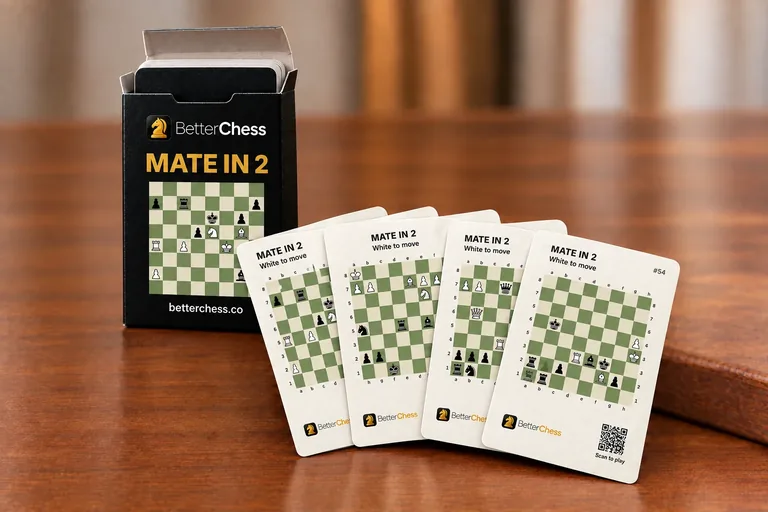
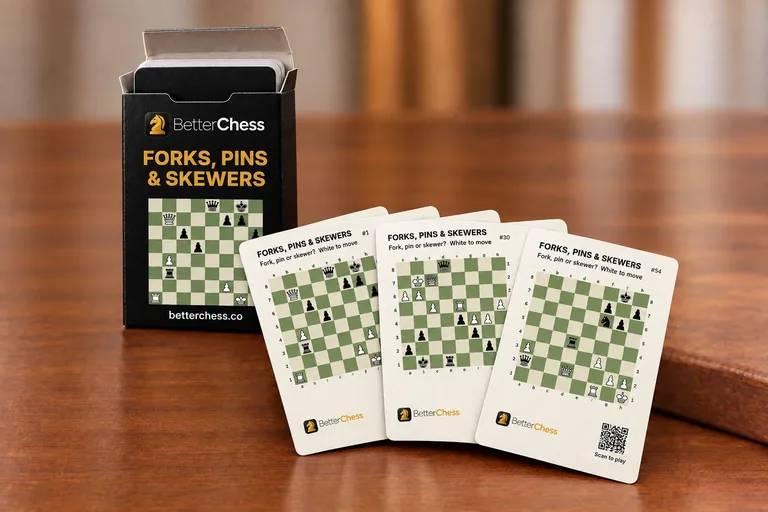
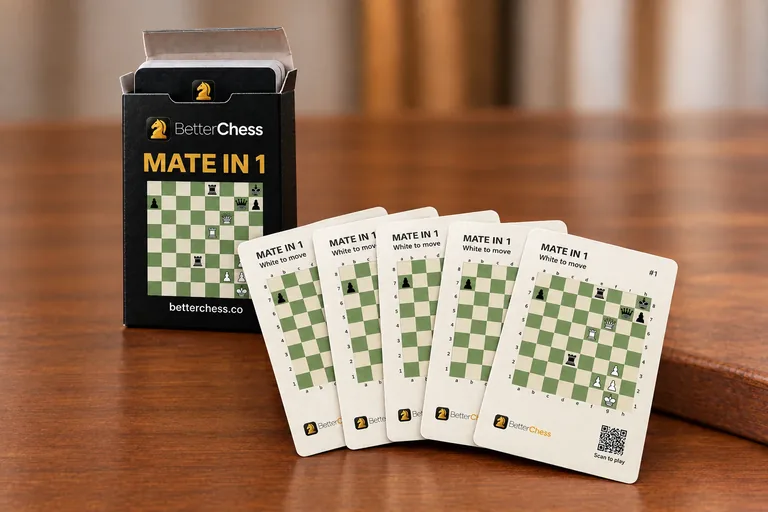
PRINTED CHESS PUZZLE CARDS
Chess puzzle playing card decks
54 poker-size cards in a tuck box. Puzzle on the front, solution on the back.