← Back to BetterChess
Why do I lose at chess?
If you feel like you understand chess but keep losing, you're not alone — and it's usually not about intelligence or memory. Below master level, games are decided by a few recurring mistakes. Find yours, and your results move.
The usual culprits
In order of how much rating they cost most club players: blunders (hanging pieces, missing threats), not having a plan (moving pieces without a goal), rushing (playing fast in critical moments), weak endgames (drawing or losing winning positions), and tilt (playing on emotionally after a setback). Notice that most are habits, not knowledge gaps.
Find your actual pattern
Don't guess — look. Review your last 10–20 losses and tag the move where it went wrong. You'll almost always see a cluster: "I hang pieces when attacked," or "I fall apart in equal endgames," or "I lose on time." That cluster is your highest-value training target, not whatever the internet says you should study.
Train the pattern, not everything
Once you know your pattern, train it directly: a pre-move safety check for blunders (see how to stop blundering), endgame technique if you bleed points late, or slower time controls if you rush. Targeted practice on your weakness beats grinding random content.
How BetterChess helps
BetterChess does the diagnosis and the training in one place: it coaches you live, builds a model of the mistakes you actually make, explains the better move in plain English, and feeds you targeted puzzles on your specific weak spots — so you stop losing the same way twice.
Frequently asked
Why do I lose at chess even though I know the rules and openings?
Because games are decided by mistakes, not knowledge. Most losses below 1800 come from blunders, no plan, or rushing — all habits you can train, regardless of how much theory you know.
How do I find my biggest weakness?
Review your recent losses and mark the move where the game turned. The pattern that repeats is your weakness — and your best training target.
Will I improve if I just play more games?
Playing helps only if you review and fix patterns. Volume without feedback tends to reinforce the same mistakes. Targeted practice with feedback is what moves rating — though results always depend on your own effort.
Related: How to stop blundering · Stop losing winning positions · Best AI chess coaches
BetterChess is a practice tool — we make no guarantee you'll reach 1800 or any rating. Improvement depends on your own practice and effort.
PRINTED CHESS PUZZLE CARDS
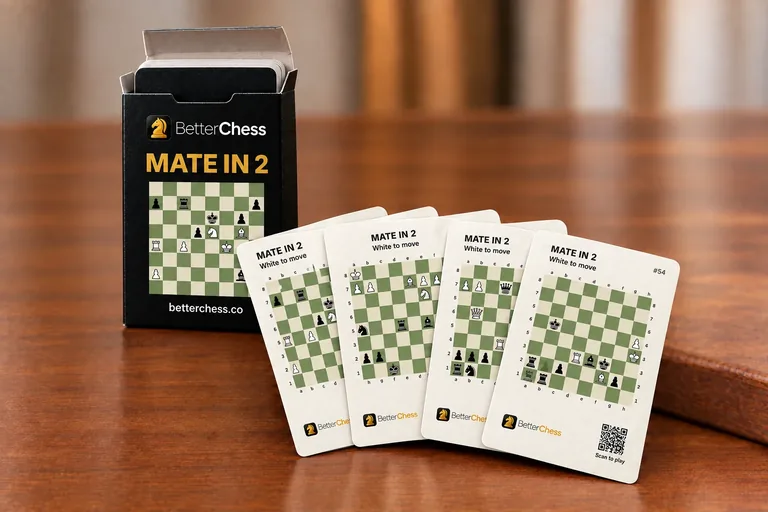
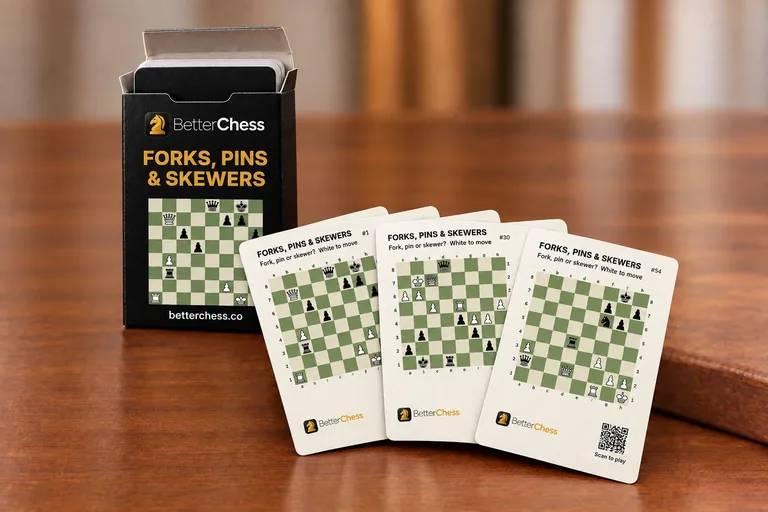
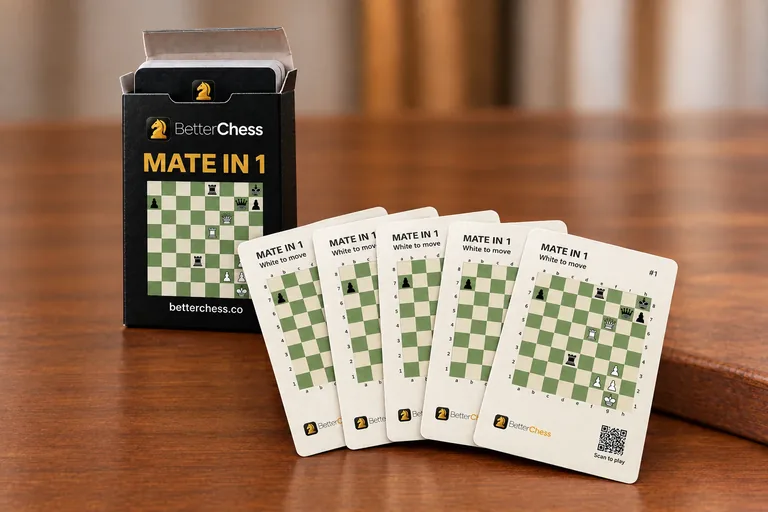
Chess puzzle playing card decks
54 poker-size cards in a tuck box. Puzzle on the front, solution on the back.