← Back to BetterChess
How to stop losing winning positions
Few things sting like being up a piece and still losing. If you keep failing to convert, it's usually a small number of habits around safety, simplification, and clock — not bad luck.
Why winning positions slip away
Three big reasons: you relax and blunder once you think you've won; you get greedy, chasing more material or a flashy mate instead of the simple win; and you panic in time trouble after spending your clock earlier. All three are fixable.
When ahead, simplify
The cleanest rule when you're up material: trade pieces, not pawns. Every trade of pieces brings you closer to an easily winning endgame and removes your opponent's chances to create threats. You don't need brilliance when you're winning — you need to make the position boring.
Keep the safety check on
Winning positions are exactly where attention drops. Keep running your pre-move check (what's the threat? is my move safe?) right to the end. Most thrown-away wins are a single one-move blunder in a position the player had already "won" in their head. See how to stop blundering.
How BetterChess helps
BetterChess coaches the conversion phase too: it nudges you toward simplifying when you're ahead, catches the relaxed blunder before you play it, and drills the winning endgames you keep fumbling — so a won game stays won.
Frequently asked
Why do I lose when I'm winning at chess?
Usually relaxation (a blunder once you think you've won), greed (chasing more instead of the simple win), or time trouble. Staying alert and simplifying fixes most of it.
What should I do when I'm up a piece?
Trade pieces (not pawns) to head toward an easy endgame, keep your king safe, and avoid unnecessary risks. Make the position simple — you don't need to find a knockout.
How do I get better at converting endgames?
Learn a handful of fundamental winning endgames (king and pawn, basic rook endings) and practice them. Converting is a skill you can drill, though how fast you improve depends on your own practice.
Related: How to stop blundering · Why do I lose at chess? · How to stop hanging pieces
BetterChess is a practice tool — we make no guarantee you'll reach 1800 or any rating. Improvement depends on your own practice and effort.
PRINTED CHESS PUZZLE CARDS
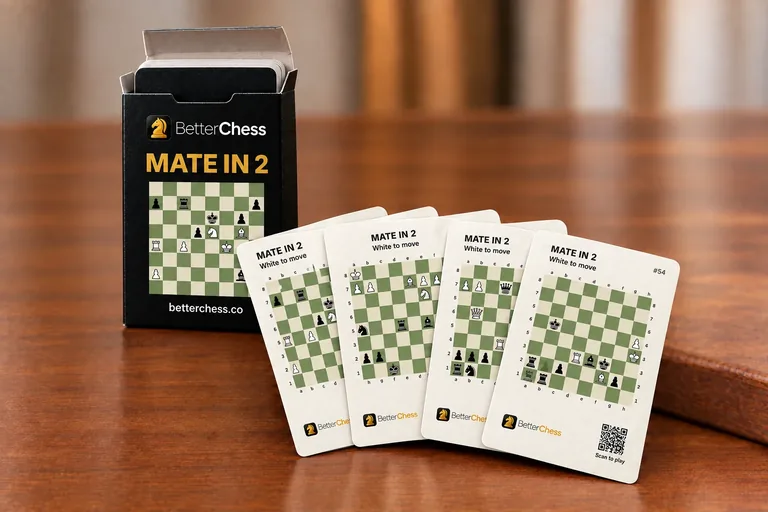
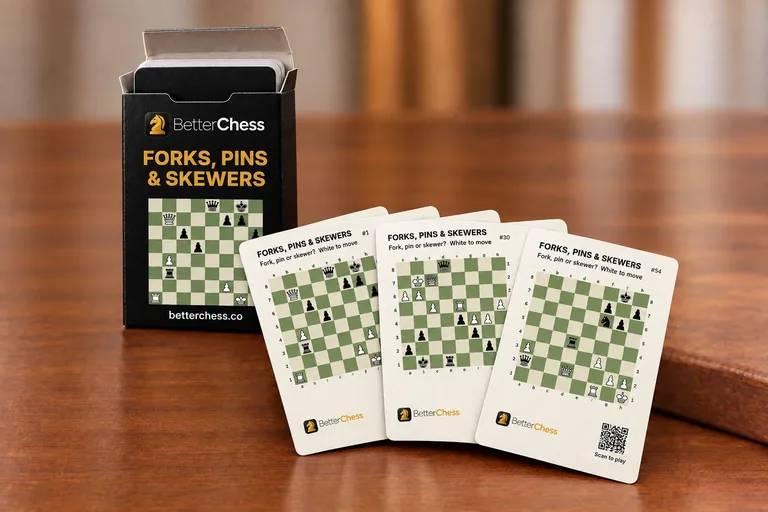
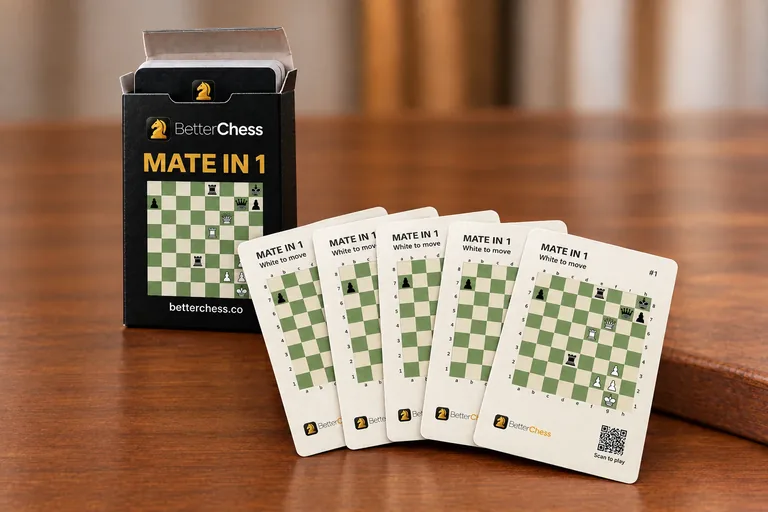
Chess puzzle playing card decks
54 poker-size cards in a tuck box. Puzzle on the front, solution on the back.