Zugzwang
Zugzwang is a position where it’s your turn and every legal move worsens your position — you’d love to pass, but you can’t.
In most of chess having the move is an advantage. In zugzwang it’s a liability: you’re forced to act, and any move loosens your grip — stepping away from a key square, giving up a pawn, or letting the enemy king in.
Zugzwang is everywhere in the endgame, where there are few pieces and the obligation to move really bites. King-and-pawn endings are decided by it constantly.
It’s the engine behind the ‘opposition’: putting the kings face to face so that whoever has to move must give ground.
Frequently asked
How do you pronounce zugzwang?
‘TSOOK-tsvang’ — it’s German for ‘compulsion to move’.
What’s the difference between zugzwang and the opposition?
The opposition (kings facing off with one square between them) is the most common tool for putting the opponent in zugzwang in king-and-pawn endgames.
Related terms
BetterChess is a practice tool — we make no guarantee you'll reach 1800 or any rating. Definitions are standard chess terminology; every diagram position is checked legal with the same engine the board runs.
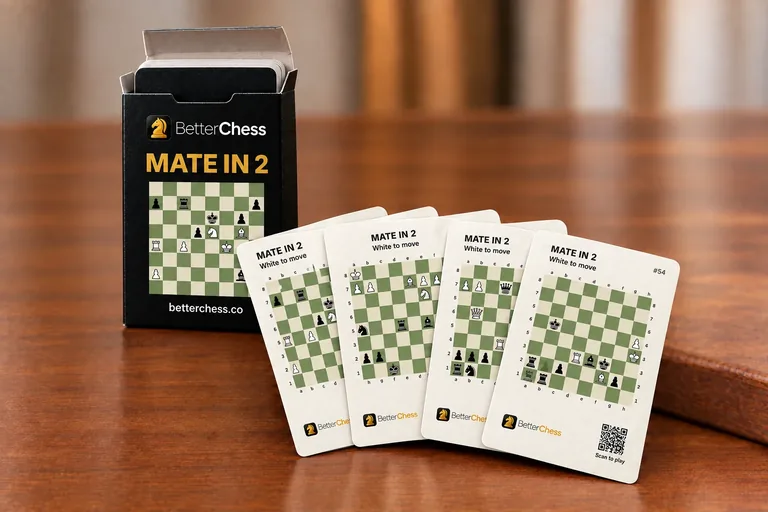
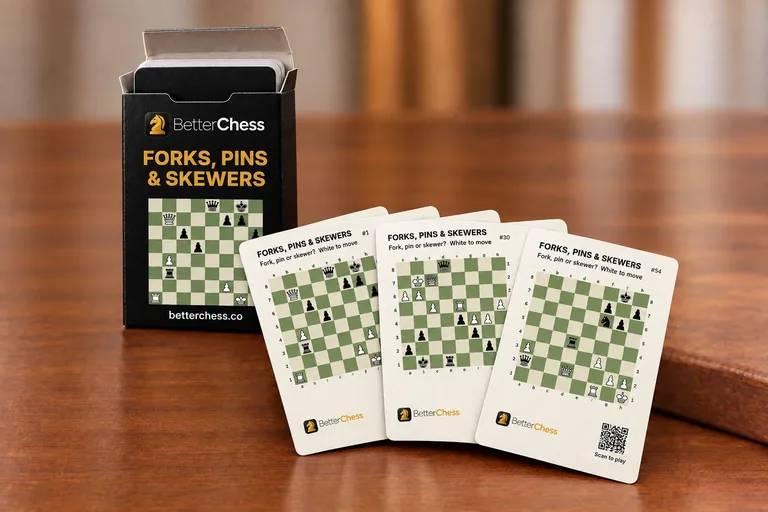
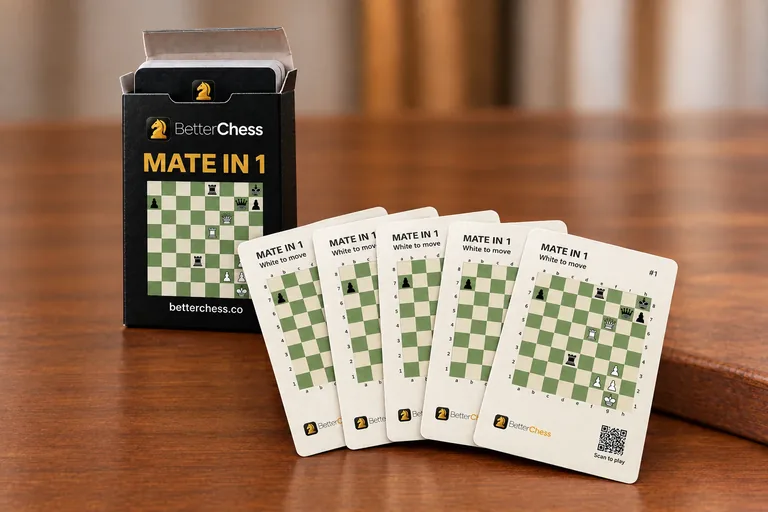
PRINTED CHESS PUZZLE CARDS
Chess puzzle playing card decks
54 poker-size cards in a tuck box. Puzzle on the front, solution on the back.