Gambit
A gambit is an opening where you deliberately give up a pawn (sometimes more) early on, in return for quicker development, central control, or an attack.
The idea is a trade of material for time: you hand over a pawn so your pieces come out faster and your opponent spends moves grabbing and holding it.
Famous gambits include the King’s Gambit, the Queen’s Gambit (which is really a temporary pawn offer), the Evans Gambit, and the Smith–Morra. Some are fully sound; others are bets on the attack.
Accepting a gambit isn’t cowardly and declining isn’t weak — each opening has its own best answer. The key is to know whether to give the pawn back at the right moment.
Frequently asked
Are gambits good for beginners?
They’re great for learning attacking chess and development, but you give the opponent a free pawn — so you have to follow up actively. Solid openings are lower-risk; gambits are more fun and instructive.
What’s the most famous gambit?
The King’s Gambit and the Queen’s Gambit are the best known. The Queen’s Gambit is the soundest — it usually wins the pawn back.
Related terms
BetterChess is a practice tool — we make no guarantee you'll reach 1800 or any rating. Definitions are standard chess terminology; every diagram position is checked legal with the same engine the board runs.
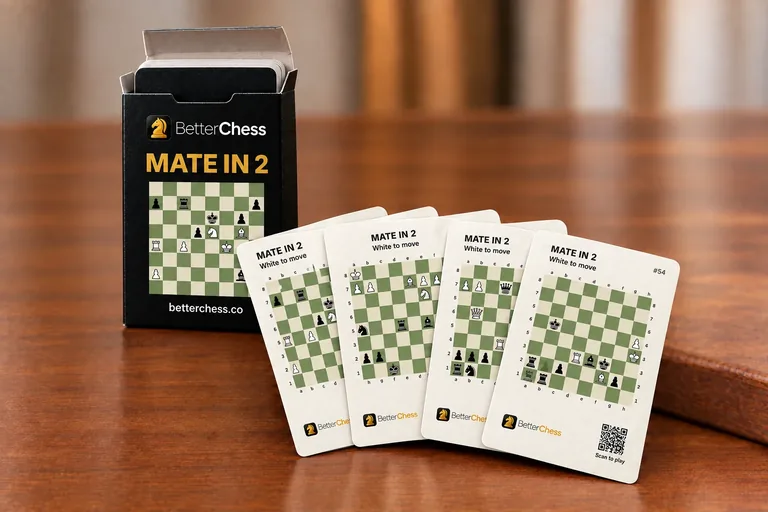
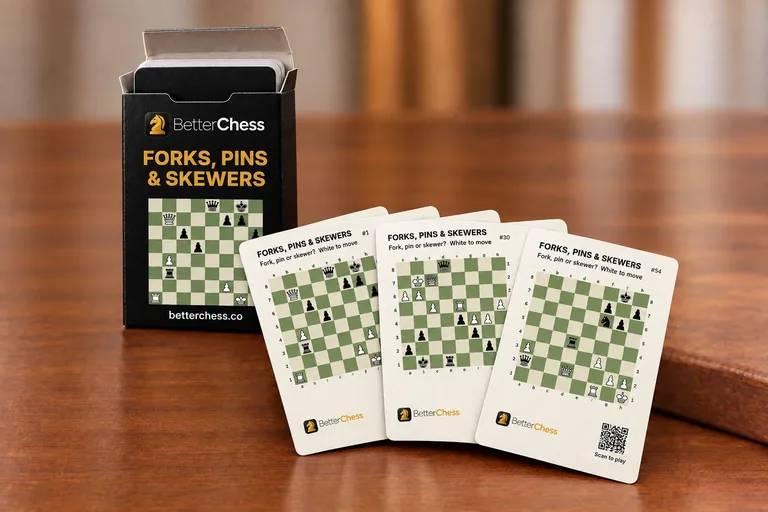
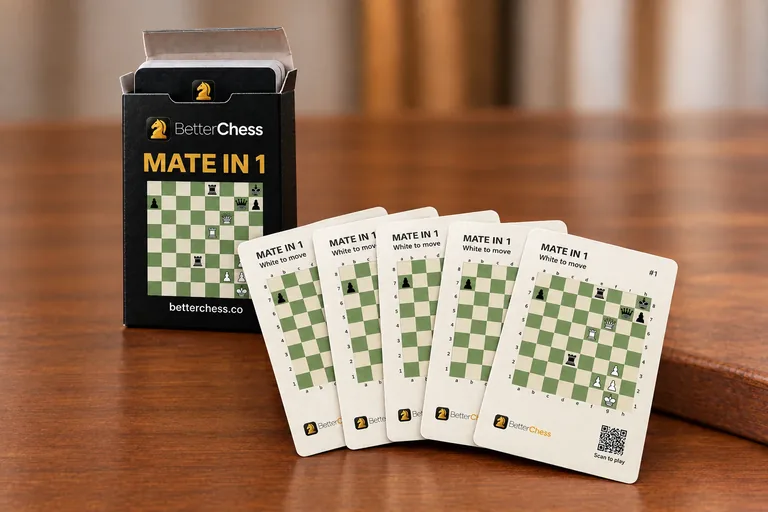
PRINTED CHESS PUZZLE CARDS
Chess puzzle playing card decks
54 poker-size cards in a tuck box. Puzzle on the front, solution on the back.