Visualization
Visualization is the ability to see future positions in your head, keeping track of where every piece stands several moves into a variation.
Calculation is only as good as the picture it runs on. Visualization is that picture: after 1.Qe8+ Rxe8 2.Rxe8, where exactly does every piece stand? Players who blunder at the end of long lines usually calculated fine but visualized a stale image of the board.
The most common failure is the ghost piece: you capture something in your head, then three moves later it defends a square from the grave. The fix is to pause at each step of a line and consciously update the picture, especially which squares just became open or covered.
Training is unglamorous but effective: solve puzzles strictly from the diagram, play through short master games blindfold from the notation, and before any forcing sequence in your own games, describe the final position to yourself before you play the first move.
Frequently asked
How is visualization different from calculation?
Calculation chooses and orders the moves; visualization is the mental picture the moves run on. You can know the right sequence and still blunder if your image of the final position is fuzzy.
How can I train visualization?
Solve tactics without moving pieces, replay short games blindfold from notation, and practice stopping mid-line to name where every piece stands. Accuracy of the picture matters more than raw depth.
Related terms
BetterChess is a practice tool — we make no guarantee you'll reach 1800 or any rating. Definitions are standard chess terminology; every diagram position is checked legal with the same engine the board runs.
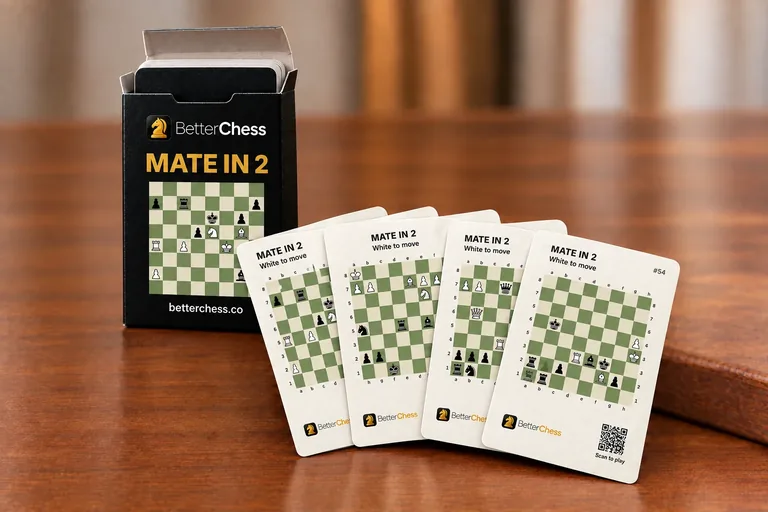
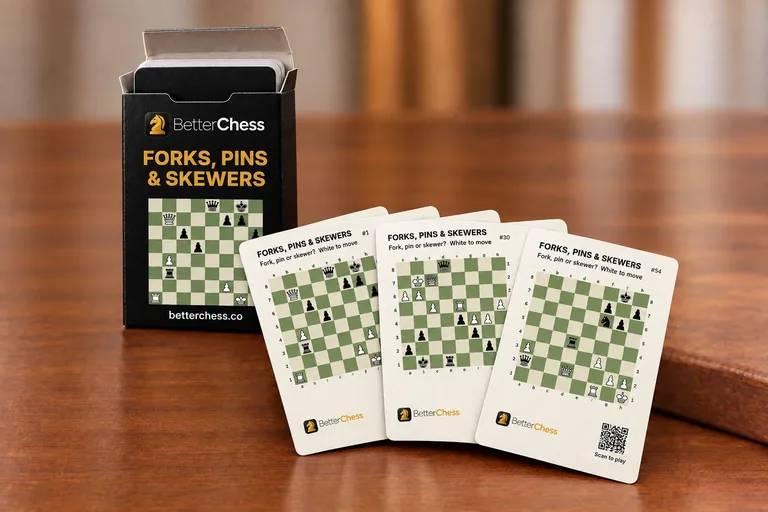
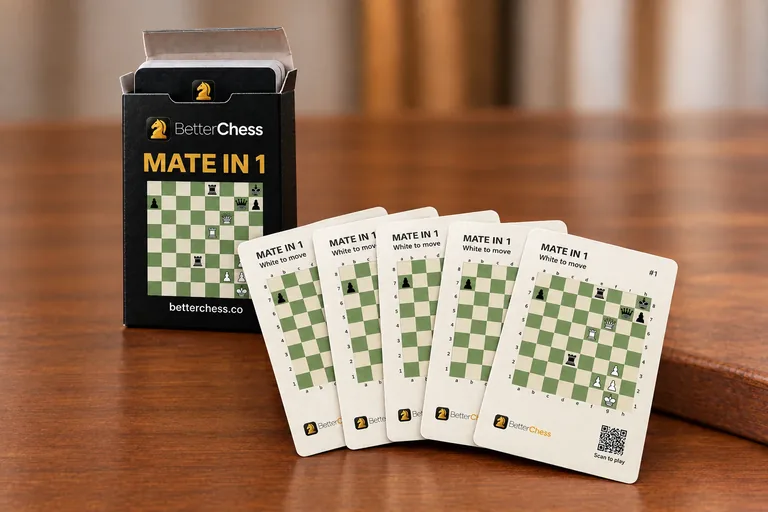
PRINTED CHESS PUZZLE CARDS
Chess puzzle playing card decks
54 poker-size cards in a tuck box. Puzzle on the front, solution on the back.