Calculation
Calculation is the concrete work of analyzing specific move sequences in your head: I go here, they go there, and evaluating the resulting positions.
Strategy tells you what you want; calculation tells you whether it works. Good calculation follows forcing moves first, checks, captures, and threats, because they narrow the opponent's replies and keep the tree of variations small enough to handle.
The classic demonstration is Legall's trap: White sees 5.Nxe5, realizes the queen hangs, and calculates that 5...Bxd1 loses to 6.Bxf7+ Ke7 7.Nd5 mate, while declining with 5...dxe5 6.Qxg4 leaves White a clean pawn up. Only concrete lines, checked to the end, justify a move that drops the queen.
Train it like a muscle: solve tactics without moving pieces, force yourself to see the final position clearly, and always verify your opponent's most annoying reply, especially in-between checks and captures, before you commit.
Frequently asked
How far ahead should I calculate?
As far as the forcing moves go. In quiet positions two or three moves is plenty; in a forcing sequence you calculate until the captures and checks run out and you can evaluate a stable position.
How do I improve my calculation?
Solve puzzles from the diagram without moving the pieces, name your candidate moves first, and finish every line with a clear evaluation. Consistency beats depth: one accurate line is worth three fuzzy ones.
Related terms
BetterChess is a practice tool — we make no guarantee you'll reach 1800 or any rating. Definitions are standard chess terminology; every diagram position is checked legal with the same engine the board runs.
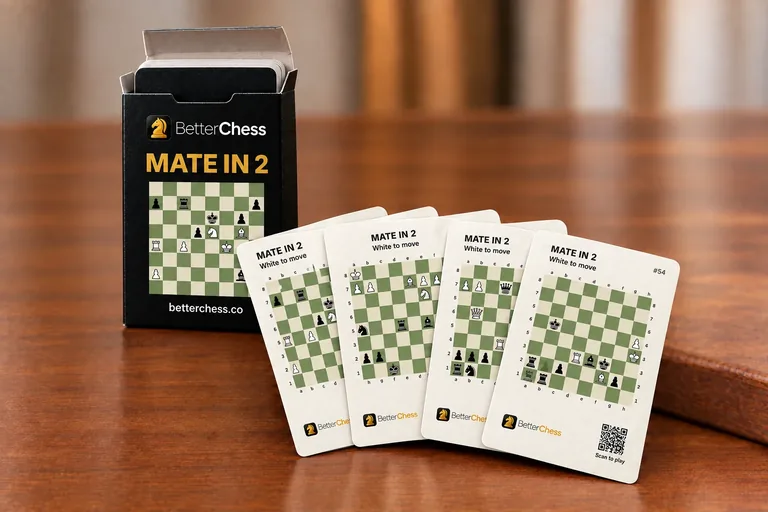
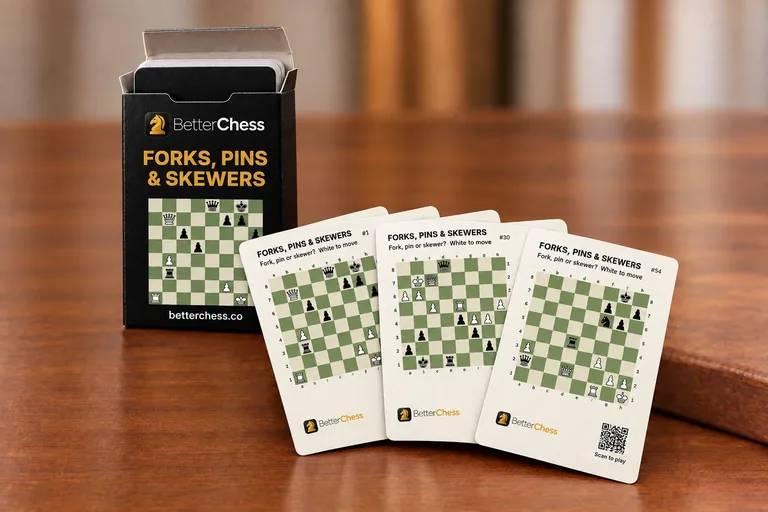
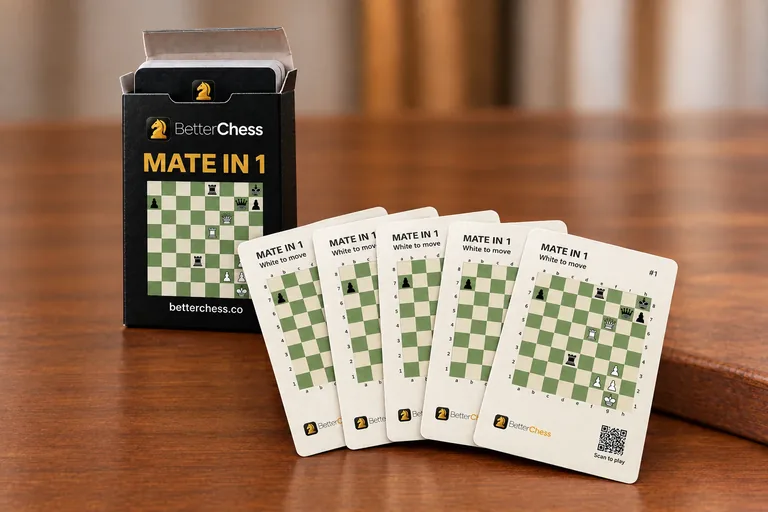
PRINTED CHESS PUZZLE CARDS
Chess puzzle playing card decks
54 poker-size cards in a tuck box. Puzzle on the front, solution on the back.