Time Trouble
Time trouble, also called zeitnot, is the phase when a player has very little clock time left for the remaining moves, and the blunder rate climbs steeply.
Time trouble is where good positions go to die. With seconds per move, calculation shrinks to one ply, known tactics get missed, and players grab material or repeat moves on autopilot. Increments soften the worst of it, but a player thirty seconds a move behind their position's demands is still in zeitnot.
The Laws even acknowledge it: in a classical game, once you have under five minutes left and no increment of at least 30 seconds, you are no longer required to keep score. Whole tournaments swing in these moments, which is why experienced players track the opponent's clock as carefully as the position.
Prevention beats cure. Budget your clock by phase, stop re-checking safe decisions in level positions, and settle for a good move instead of hunting the perfect one. When your opponent is in time trouble, do not speed up to match them: keep playing strong, simple moves and let their clock do the damage.
Frequently asked
What does zeitnot mean?
It is German for time trouble and is standard chess slang for being desperately short of clock time. Severe zeitnot is where winning positions are most often thrown away.
How do I avoid time trouble?
Budget your clock by phase, stop triple-checking safe decisions in level positions, and settle for a good move rather than the perfect one. With increments, bank a small buffer before the complications start.
Related terms
BetterChess is a practice tool — we make no guarantee you'll reach 1800 or any rating. Definitions are standard chess terminology; every diagram position is checked legal with the same engine the board runs.
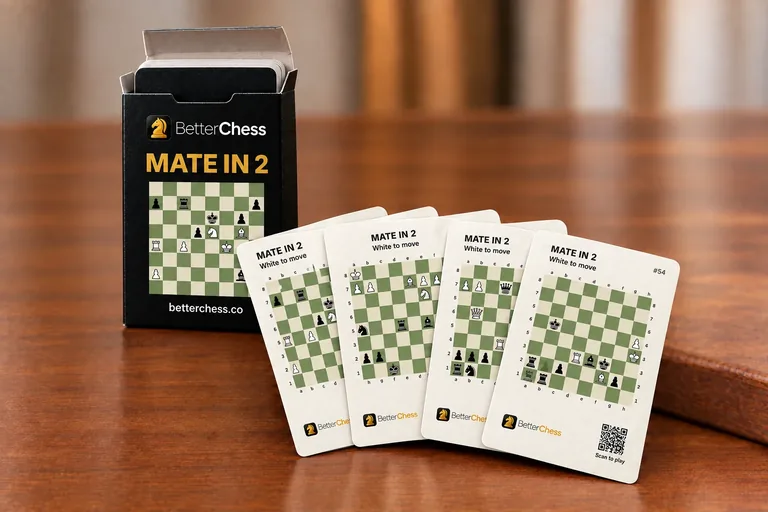
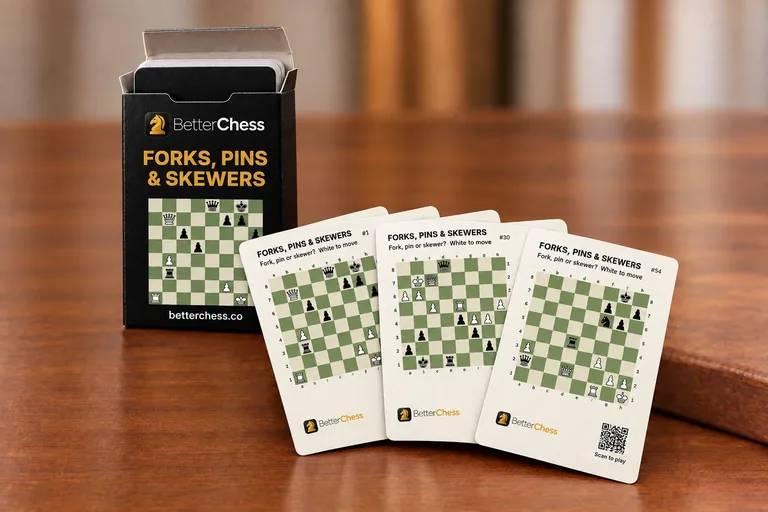
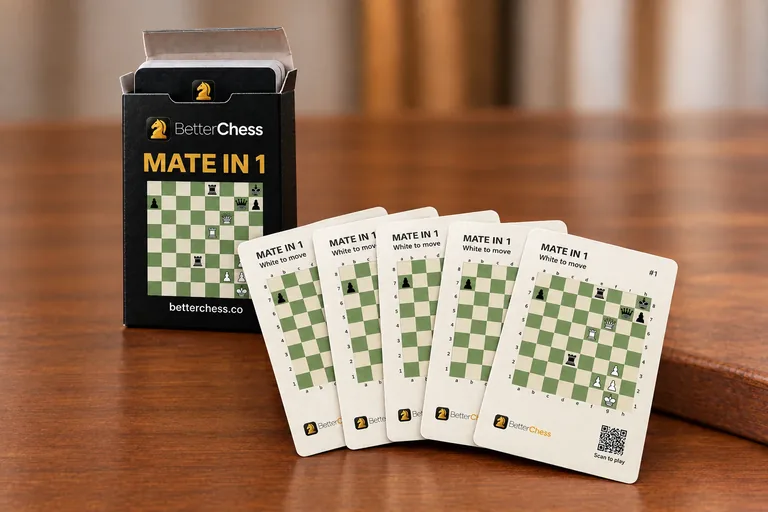
PRINTED CHESS PUZZLE CARDS
Chess puzzle playing card decks
54 poker-size cards in a tuck box. Puzzle on the front, solution on the back.