Blunder
A blunder is a serious mistake — typically one that hangs a piece, allows a winning tactic, or loses the game outright.
A blunder is the bad move that flips a position: dropping a piece for nothing, missing the opponent's threat, walking into a fork or pin, or overlooking a mate. In notation it's marked ‘??’, the strongest symbol for a mistake.
At club level, games are decided far more by blunders than by deep strategy — most points are simply handed over. The good news is that the same handful of oversights cause the great majority of them, so they're very trainable.
The cure is a routine, not talent: before every move, ask what the opponent's last move threatens, check whether your intended move leaves anything undefended (look for loose pieces and back-rank weaknesses), and only then play it. This blunder-check, done every single move, saves more rating points than any opening.
Frequently asked
How do I stop blundering in chess?
Run a blunder-check before every move: ask what the opponent threatens, then make sure your move doesn't hang a piece or allow a tactic. Doing this consistently prevents most blunders.
What's the difference between a blunder and a mistake?
It's a matter of severity. A ‘mistake’ (?) worsens your position; a ‘blunder’ (??) is a serious error that loses material or the game. A ‘?!’ is a dubious move that's merely questionable.
Related terms
BetterChess is a practice tool — we make no guarantee you'll reach 1800 or any rating. Definitions are standard chess terminology; every diagram position is checked legal with the same engine the board runs.
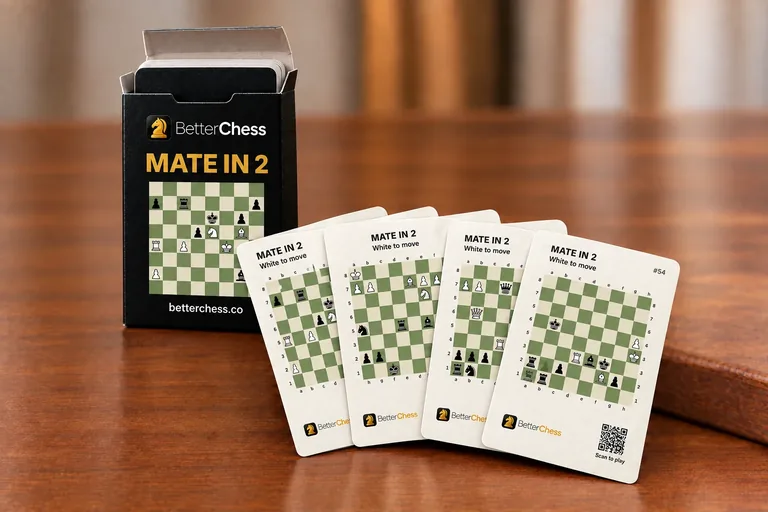
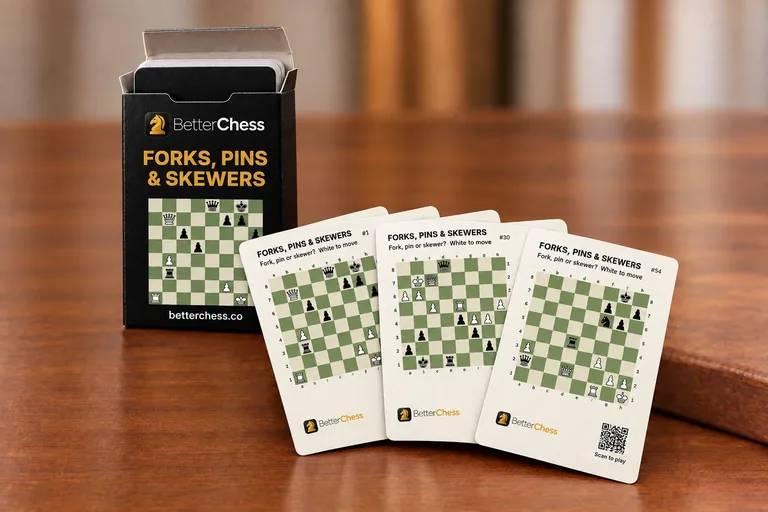
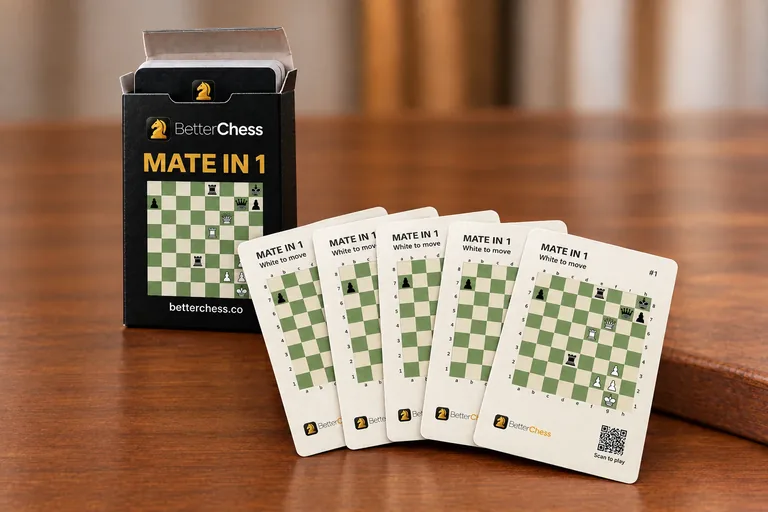
PRINTED CHESS PUZZLE CARDS
Chess puzzle playing card decks
54 poker-size cards in a tuck box. Puzzle on the front, solution on the back.