Flagging
Flagging means winning on time: your opponent's clock reaches zero before the game ends on the board, so they lose whatever the position.
The name comes from analog clocks, which had a small flag that the minute hand raised and then dropped exactly on the hour; when your flag fell, you had lost on time. Digital clocks kept the word, and online play made flagging a defining part of fast chess.
In blitz and bullet the clock is a full part of the game, and playing for it is legitimate. Keeping the position complicated, choosing fast obvious moves over deep ones, and premoving through scrambles are all standard technique; dragging out a lost position purely to win on time is often called dirty flagging, and it is legal too.
There is one big exception: if the player who still has time cannot possibly checkmate you by any series of legal moves, your flag falling only draws the game. That is why timing out against a lone king is a draw, not a loss.
Frequently asked
Is flagging considered fair?
Yes. The time control is agreed before the game, and managing the clock is part of chess. If losing on time in winning positions keeps stinging, play with an increment or budget more reserve time for the endgame.
Why did I only get a draw when my opponent flagged?
Because you had no possible checkmate with the material left, such as a bare king, or king and bishop against king. The rules award a draw when the player with time remaining cannot mate by any legal sequence, and sites approximate this with material checks.
Related terms
BetterChess is a practice tool — we make no guarantee you'll reach 1800 or any rating. Definitions are standard chess terminology; every diagram position is checked legal with the same engine the board runs.
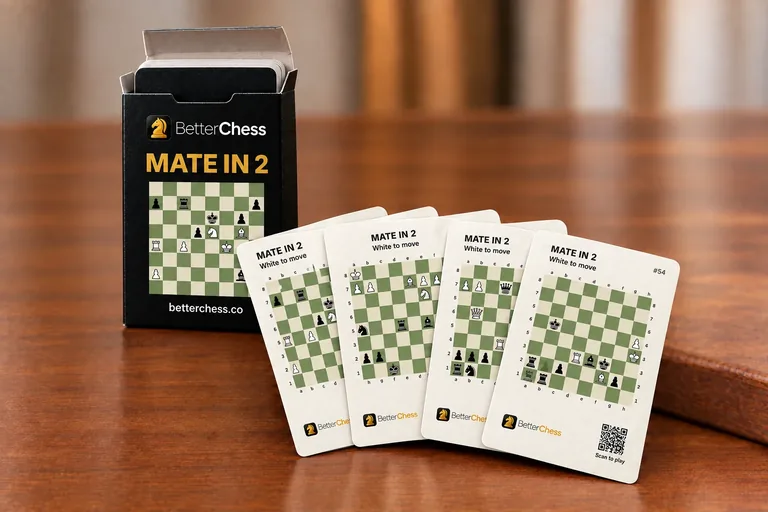
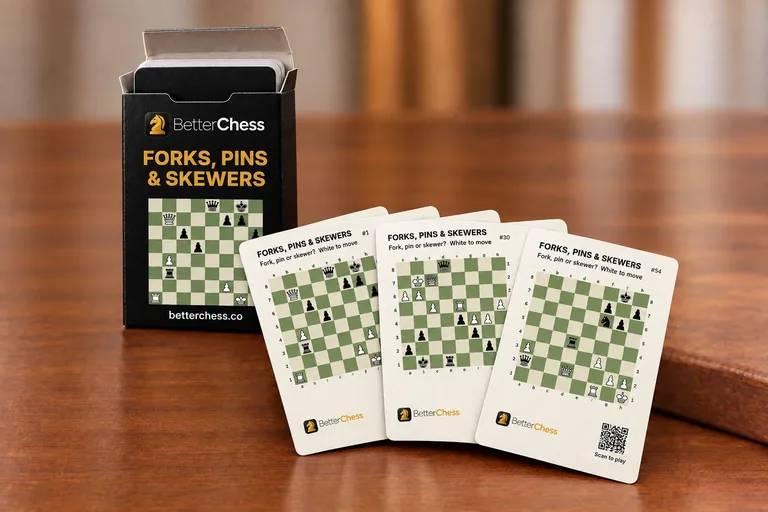
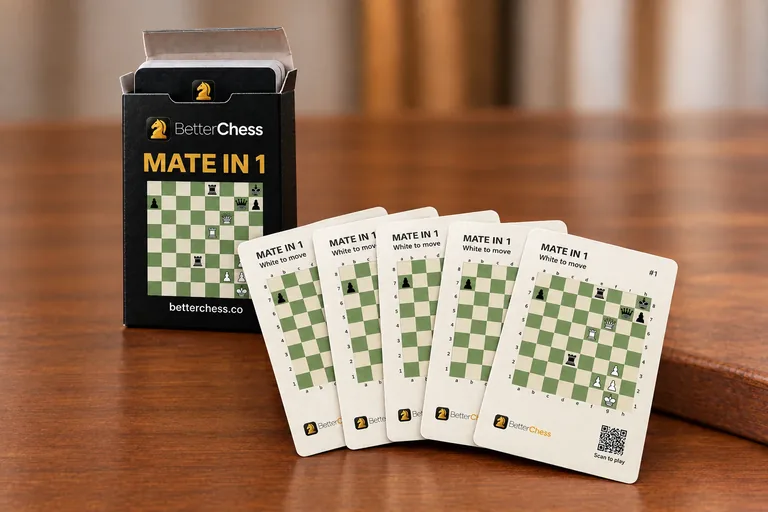
PRINTED CHESS PUZZLE CARDS
Chess puzzle playing card decks
54 poker-size cards in a tuck box. Puzzle on the front, solution on the back.