Skewer
A skewer is a pin in reverse: a valuable piece is attacked in front and must move, exposing a piece behind it on the same line.
Like a pin, a skewer runs along a straight line and is delivered by a bishop, rook or queen. The difference is which piece is in front: in a skewer the more valuable piece is attacked first, so when it steps aside the piece behind it is captured.
The most forcing skewers are checks — the king is attacked, must move, and a piece behind it falls.
Skewers and pins are mirror images: in a pin the valuable piece is behind; in a skewer it’s in front. Telling them apart helps you spot both.
Frequently asked
What’s the difference between a skewer and a pin?
Same line, opposite order. In a pin the valuable piece is behind and the front piece is stuck; in a skewer the valuable piece is in front, must move, and the piece behind it is lost.
Which pieces can skewer?
Only line pieces — the bishop, rook and queen — since a skewer works along a rank, file or diagonal.
Related terms
BetterChess is a practice tool — we make no guarantee you'll reach 1800 or any rating. Definitions are standard chess terminology; every diagram position is checked legal with the same engine the board runs.
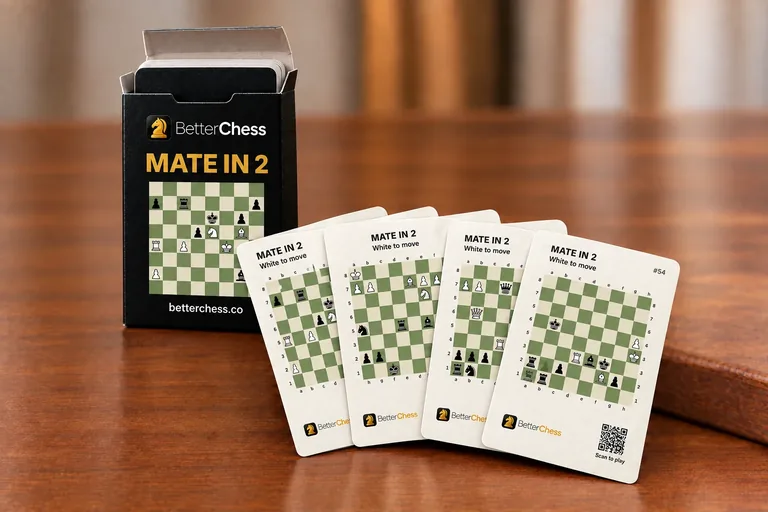
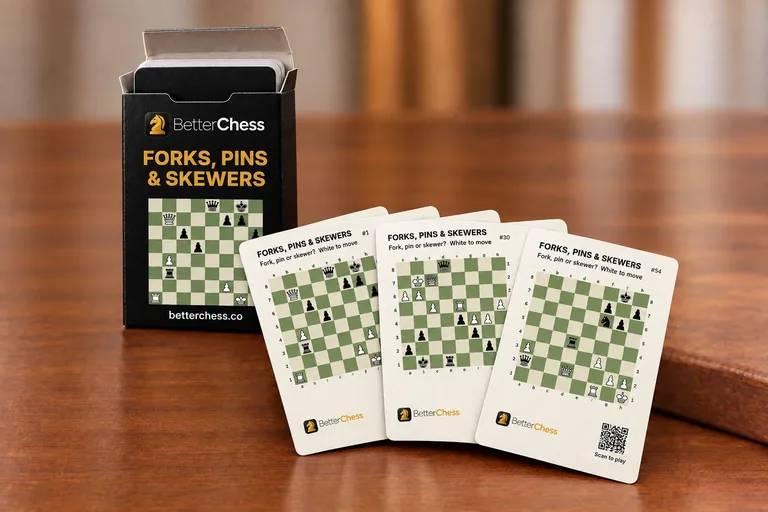
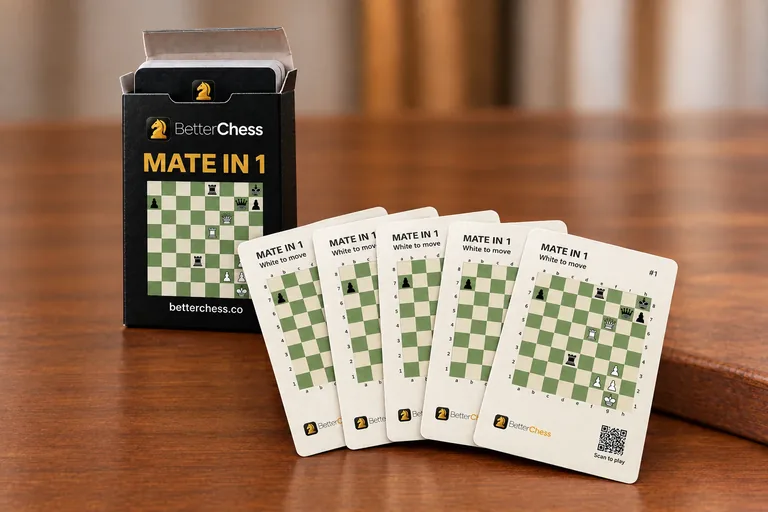
PRINTED CHESS PUZZLE CARDS
Chess puzzle playing card decks
54 poker-size cards in a tuck box. Puzzle on the front, solution on the back.