Pin
A pin is when a piece can’t move (or shouldn’t) because a more valuable piece sits directly behind it along the line of attack.
Only line pieces — bishops, rooks and queens — can pin, because the pin runs along a straight line: attacker, pinned piece, and the bigger piece behind it.
An absolute pin is against the king — the pinned piece literally cannot move, because that would expose the king to check (which is illegal). A relative pin is against a piece (often the queen): moving is legal but loses material.
A pinned piece is a weak piece. Pile more attackers onto it, or push a pawn to win it — it can’t run.
Frequently asked
What’s the difference between an absolute and a relative pin?
An absolute pin is against the king — the pinned piece can’t legally move at all. A relative pin is against a more valuable piece; moving is legal but would lose material.
How do you exploit a pin?
Attack the pinned piece again — with a pawn or another piece — since it can’t move to safety. Or use the fact that it can’t defend its usual squares.
Related terms
BetterChess is a practice tool — we make no guarantee you'll reach 1800 or any rating. Definitions are standard chess terminology; every diagram position is checked legal with the same engine the board runs.
PRINTED CHESS PUZZLE CARDS
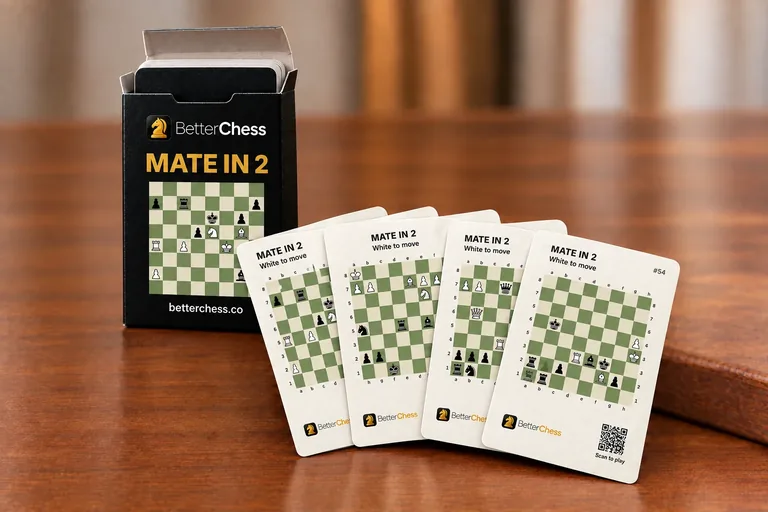
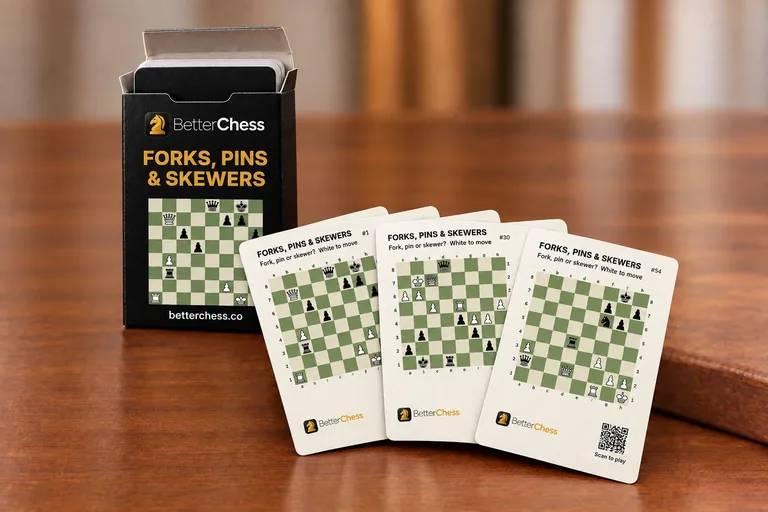
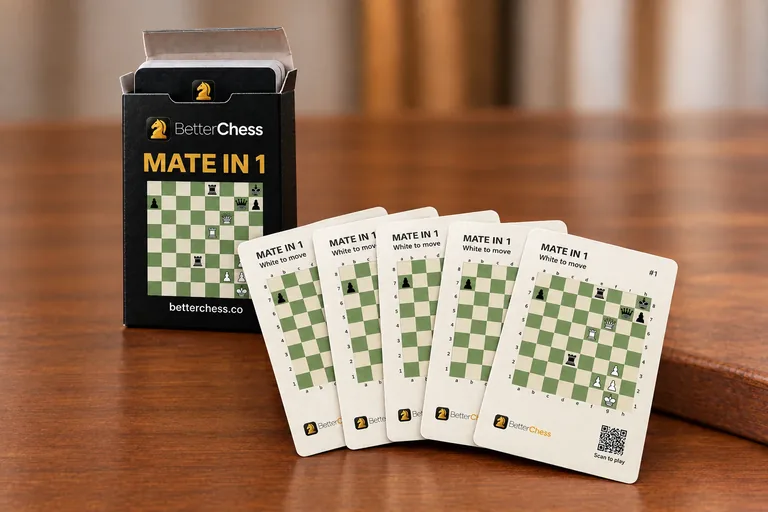
Chess puzzle playing card decks
54 poker-size cards in a tuck box. Puzzle on the front, solution on the back.