Fork
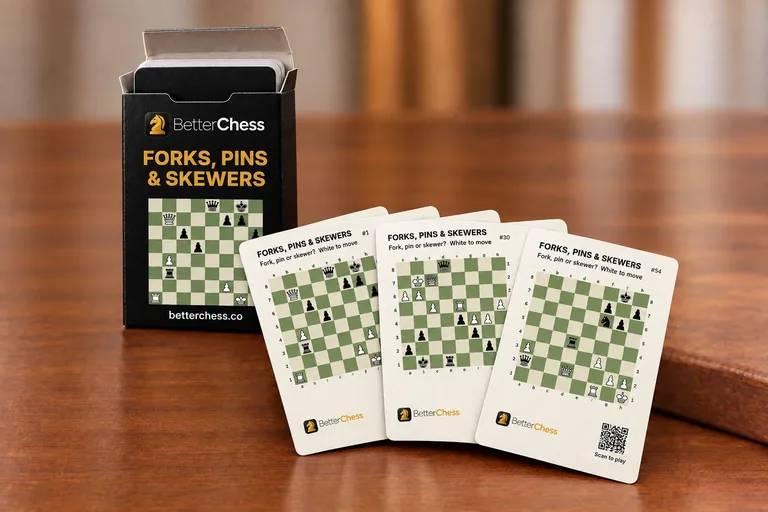
A fork is a single move that attacks two (or more) enemy pieces at once, so the opponent can only save one.
A fork wins material because the opponent can’t defend both targets at the same time — they save one, you take the other.
Knights are the classic forking piece because they jump over everything and attack squares of the opposite colour, but pawns, bishops, rooks, queens and even the king can fork too. The deadliest forks hit the king (a check) plus a piece, because the check must be answered first.
Learning to spot forks — both yours and the opponent’s — is one of the fastest ways to gain rating under 1500.
Frequently asked
What is a knight fork?
A fork delivered by a knight — the most common kind, because the knight attacks in a star shape and can hit a king and queen that no other piece could attack at once.
Is a fork the same as a double attack?
A fork is a type of double attack made by one piece. ‘Double attack’ is the broader idea — it can also mean two of your pieces both hitting one target, or one move that creates two threats.
Related terms
BetterChess is a practice tool — we make no guarantee you'll reach 1800 or any rating. Definitions are standard chess terminology; every diagram position is checked legal with the same engine the board runs.
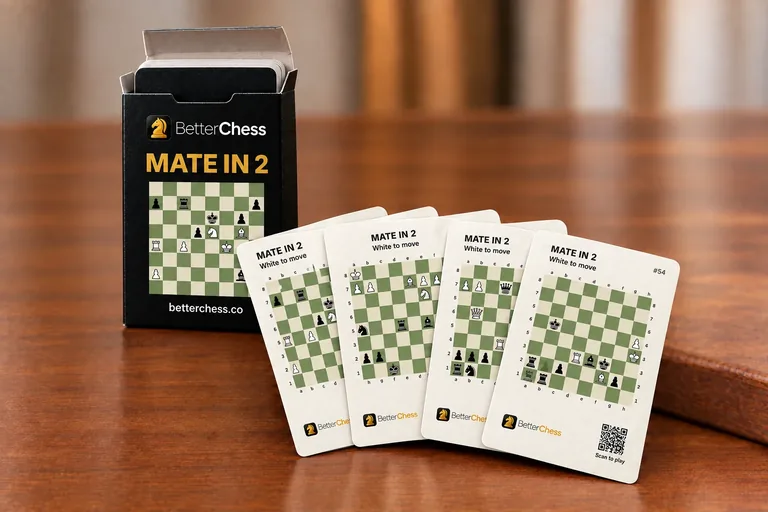
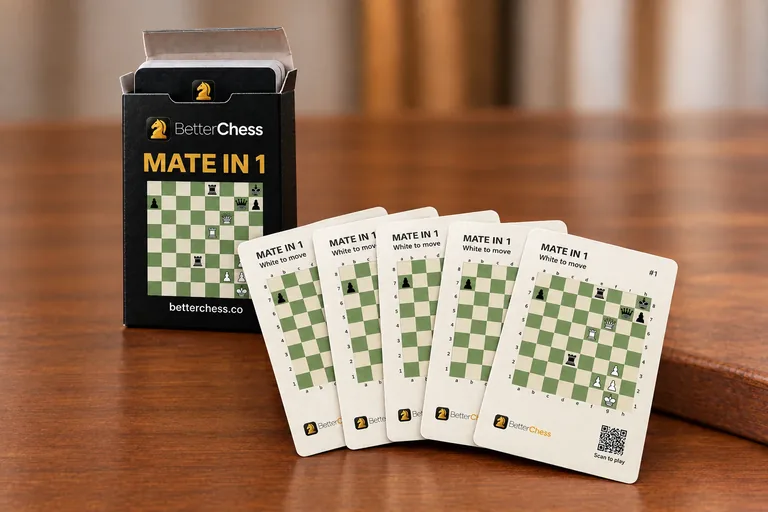
PRINTED CHESS PUZZLE CARDS
Chess puzzle playing card decks
54 poker-size cards in a tuck box. Puzzle on the front, solution on the back.