Sandbagging
Sandbagging is deliberately losing rated games to push your own rating down, usually to face weaker opposition or sneak under a tournament section limit.
The motive is almost always the pairing or the prize. Over the board, big opens pay real money in class sections such as under 1600, so a 1750 who dumps rated games down to 1590 buys a field they expect to farm. Online, sandbaggers chase easy opponents, padded win streaks and flattering stats.
The pattern is easy to picture: resignations after five moves, hung queens in winning positions, strings of losses to far weaker players just before an event. It is also detectable, and sites close accounts for it; US Chess even maintains rating floors partly to stop players sinking below their proven strength.
Sandbagging is cheating, full stop. It steals prizes from honest players in class sections and poisons the rating pool that everyone else relies on. If you want easier games, play a casual format; if you want a real number, play every rated game to win.
Frequently asked
Why would anyone want a lower rating?
Money and comfort. A deflated rating can qualify a player for a lower prize section they expect to dominate, or simply serve up weaker opponents online. The rating is being used as a ticket rather than a measurement.
How is sandbagging different from smurfing?
A sandbagger drags an existing rating down by losing on purpose; a smurf starts a fresh account so a strong player faces weak opposition under a new name. Both are rating manipulation, and both get accounts closed on the major sites.
Related terms
BetterChess is a practice tool — we make no guarantee you'll reach 1800 or any rating. Definitions are standard chess terminology; every diagram position is checked legal with the same engine the board runs.
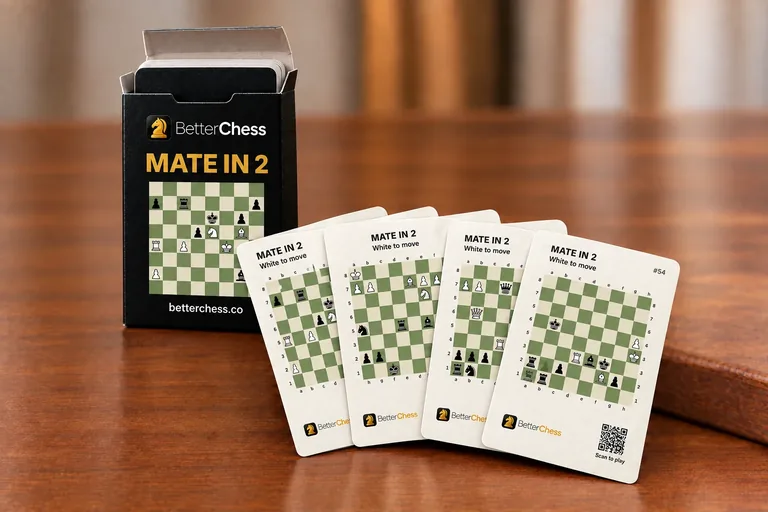
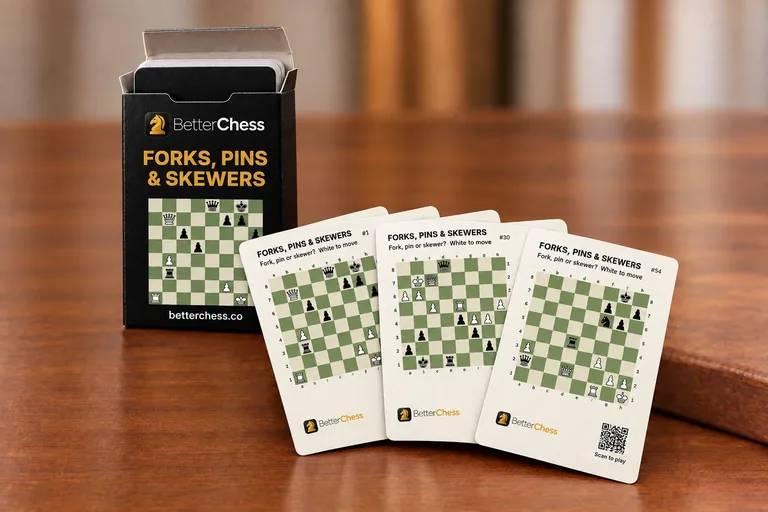
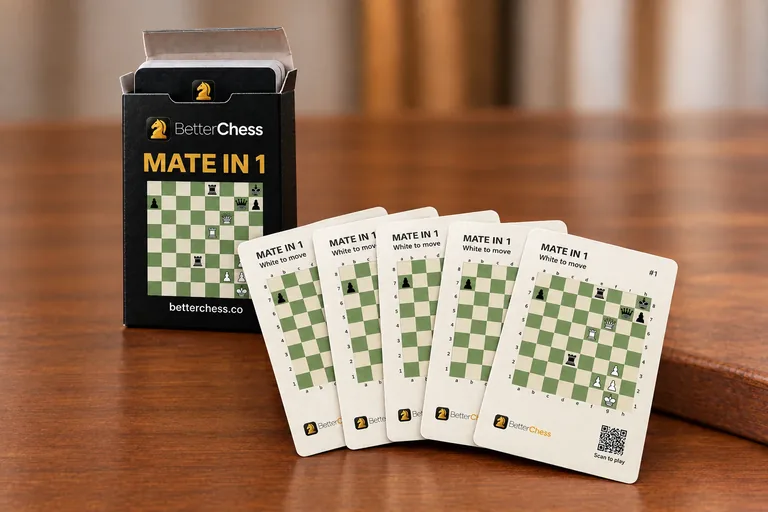
PRINTED CHESS PUZZLE CARDS
Chess puzzle playing card decks
54 poker-size cards in a tuck box. Puzzle on the front, solution on the back.