En Passant
En passant is a special pawn capture: a pawn that has just advanced two squares can be taken by an enemy pawn beside it, as if it had moved only one.
When a pawn makes its two-square opening jump and lands directly beside an enemy pawn, that enemy pawn may capture it ‘in passing’ — moving diagonally onto the square the pawn skipped over, and removing it.
The catch: you can only do it immediately, on the very next move. Pass up the chance and the right to capture en passant is gone for good.
The rule exists so a pawn can’t use its two-square jump to sneak safely past an enemy pawn that would otherwise have controlled the square it passed.
Frequently asked
When can you play en passant?
Only immediately after the enemy pawn makes its two-square advance, and only with a pawn of yours sitting directly beside it on the 5th rank (for White) or 4th rank (for Black).
Is en passant forced?
No — it’s optional, like any capture. But it’s often the right move, and sometimes the only good one.
Related terms
BetterChess is a practice tool — we make no guarantee you'll reach 1800 or any rating. Definitions are standard chess terminology; every diagram position is checked legal with the same engine the board runs.
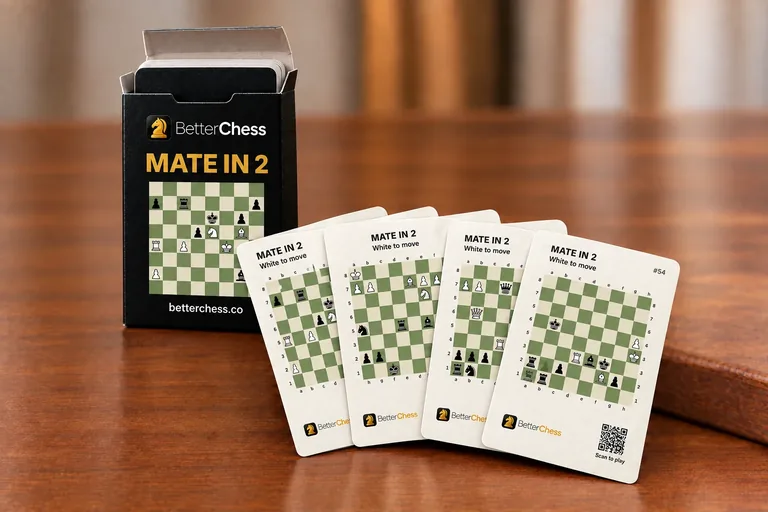
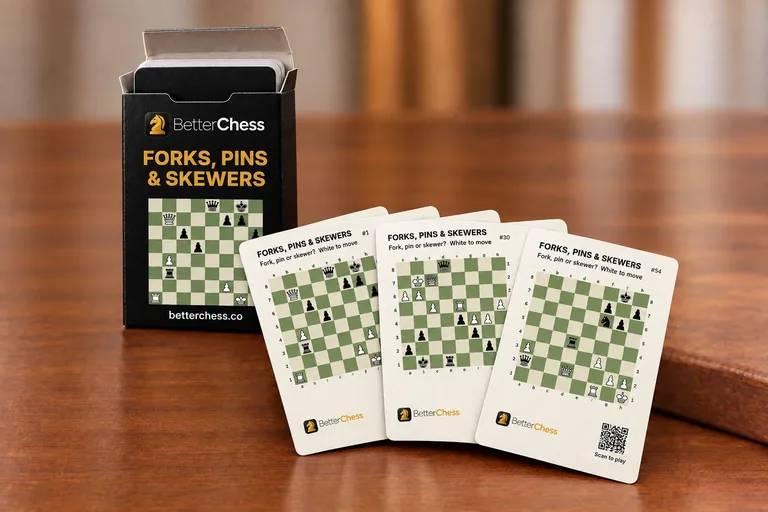
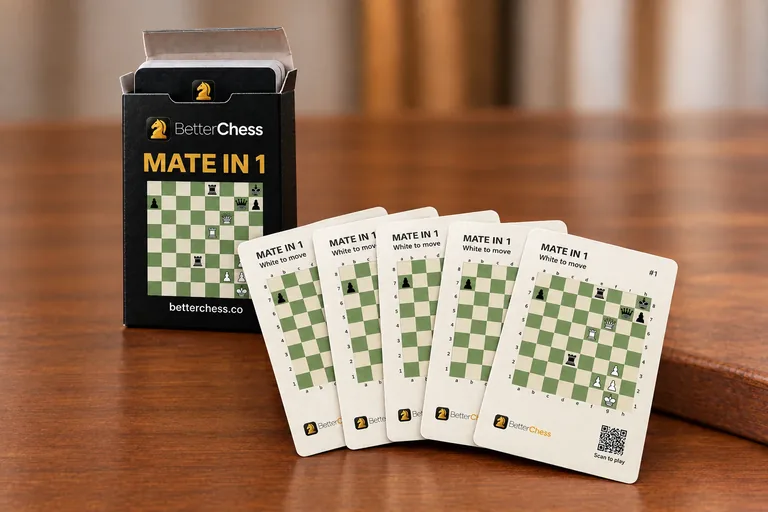
PRINTED CHESS PUZZLE CARDS
Chess puzzle playing card decks
54 poker-size cards in a tuck box. Puzzle on the front, solution on the back.