FIDE
FIDE, the International Chess Federation, is the world governing body of chess. It writes the Laws of Chess, runs the official rating system, awards titles, and organizes the World Championship.
FIDE (Fédération Internationale des Échecs, French for International Chess Federation) was founded in Paris in 1924. Its motto is Gens una sumus, 'we are one family', and today it counts around 200 national federations as members, making chess one of the most widely organized sports in the world.
Almost every formal structure in chess flows from FIDE: the Laws of Chess that govern over-the-board play, the international rating system (based on the Elo model FIDE adopted in 1970), the titles from Candidate Master up to Grandmaster, the World Championship cycle, and the biennial Chess Olympiad.
For a club player, FIDE matters in two concrete ways. A FIDE rating, earned only in officially rated over-the-board events, is the number that travels with you internationally. And whenever a term like norm, arbiter, or dead position comes up, its precise meaning lives in the FIDE Handbook.
Frequently asked
What does FIDE stand for?
Fédération Internationale des Échecs, French for International Chess Federation. It was founded in Paris in 1924, and its motto Gens una sumus means 'we are one family'.
What is the difference between a FIDE rating and an online rating?
A FIDE rating comes only from over-the-board play in officially rated events. Online ratings use different player pools and different math, so the numbers are not directly comparable.
Related terms
BetterChess is a practice tool — we make no guarantee you'll reach 1800 or any rating. Definitions are standard chess terminology; every diagram position is checked legal with the same engine the board runs.
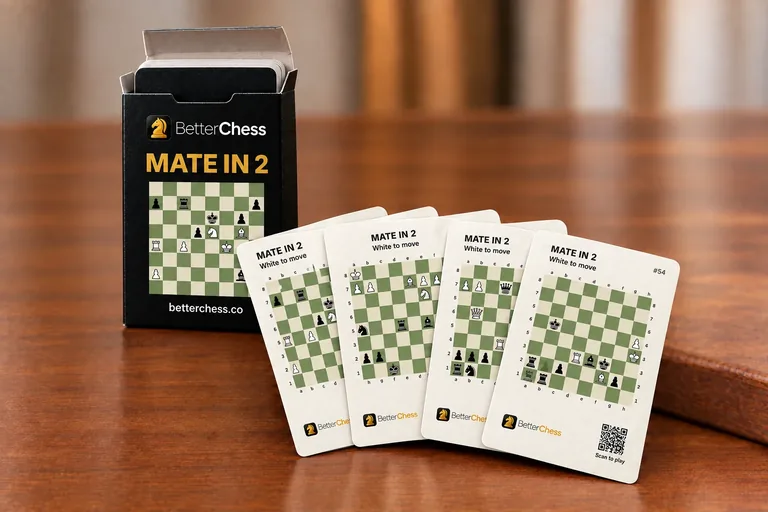
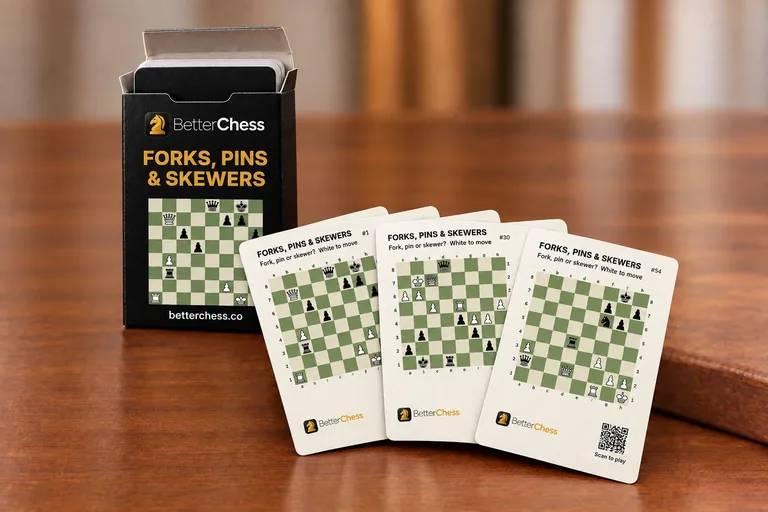
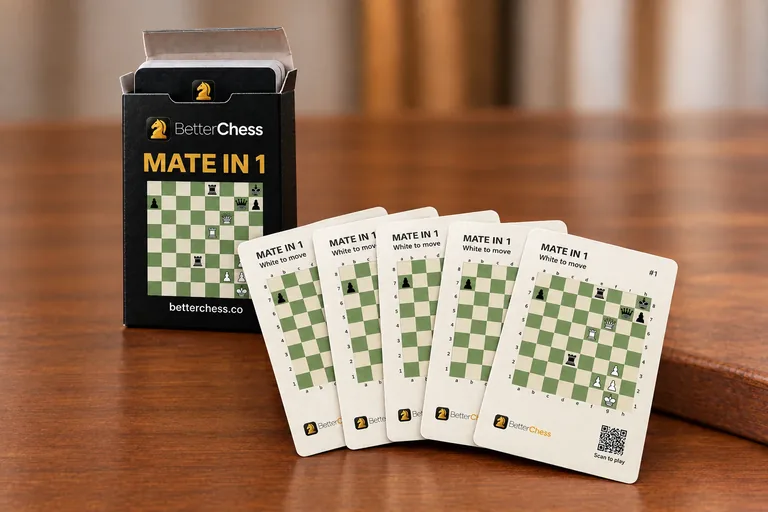
PRINTED CHESS PUZZLE CARDS
Chess puzzle playing card decks
54 poker-size cards in a tuck box. Puzzle on the front, solution on the back.