Arbiter
An arbiter is the official who enforces the Laws of Chess at a tournament: starting rounds, ruling on disputes and illegal moves, applying penalties, and recording results.
The arbiter is chess's referee. They start and supervise the rounds, keep the playing conditions in order, rule on illegal moves and clock incidents, apply penalties, verify draw claims, and record the results that go to the rating office.
FIDE awards two arbiter titles, FIDE Arbiter (FA) and International Arbiter (IA), earned through seminars, exams, and supervised experience at real events. In US tournaments run under USCF rules the equivalent official is called a tournament director, but the job is the same.
Know when to use them. If anything at your board needs a ruling (an illegal move, a clock malfunction, a disturbance, or a draw claim by threefold repetition or the fifty-move rule), stop the clocks and raise your hand. Claims go through the arbiter, never through an argument with your opponent.
Frequently asked
What is the difference between an arbiter and a tournament director?
Largely terminology. FIDE events use arbiters, with the FIDE Arbiter and International Arbiter titles; US events under USCF rules use tournament directors. The core job of enforcing the rules is the same.
When should I call the arbiter?
Any time something needs a ruling: an illegal move, a clock problem, a disturbance, or a draw claim by threefold repetition or the fifty-move rule. Stop the clocks, raise your hand, and let the arbiter decide.
Related terms
BetterChess is a practice tool — we make no guarantee you'll reach 1800 or any rating. Definitions are standard chess terminology; every diagram position is checked legal with the same engine the board runs.
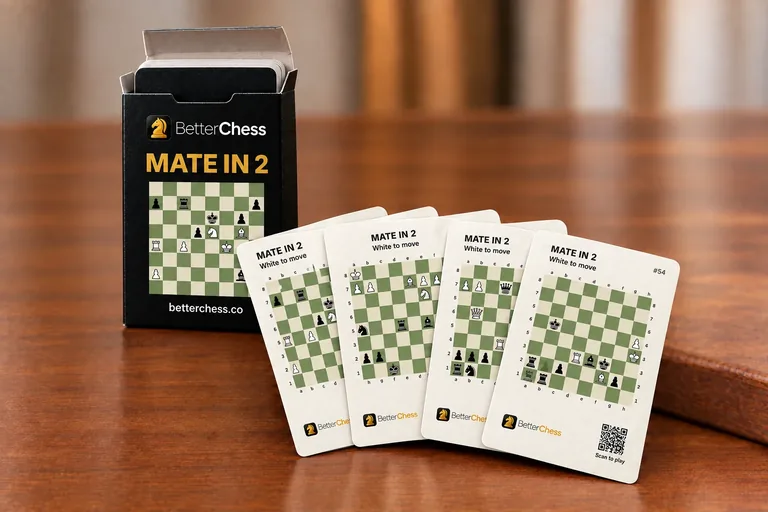
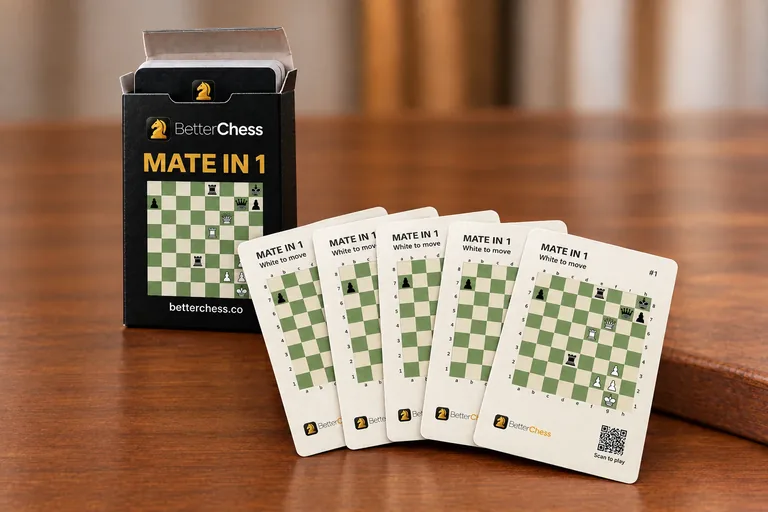
PRINTED CHESS PUZZLE CARDS
Chess puzzle playing card decks
54 poker-size cards in a tuck box. Puzzle on the front, solution on the back.