Correspondence Chess
Correspondence chess is played at a pace of days per move rather than minutes, historically by post and today mostly as online daily games.
Players exchange one move at a time with days to reply, so a single game can run for months or years. Moves once traveled on postcards; today the same rhythm survives online as daily chess, and the International Correspondence Chess Federation still runs formal events with controls like ten moves in fifty days.
The rules differ from live chess in one famous way: consulting opening books and databases has always been part of the format, and modern ICCF play even permits engines in most events, turning top games into deep human plus computer analysis where draws dominate. Mainstream sites allow books and explorers in daily games but still ban engine help.
For an improving player, a couple of daily games are a quiet superpower. You can analyze real positions on a real board for as long as you like, build opening files as the lines actually appear in your games, and practice being thorough instead of fast.
Frequently asked
Are engines allowed in correspondence chess?
In most ICCF events, yes, and top correspondence chess is effectively human guided engine analysis. On mainstream sites, daily games allow opening books and databases but forbid engines, so read the rules of the event you join.
How long does a correspondence game take?
Typically weeks to months, and serious ICCF games can run past a year. With a control like ten moves in fifty days, a hard fought sixty move game can legitimately take most of a year on its own.
Related terms
BetterChess is a practice tool — we make no guarantee you'll reach 1800 or any rating. Definitions are standard chess terminology; every diagram position is checked legal with the same engine the board runs.
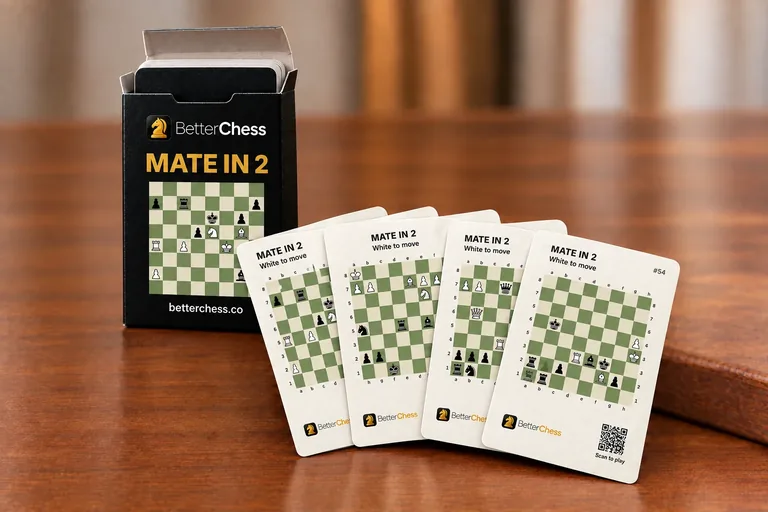
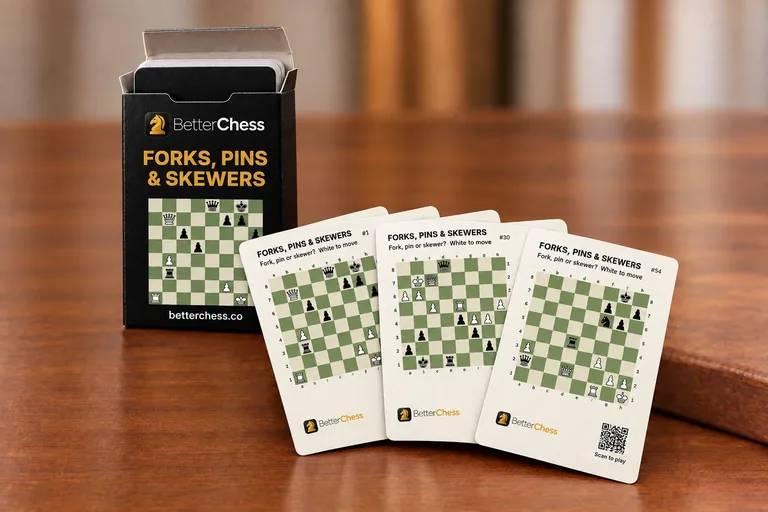
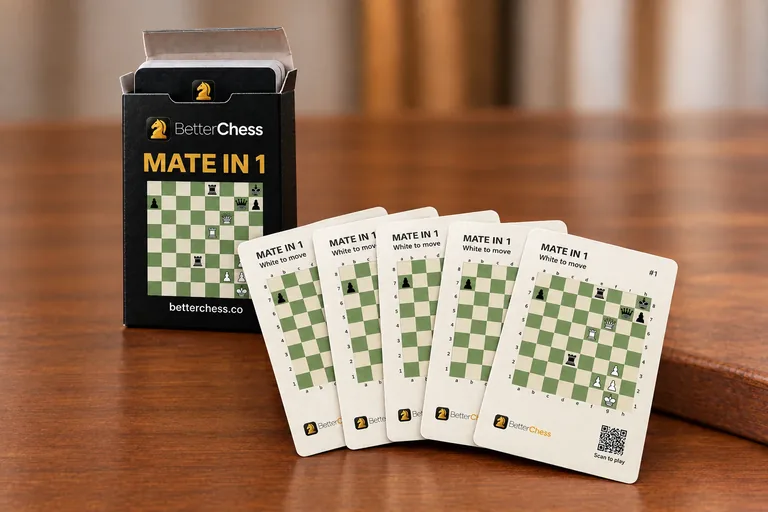
PRINTED CHESS PUZZLE CARDS
Chess puzzle playing card decks
54 poker-size cards in a tuck box. Puzzle on the front, solution on the back.