Classical Chess
Classical chess is the slow form of the game, with each player getting an hour or more, often several, for one game.
Classical, also called standard chess, covers every control longer than rapid. A typical FIDE event gives 90 minutes for the first 40 moves plus 30 minutes for the rest, with a 30 second increment from move one, and a single world championship game can last well over five hours.
With real time on the clock, the game changes character. Opening preparation runs deep, critical positions get twenty minute thinks, endgames are played with precision, and stamina becomes a factor; a classical tournament is physically demanding in a way fast chess is not.
Classical is also where improvement compounds fastest per game. Long thinks force you to build a full thinking process, from candidate moves to blunder checks, and one seriously played and reviewed slow game teaches more than an evening of blitz.
Frequently asked
How long does a classical game last?
Commonly three to five hours, and top level games can go longer. With a 90 plus 30 control, 40 moves each can already consume four hours before the extra time is touched.
Do I have to play classical to improve?
No, but slow thinking has to happen somewhere. If classical events are impractical, one long rapid game a week played with full seriousness, then reviewed, covers most of the same ground.
Related terms
BetterChess is a practice tool — we make no guarantee you'll reach 1800 or any rating. Definitions are standard chess terminology; every diagram position is checked legal with the same engine the board runs.
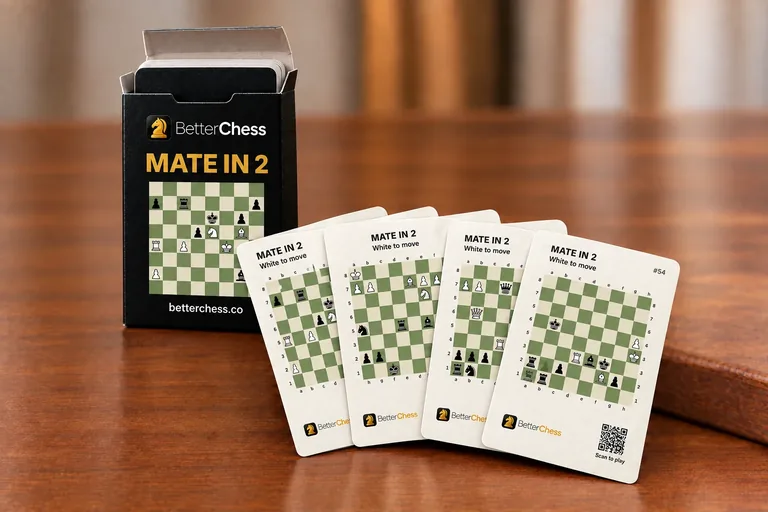
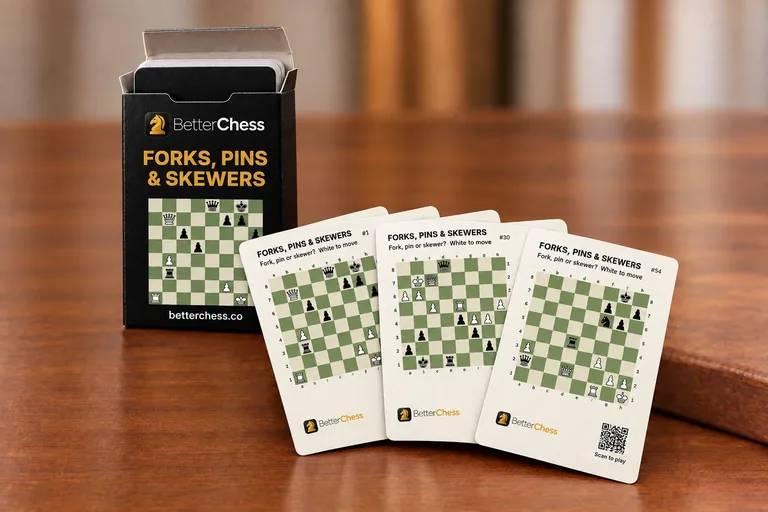
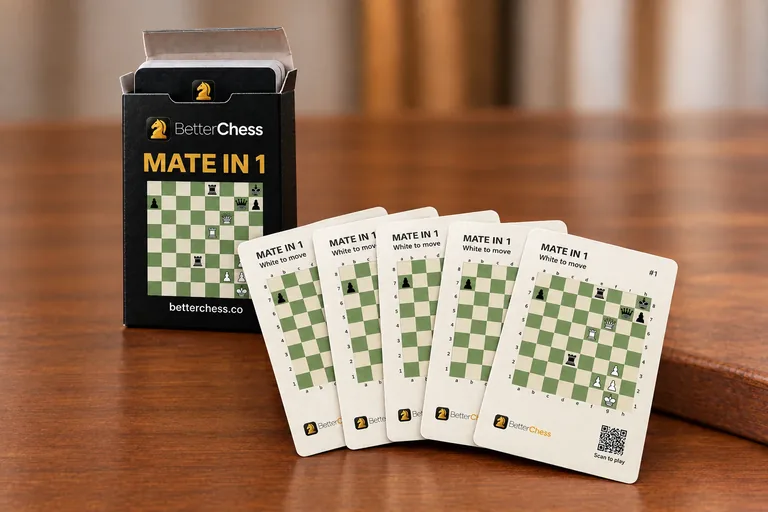
PRINTED CHESS PUZZLE CARDS
Chess puzzle playing card decks
54 poker-size cards in a tuck box. Puzzle on the front, solution on the back.