Time Control
A time control is the clock setting for a game: how much total thinking time each player has, plus any increment per move.
Online controls are written as minutes plus increment: 1+0, 3+2, 15+10. Over the board, classical events use staged controls, for example 90 minutes for the first 40 moves and 30 more for the rest, with a 30 second increment from move one. The clock is agreed before the game and is as binding as the rules of movement.
Controls group into speed categories by total time: bullet games give each side under three minutes, blitz runs to roughly ten, rapid to about an hour, and classical beyond that. Ratings are tracked separately per category, because skill does not transfer evenly across speeds.
Choosing time controls is a training decision. Fast games multiply your experience of openings and basic patterns, while slow games are where calculation, planning and discipline actually develop. Most improving players do their serious work at rapid or slower and treat bullet as dessert.
Frequently asked
What do the numbers in 3+2 mean?
Three minutes per player for the whole game, with two seconds added to your clock after each move you make. The first number is base time in minutes, the second is the increment in seconds.
Which time control is best for improvement?
Slower ones. Rapid games of 15+10 or longer give you time to actually practice calculating and planning, which is what carries over to every speed. Blitz and bullet are better for volume, opening reps and fun.
Related terms
BetterChess is a practice tool — we make no guarantee you'll reach 1800 or any rating. Definitions are standard chess terminology; every diagram position is checked legal with the same engine the board runs.
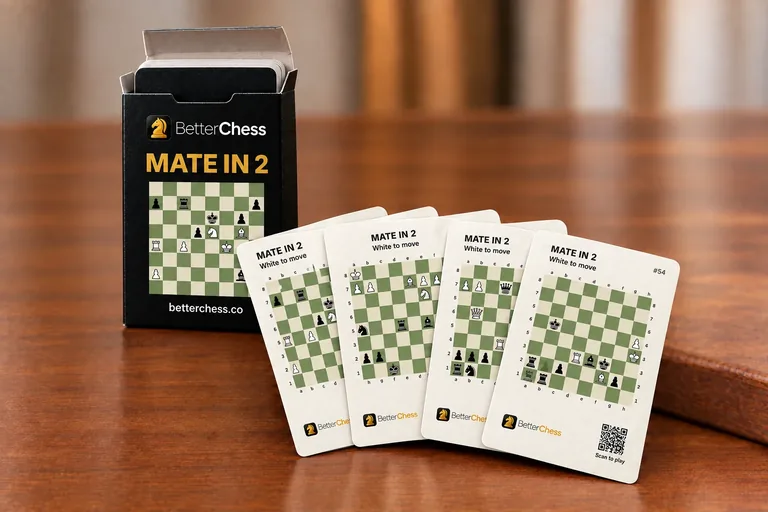
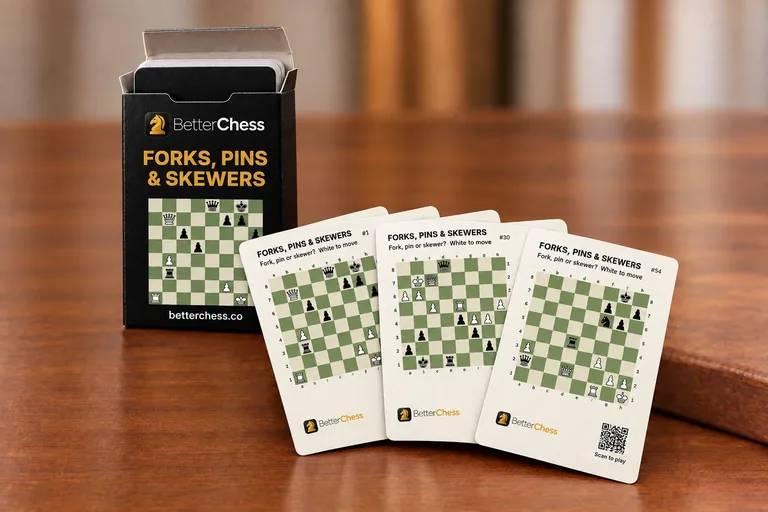
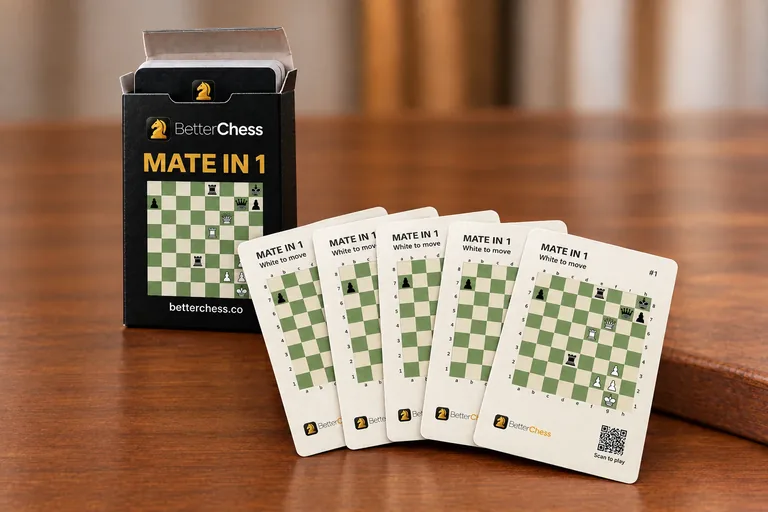
PRINTED CHESS PUZZLE CARDS
Chess puzzle playing card decks
54 poker-size cards in a tuck box. Puzzle on the front, solution on the back.